Opioid Tapering Calculator
Stopping opioids isn’t as simple as just cutting the dose in half. For people who’ve been on these medications for months or years, sudden discontinuation can trigger serious problems - from unbearable pain to suicidal thoughts. The opioid side effects don’t disappear when you stop taking them; they often get worse before they get better. That’s why tapering - the slow, planned reduction of dosage - isn’t just a good idea. It’s a medical necessity.
Why Abrupt Stopping Is Dangerous
The FDA recorded 103 cases between 2012 and 2017 where patients suffered severe harm after being abruptly taken off opioids. These weren’t rare outliers. They included suicide attempts, uncontrolled pain, and extreme withdrawal. In fact, a 2021 study in the Annals of Internal Medicine found that patients who had their doses cut by more than 10% per week had a 68% higher risk of opioid overdose and a 78% higher risk of suicide attempt or self-harm compared to those who tapered slowly.
Why does this happen? When your body gets used to opioids, it changes how it manages pain and stress. Your brain stops making its own natural painkillers. Your nervous system becomes hypersensitive. Suddenly removing the drug doesn’t just leave you without pain relief - it flips your entire system into overdrive.
When Should You Consider Tapering?
Not everyone on opioids needs to stop. But tapering is recommended if:
- Your pain hasn’t improved after several months
- You’re experiencing side effects like drowsiness, constipation, or confusion
- You’ve had an overdose or near-overdose event
- You’re taking opioids along with benzodiazepines (like Xanax or Valium)
- You’re refilling prescriptions early or showing other unsafe behaviors
- Your doctor believes the risks now outweigh the benefits
The CDC and other major health groups agree: if opioids aren’t helping you move better, sleep better, or live better, it’s time to talk about reducing them.
How Slow Should the Taper Be?
There’s no one-size-fits-all schedule. But the safest approach is usually a slow one. Most experts recommend reducing your dose by 10% to 25% every 2 to 4 weeks. For people on very high doses - over 90 morphine milligram equivalents (MME) per day - going even slower, like 5% to 10% per month, often works better.
A 2022 survey of 1,200 chronic pain patients found that 63% preferred a taper of 10% per month. Only 9% wanted to cut by 20% every week. And here’s the key: those who chose slower tapers were 32% more likely to stick with the plan.
Fast tapers - cutting more than 25% per week - are risky. They increase the chance of relapse, overdose, and mental health crises. Even if you feel fine, your body might not be. That’s why the CDC warns against using rigid schedules. A taper that works for one person could be dangerous for another.
What Happens During Withdrawal?
Withdrawal isn’t just “feeling sick.” It’s your body rebelling after months of chemical dependence. Common symptoms include:
- Anxiety (reported by 82% of patients during tapering)
- Insomnia (76%)
- Muscle aches and cramps (68%)
- Nausea, vomiting, diarrhea (59%)
- Sweating, chills, runny nose
- Restlessness and irritability
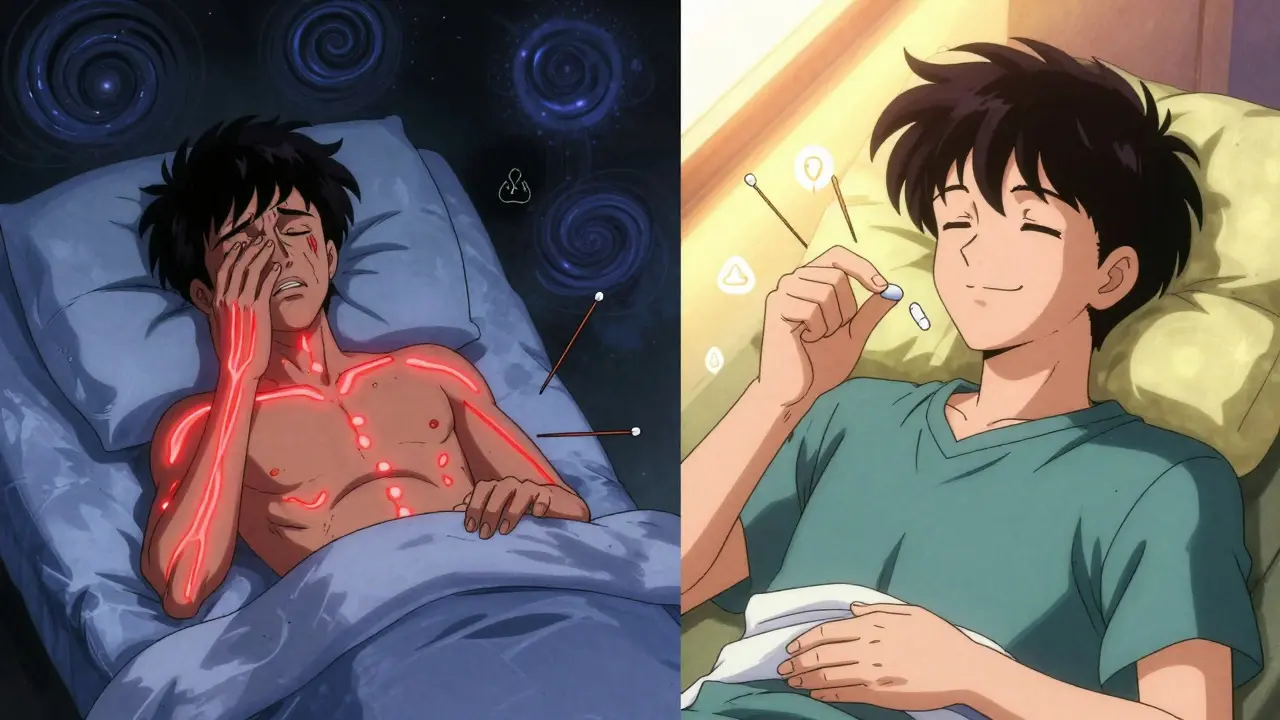
These symptoms usually peak within the first 1-2 weeks after a dose reduction and then slowly improve. But for some, they can last for weeks or even months - especially if the taper was too fast.
Supportive Medications Can Help
You don’t have to suffer through withdrawal alone. Doctors can prescribe non-opioid medications to ease symptoms:
- Clonidine (0.1-0.3 mg twice daily): Reduces sweating, anxiety, rapid heartbeat, and high blood pressure.
- Hydroxyzine (25-50 mg at bedtime): Helps with anxiety and sleep problems.
- Loperamide (2-4 mg as needed): Controls diarrhea.
- NSAIDs or acetaminophen: Manage lingering pain without opioids.
Some patients also benefit from non-drug support - like acupuncture, physical therapy, or mindfulness practices. These don’t replace medication, but they help your body adjust.
What About Naloxone?
If you’re on more than 50 MME per day, have a history of overdose, or take benzodiazepines, your doctor should give you naloxone before starting the taper. Naloxone reverses opioid overdoses. It’s not just for emergencies - it’s a safety net.
Why? Because 41% of overdose deaths during tapering happen within the first 30 days. Your tolerance drops fast. If you relapse - even by taking your old dose - you could overdose. Naloxone can save your life.
Success Isn’t Always About Stopping Completely
Many people think the goal is to get off opioids entirely. But that’s not always realistic - or even the best outcome. The CDC and National Academy of Medicine now say: functional improvement is the real goal.
Studies show that 68% of successful tapering plans don’t aim for zero opioids. Instead, they aim for lower doses that still let patients move, sleep, and live without severe side effects. Some people stabilize at 20 MME. Others at 40. That’s okay. Reducing harm matters more than hitting a number.
Coordinated Care Makes All the Difference
Tapering isn’t a solo project. It works best when you have a team. That means:
- Your prescriber
- A pain specialist
- A mental health counselor
- A physical therapist
Patients with a history of trauma, depression, or substance use disorder need extra support. A 2021 JAMA study showed that combining tapering with cognitive behavioral therapy (CBT) and physical therapy cut failure rates from 44% down to 19% in six months.
Don’t try to do this alone. Ask for help. Your mental health is just as important as your physical health.
Documentation and Consent Are Non-Negotiable
The Oregon Health Authority found that 87% of successful tapers involved a signed agreement between patient and provider. This isn’t bureaucracy - it’s protection. The agreement should include:
- Your current dose
- The taper schedule
- Goals (pain reduction? better sleep? less drowsiness?)
- What to do if symptoms get worse
- How often you’ll check in
And here’s the most important part: you must agree to it. The CDC found that tapers with patient consent had 47% fewer dropouts than those imposed without discussion.
What If You’re Asked to Taper Too Fast?
Between 2017 and 2020, 12% of primary care providers mistakenly stopped opioids abruptly because they misunderstood the 2016 CDC guidelines. That led to at least 17 documented suicides. That’s not just tragic - it’s preventable.
If your doctor suggests cutting your dose by 30% in two weeks - or worse, stopping cold turkey - ask for evidence. Say: “Can we follow the 2022 CDC guidelines on slow tapering?” If they refuse or dismiss you, seek a second opinion.
What’s New in 2026?
Since January 1, 2024, all licensed prescribers in the U.S. must complete 8 hours of continuing education on opioid tapering. This was mandated by the DEA to prevent dangerous practices. You’re now more protected than ever.
And if you’re in the UK - like me in Bristol - you’ll find similar guidance from the National Institute for Health and Care Excellence (NICE). Their recommendations mirror the CDC: slow, patient-centered, and evidence-based.
Final Thoughts
Tapering opioids isn’t about punishment. It’s about safety. It’s about giving your body a chance to heal. It’s about reclaiming your life from side effects that steal your energy, your focus, and your peace.
There’s no rush. There’s no leaderboard. The goal isn’t to be opioid-free by a certain date. The goal is to feel better - without risking your life in the process.
If you’re thinking about tapering, start with a conversation. Ask your doctor: “What’s the plan? How will we know if it’s working? What if things get hard?” You have the right to a safe, respectful, and personalized approach.
And if you’ve been told to stop cold - walk out. Find someone who listens. Your life is worth more than a rushed prescription change.
Tim Schulz
March 12, 2026 AT 11:07"Cut by 10% every 2-4 weeks" - sounds like someone’s trying to make a TikTok trend out of withdrawal. I’ve seen people get kicked off opioids faster than a Tinder date after saying "I love you". And don’t even get me started on the "signed agreement" nonsense. Next they’ll make us sign a waiver before breathing.
Meanwhile, my cousin’s mom tapered over 18 months with acupuncture, CBD, and a therapist who actually listened. She’s hiking again. No drama. No trauma. Just patience. 🌿💪
Jinesh Jain
March 13, 2026 AT 01:38douglas martinez
March 13, 2026 AT 23:34Sabrina Sanches
March 14, 2026 AT 12:25Shruti Chaturvedi
March 15, 2026 AT 12:55Katherine Rodriguez
March 15, 2026 AT 20:41Devin Ersoy
March 16, 2026 AT 02:52Scott Smith
March 17, 2026 AT 12:47Sally Lloyd
March 19, 2026 AT 03:22Emma Deasy
March 20, 2026 AT 23:03tamilan Nadar
March 21, 2026 AT 14:32Adam M
March 22, 2026 AT 17:12Rosemary Chude-Sokei
March 23, 2026 AT 12:29Noluthando Devour Mamabolo
March 24, 2026 AT 18:43