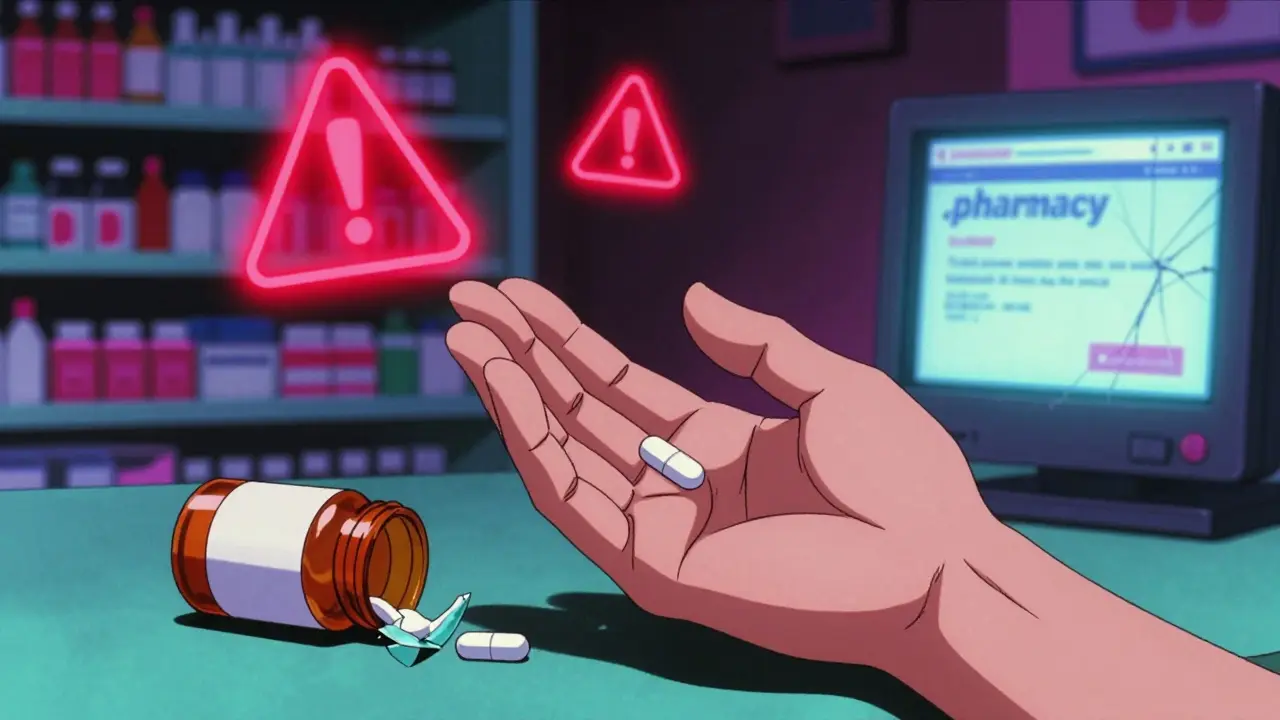
Every year, hundreds of thousands of people around the world take pills they think are real medicine-only to find out too late they were poisoned by fakes. These aren’t just poor-quality copies. They’re dangerous, sometimes deadly, and often impossible to spot without knowing what to look for. The counterfeit medication problem isn’t going away. In fact, it’s getting smarter, deadlier, and more widespread.
Pricing That’s Too Good to Be True
If a pill costs half-or even a tenth-of what you’d pay at your local pharmacy, run. Legitimate pharmaceutical companies don’t slash prices by 80%. Even discount programs and generic versions rarely drop more than 20% below the standard retail price. According to Truemed’s 2024 analysis, websites offering drugs at 50-80% off are almost always selling fakes. The DEA’s Operation Press Your Luck in September 2024 confirmed that nearly every online pharmacy pushing extreme discounts was distributing counterfeit opioids, erectile dysfunction meds, or weight loss drugs. A 10mg oxycodone tablet that normally costs $3-$5 at a pharmacy might be listed for $0.50 online. That’s not a deal. That’s a death sentence. Many of these fake pills contain fentanyl-enough to kill an adult in one dose.Packaging That Doesn’t Add Up
The packaging is the first place counterfeiters cut corners. Look closely. Spelling errors? That’s a red flag. The FDA’s 2023 database shows 63% of counterfeit drugs have typos on the label-misspelled drug names, wrong dosage instructions, or incorrect manufacturer details. Batch numbers that don’t match the format? Expiry dates printed in the wrong place? Low-resolution printing that looks blurry when you zoom in? These aren’t accidents. Legitimate manufacturers use high-precision printing and strict quality control. Fake bottles often have seals that look like they were re-glued. The plastic blister packs might feel flimsy, or the foil backing might peel off too easily. Even small things like the color of the ink or the font size of the “Rx” symbol can be off. One pharmacist in Ohio noticed the “Pfizer” logo on a fake Viagra bottle was slightly smaller than the real one-just 0.2mm. That’s the kind of detail only someone who’s seen thousands of real packages would catch.Tablets That Look, Feel, or Taste Wrong
If your medication looks different from the last time you filled the prescription, don’t ignore it. Counterfeiters try to mimic the shape, color, and imprint, but they rarely get it perfect. Real tablets have consistent weight, diameter, and hardness. The USP standard allows no more than a 5% variation in weight. Fake pills often crumble in your fingers, feel too light, or have uneven edges. Some dissolve in water within two minutes-real ones usually take 20-30 minutes. One Reddit user reported that their fake metformin tablets turned to mush in seconds, while their real ones stayed intact for over a minute. Smell matters too. If your insulin or antibiotic suddenly smells chemical or sour, it’s not right. And taste? Some counterfeit painkillers have a bitter, metallic aftertaste. That’s not the drug. That’s the fentanyl or amphetamine hidden inside.Where You Buy Matters More Than You Think
Buying medication online is risky-but not all online pharmacies are dangerous. The only websites you should trust are those with the .pharmacy domain. These are verified by the National Association of Boards of Pharmacy (NABP). As of January 2025, there are only 6,214 of these verified sites. Meanwhile, Interpol found over 35,000 illegal online pharmacies operating in 2024. Many of these sites look professional. They use real logos, stock photos of doctors, and fake testimonials. But they don’t require a prescription. That’s a huge red flag. Legitimate pharmacies in the U.S. and EU are required to verify prescriptions. If a website lets you click “Buy Now” without asking for a doctor’s note, it’s a scam. Even worse, many of these sites ship from countries with no drug safety regulations-like China, India, or Russia-where counterfeit production is rampant.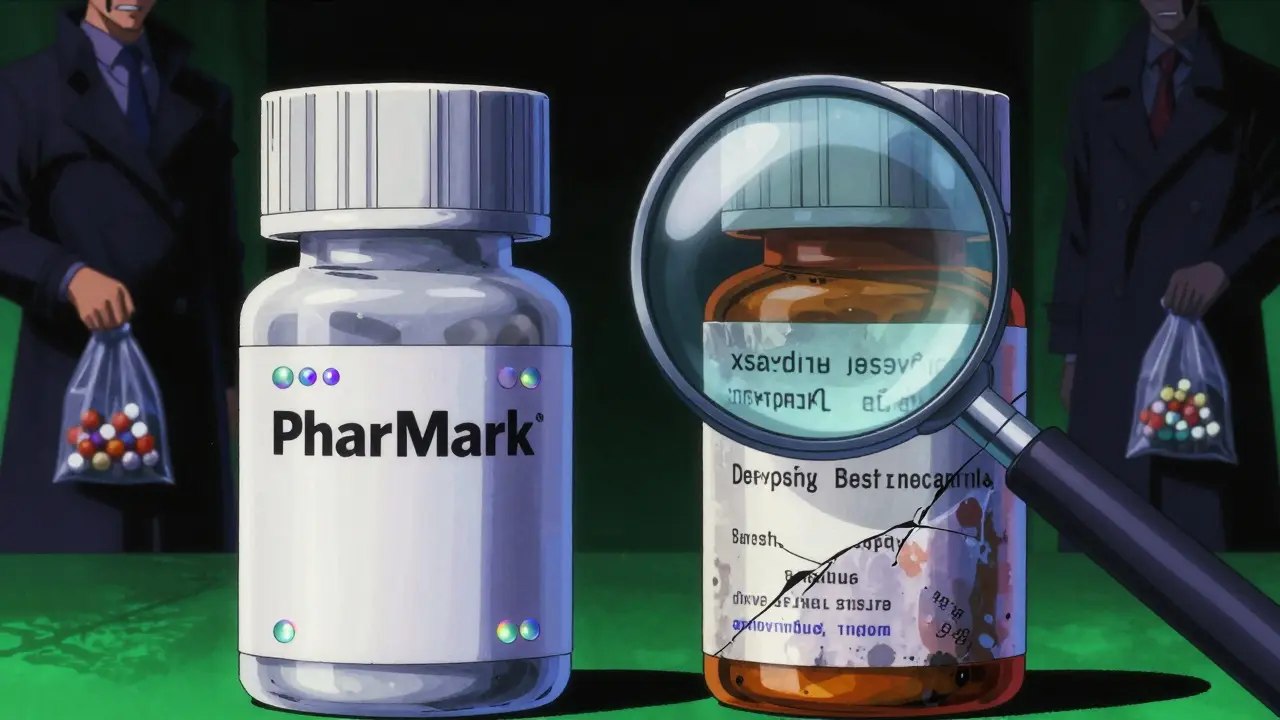
Side Effects That Don’t Match the Prescription
If you start feeling dizzy, nauseous, or unusually tired after taking a new batch of medicine-especially if you’ve taken it before without issues-stop taking it. The FDA reports that 43% of counterfeit medication users experience unexpected side effects. In one case documented in the Journal of Clinical Pharmacy and Therapeutics, patients taking what they thought was metformin for diabetes ended up with severe hypoglycemia. Why? The fake pills contained glyburide, a completely different diabetes drug that forces the body to release insulin. Another patient took fake Viagra and ended up in the ER with a racing heart. The pill didn’t have sildenafil-it had 15mg of amphetamine. These aren’t rare cases. The DEA’s 2024 report found that 22% of counterfeit pills contain the wrong active ingredient entirely. Some contain no active ingredient at all. Others contain toxic fillers like talc, chalk, or even rat poison.How to Verify Your Medication
You don’t need to be a pharmacist to spot a fake. Follow these six steps every time you get a new prescription:- Check the seal. Tamper-evident packaging should show visible damage if opened. If the cap or blister pack looks resealed, don’t use it.
- Verify the NDC code. Every drug has a National Drug Code (NDC). Look it up on the FDA’s online directory. If it doesn’t show up, the drug isn’t legitimate.
- Call the manufacturer. Find the phone number on the official website (not the bottle). Ask if the lot number is valid. Pfizer says 37% of counterfeit lot numbers don’t exist in their system.
- Compare the pill. Use the manufacturer’s online image library. Pfizer, Novo Nordisk, and other major companies have free tools showing what their real pills look like. Look at the imprint, color, shape, and size.
- Do a solubility test. Put a tablet in a glass of water. Let it sit for 30 minutes. Real pills shouldn’t dissolve completely. If it turns to sludge, it’s fake.
- Report it. If you suspect a counterfeit, file a report with the FDA’s MedWatch program within 24 hours. Your report helps protect others.
The New Threat: AI-Generated Packaging
Counterfeiters aren’t just copying labels anymore-they’re using AI to generate perfect replicas. The WHO’s November 2024 warning highlighted that AI can now produce packaging that fools 68% of consumers on first glance. These fakes mimic holograms, color gradients, and embossed text with near-perfect accuracy. But here’s the catch: they still fail under microscopic analysis. Legitimate holograms contain microtext only visible at 50x magnification. Real pills have proprietary markings-like the new FDA-approved PharmMark system using luminescent nanoparticles that glow under UV light. These features are impossible to copy without access to the manufacturer’s secret technology. If you’re unsure, use a UV flashlight (365nm wavelength) on the pill or packaging. If nothing glows, it’s likely fake.
James Dwyer
January 26, 2026 AT 14:59This is terrifying stuff, but honestly, it’s the only thing keeping me alive. I’ve been on metformin for eight years, and last month I noticed the pills looked off-slightly lighter, smoother edges. I called my pharmacy and they confirmed it was a batch from a new distributor. Turned out it was fake. I’m alive because I checked. Don’t wait until you’re in the ER.
jonathan soba
January 28, 2026 AT 09:21Let’s be real-the system is broken. The FDA’s database has a 17% error rate in NDC matching. You think you’re safe checking the code? You’re just playing Russian roulette with a spreadsheet. The real solution isn’t vigilance-it’s dismantling the pharmaceutical monopoly that lets this happen in the first place.
matthew martin
January 29, 2026 AT 05:29Man, I used to think I was paranoid for checking my meds. Then my uncle took what he thought was his blood pressure pill-ended up in the hospital with a heart rate of 180. Turns out it was amphetamine disguised as lisinopril. Now I carry a UV flashlight in my pill organizer. Yeah, it looks weird. But so does dying because you trusted a website that said ‘Free Shipping.’ The fake pills are getting smarter, but so are we. Just gotta know the signs.
I’ve started taking pics of every new prescription and comparing them to the last one. Even the font on the bottle matters now. I don’t care if it’s overkill. Better to look like a lunatic than a corpse.
And if you’re buying online? Only .pharmacy. No exceptions. I don’t care if the site looks like a Mayo Clinic affiliate. If it doesn’t have that little badge, it’s a trap. The DEA’s got a whole map of these scams. Bookmark it. Share it. Save someone’s life.
Also, the AI-generated packaging thing? Wild. I saw a video where a fake Advil bottle had perfect holograms, embossing, even the slight gloss of the real thing. But under UV? Nothing. Real ones glow like a neon sign. So yeah-grab a $10 UV light from Amazon. It’s the cheapest insurance policy you’ll ever buy.
And don’t even get me started on the taste. I took a fake gabapentin once. Tasted like burnt plastic and regret. I spat it out. That’s the moment you stop being a patient and start being a detective.
Katie Mccreary
January 29, 2026 AT 15:24You’re all just panicking over pills. I’ve been buying from Indian pharmacies for years. Never had an issue.
Mel MJPS
January 31, 2026 AT 04:17I just want to say thank you to everyone who shared their stories. I was about to refill my insulin online because it was 80% cheaper. Now I’m going to my local pharmacy tomorrow. I don’t have the money for this, but I’m not risking my life for a discount. You’re not alone.
Kevin Kennett
January 31, 2026 AT 23:07That UV flashlight tip? Genius. I bought one last week after reading this. My wife laughed at me. Then she found a fake Zoloft bottle in the medicine cabinet-bought from a ‘trusted’ site during a panic buy last year. We both turned pale. Now she’s the one reminding me to check the lot numbers. We’re not just saving ourselves-we’re saving our kid from growing up without either of us.
Robert Cardoso
February 1, 2026 AT 19:04Let’s not pretend this is about consumer awareness. This is corporate negligence dressed up as a public health crisis. The FDA has known about this for a decade. They’ve done nothing but issue press releases while the death toll climbs. The real villains aren’t the scammers-they’re the CEOs who profit from the chaos. The Drug Supply Chain Security Act? A PR stunt. It won’t be enforced until 2030. By then, another 200,000 people will be dead. You’re not being paranoid. You’re being correct.
Jess Bevis
February 3, 2026 AT 16:59Used to work in pharma logistics. Saw fake batches slip through customs. One shipment had ‘ibuprofen’ labeled in English… but the tablets were printed in Cyrillic. The box said ‘Made in Germany.’ The pills were made in a basement in Kyiv. No one cared until someone died.
fiona vaz
February 4, 2026 AT 09:55I’ve started keeping a log of every pill I take-date, time, batch, appearance. It’s tedious, but it’s peace of mind. And if you’re ever unsure, call the manufacturer. They’ll answer. They want you to be safe.
Chris Urdilas
February 4, 2026 AT 10:43So let me get this straight-we’re supposed to carry a UV light, call Pfizer, check NDC codes, and Google pill images… just to take a pill? What’s next? A fingerprint scan to swallow aspirin?
SRI GUNTORO
February 5, 2026 AT 06:43If you’re buying medicine online, you deserve what you get. People don’t get sick from fake pills-they get sick because they’re too lazy to go to a real doctor.