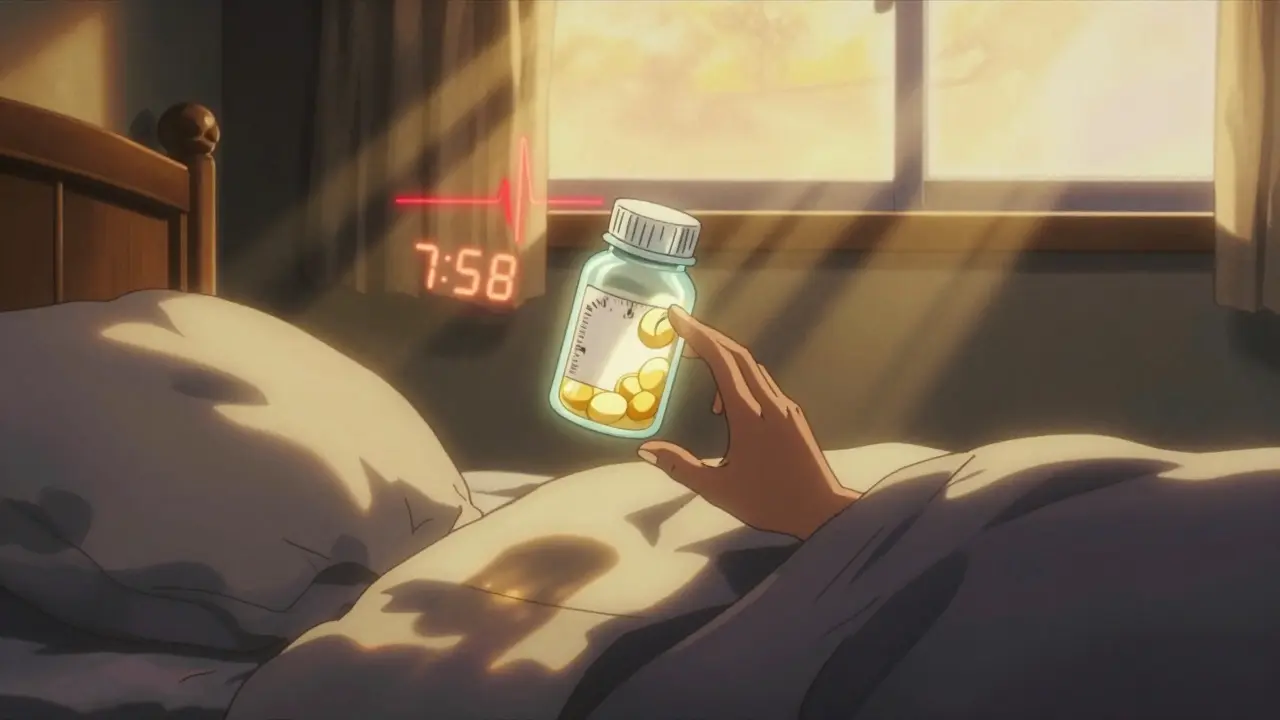
Skipping a pill because you’re running late, feeling fine, or just forgetting isn’t harmless. It’s a gamble with your health-and the stakes are higher than most people realize. When your doctor prescribes a medication, the timing isn’t arbitrary. It’s calculated down to the hour to keep the drug at the right level in your blood. Miss a dose, and that balance breaks. For some people, it means a spike in blood pressure. For others, it could mean a return of infection, a dangerous clot, or even a trip to the hospital.
Why Timing Matters More Than You Think
Think of your body like a tank that needs a steady flow of medicine. If you take your pill at 8 a.m. every day, your doctor designed the dose to last until the next one. But if you skip it, the level drops. If you take it late, it spikes. Both mess with how well the drug works. Take antibiotics, for example. You start feeling better after three days. It’s tempting to stop. But the bacteria aren’t all gone. The ones that survive are the toughest. They multiply. And now, the same antibiotic won’t work next time. That’s how antibiotic resistance starts-and it’s not science fiction. The CDC says it kills over 1.2 million people globally every year. Completing your full course isn’t about feeling better. It’s about killing every last bug. Same goes for blood pressure meds. High blood pressure doesn’t give you symptoms. You won’t feel dizzy or headachy when it’s high. But it’s quietly damaging your heart, kidneys, and arteries. If you skip doses, your pressure swings wildly. That’s when strokes and heart attacks happen. The American Heart Association says nearly half of American adults have high blood pressure. And half of them aren’t taking their meds correctly. That’s not just risky-it’s deadly.Medicines That Can’t Wait
Some drugs are so sensitive to timing that even an hour off can cause problems.- Warfarin (a blood thinner): Too much? You could bleed internally. Too little? You could get a clot. Your INR levels are checked every few weeks to make sure you’re in the safe zone. Skip a dose, and that balance collapses.
- Insulin: If you take it before meals, skipping a meal means your blood sugar crashes. Low blood sugar can make you dizzy, confused, or even unconscious. It’s not a minor inconvenience-it’s an emergency.
- Immunosuppressants: After a transplant, your body tries to reject the new organ. These drugs stop that. Miss a dose, and your immune system can turn on the organ. Rejection isn’t always obvious. It can sneak up silently.
- Anti-seizure meds: Even one missed dose can trigger a seizure in someone who’s been stable for months.
Why People Skip-And What They Don’t Realize
People skip doses for real reasons, not laziness.- Forgetfulness: Life gets busy. Kids, work, appointments. It’s easy to lose track.
- Feeling fine: If you’re not sick, why keep taking the pill? This is the biggest trap with blood pressure, cholesterol, and diabetes meds. They work silently.
- Side effects: Nausea, dizziness, fatigue-people think it’s the medicine, not the disease. But stopping can make things worse.
- Cost: A $500 monthly pill is impossible for some. But skipping doses doesn’t save money. It leads to ER visits, hospital stays, and higher bills down the line.
- Confusion: Three pills in the morning, two at night, one with food, one on an empty stomach? No wonder people get mixed up.

How to Get It Right-Without Stress
You don’t need to be perfect. You just need a system.- Use a pill organizer: Weekly or monthly boxes with morning, afternoon, evening slots. Fill them once a week. If you don’t see the pill, you didn’t take it.
- Set phone alarms: Label them. Not just “take pill.” Say “Take Lisinopril for BP.” That way, even if you forget why, you know what it’s for.
- Pair it with a habit: Brush your teeth? Take your pill right after. Drink your morning coffee? Take it with that. Habits stick better than reminders.
- Ask your pharmacist: They’re not just the people who hand out pills. They’re trained in medication timing. Ask them to review your whole list. Can any meds be combined? Can you switch to once-daily versions? Many pharmacies offer free medication reviews.
- Use the teach-back method: When your doctor gives you instructions, say: “So, to make sure I got it right-I take this pill every morning with breakfast, and I don’t skip it even if I feel fine. Is that correct?” If they nod, you’re good.
What Happens When You Skip-Real Stories
A 72-year-old man in Sydney stopped his blood pressure meds because he thought he was “cured.” He felt fine. Two months later, he had a stroke. He survived-but lost the use of his right arm. A woman with diabetes skipped her insulin on days she didn’t eat much. She thought she was being smart. She ended up in the ER three times in six months with low blood sugar. She didn’t realize her body was still using insulin even when she wasn’t eating. These aren’t rare. They’re common. Dignity Health reports that patients who miss doses often end up with worsening symptoms, new complications, and more hospital visits. The good news? Most of these problems can be reversed-if you start taking your meds again, on time.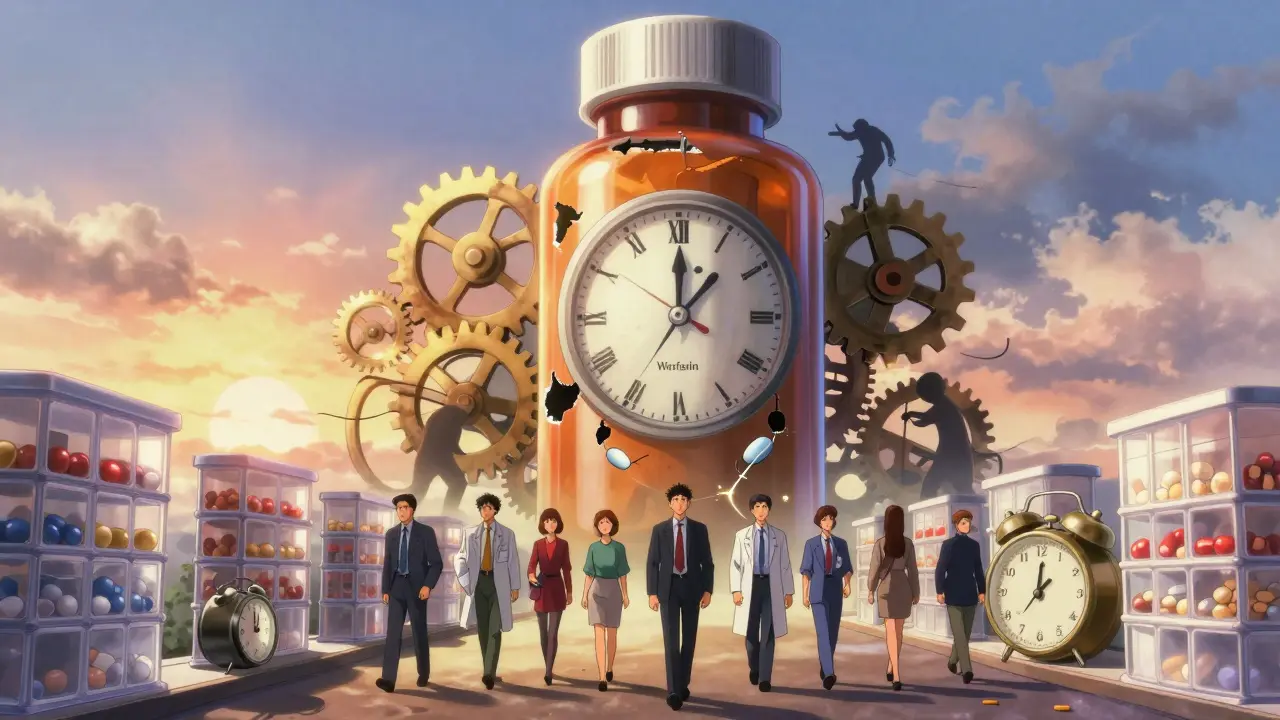
What the System Is Doing About It
It’s not just on you. The healthcare system is waking up. The U.S. Department of Health and Human Services’ Million Hearts initiative is pushing for better communication between doctors and patients. Medicare Part D plans now offer free pill organizers and medication therapy management-where a pharmacist sits down with you and sorts out your whole regimen. Pharmacies are rolling out smart pill bottles that beep when it’s time to take your medicine-and text your caregiver if you miss a dose. Apps like Medisafe and MyTherapy track your doses and send reminders. Some even sync with your doctor’s system. But tech won’t fix it alone. The real fix is communication. If your doctor says “take once daily,” but you’re not sure if that’s morning or night-ask. If the label says “with food,” but you’re not sure what counts as food-ask. If you can’t afford your meds-ask. There are programs. There are discounts. There are options. But you have to speak up.It’s Not About Perfection. It’s About Consistency.
You don’t have to be flawless. Life happens. You’ll forget sometimes. That’s okay. But if you’re skipping doses regularly, you’re not just risking your health-you’re wasting the time, money, and effort that went into prescribing that medicine in the first place. The goal isn’t to memorize every instruction. It’s to build a routine so simple, so automatic, that you don’t have to think about it. A pillbox. An alarm. A habit. That’s all it takes. Your body doesn’t care if you’re tired, busy, or stressed. It only cares if the medicine is there-on time, every time. And if you want to stay healthy, so should you.What happens if I miss a dose of my blood pressure medication?
If you miss a single dose, take it as soon as you remember-unless it’s almost time for your next dose. Then skip the missed one and go back to your regular schedule. Never double up. Missing doses causes your blood pressure to spike and drop unpredictably, which increases your risk of stroke or heart attack. Consistency is more important than perfection.
Can I stop taking my antibiotics if I feel better?
No. Feeling better doesn’t mean the infection is gone. Stopping early lets the strongest bacteria survive and multiply. This leads to antibiotic resistance, meaning the drug won’t work next time-even if you take it exactly right. Always finish the full course, even if it’s 10 days and you’re fine after three.
Why do some pills need to be taken with food and others on an empty stomach?
Food can change how your body absorbs the drug. Some pills need food to reduce stomach upset. Others need an empty stomach so food doesn’t block absorption. For example, taking certain antibiotics with dairy can make them useless. Always follow the label. If it’s unclear, ask your pharmacist.
Is it okay to split pills to save money?
Only if your doctor or pharmacist says it’s safe. Some pills are designed to release medicine slowly. Splitting them can cause too much drug to enter your system at once. Others have coatings that protect your stomach or control absorption. Never split a pill without checking first.
How can I remember to take my meds if I have a complex schedule?
Use a weekly pill organizer and set phone alarms labeled with the drug name and purpose. Ask your pharmacist if any meds can be switched to once-daily versions. Many pharmacies offer free medication reviews to simplify your regimen. Pair each dose with a daily habit-like brushing your teeth or eating breakfast-to make it automatic.
Are there free tools to help me take my meds on time?
Yes. Many pharmacies offer free pill organizers. Medicare Part D plans provide free medication therapy management, where a pharmacist reviews all your drugs for timing conflicts. Apps like Medisafe and MyTherapy are free and send reminders. Your doctor or pharmacist can help you find local programs too.
Next Steps: What to Do Today
- Check your medicine cabinet. Do you have any pills you haven’t taken in weeks? Don’t toss them-call your doctor first.
- Write down every medication you take, including doses and times. Bring it to your next appointment.
- Ask your pharmacist: “Can any of these be simplified?”
- Set one phone alarm today for your next dose. Label it clearly.
- If cost is an issue, say so. There are programs to help. You’re not alone.
Siobhan K.
December 21, 2025 AT 02:15Let’s be real - skipping meds isn’t about laziness, it’s about systems failing people. Doctors hand you a list of 12 pills with no context, no visual aid, no follow-up. Then they act shocked when you stop taking them. The real issue isn’t patient compliance - it’s healthcare design that treats people like robots who should remember everything.
Brian Furnell
December 22, 2025 AT 04:27As someone who’s managed anticoagulants for 8 years, I can tell you - INR fluctuations from missed doses are terrifying. One weekend I skipped two doses because I was traveling and forgot my pillbox. My INR dropped to 1.8. Two weeks later, I had a pulmonary embolism. It wasn’t ‘bad luck.’ It was pharmacokinetics catching up. The body doesn’t negotiate. It doesn’t care if you were ‘busy.’ It just reacts. And when it reacts badly, you’re the one paying the price - physically, emotionally, financially.
Erika Putri Aldana
December 22, 2025 AT 08:08Y’all act like skipping a pill is the end of the world… but have you seen the price of insulin? 😑 I’m not skipping because I’m careless - I’m skipping because I’m choosing between food and my life. And now you wanna guilt-trip me? Thanks for the lecture, Dr. Perfect.
Jerry Peterson
December 23, 2025 AT 21:24As a Nigerian immigrant in the US, I’ve seen both sides. Back home, people take meds religiously because they know what happens when they don’t - no hospitals, no backups. Here, people have access but no clarity. The system gives you a prescription and a 3-page leaflet in 8-point font. No wonder folks give up. It’s not about willpower - it’s about accessibility. Make it simple. Make it free. Make it human.
Meina Taiwo
December 24, 2025 AT 05:15My mom took her BP meds for 15 years. One day she missed three. She had a stroke two days later. Never again. Just take the pill.
Grace Rehman
December 24, 2025 AT 07:40Consistency isn’t about discipline - it’s about ritual. Brush your teeth, wash your face, take your pill. Same time, same order, same place. You don’t think about it. You just do it. That’s how the body learns. That’s how survival works. Not willpower. Not motivation. Just repetition. Make it automatic, and you’re already winning.
mukesh matav
December 26, 2025 AT 07:07I take my meds at 8:15 p.m. every night, after my tea. I don’t even think about it anymore. It’s just part of the night. If I miss it, I feel like something’s off - like I forgot to lock the door. It’s not about fear. It’s about rhythm. The body remembers. It always does.
Jay lawch
December 26, 2025 AT 12:13Let’s not pretend this is about health. This is about control. The pharmaceutical industry profits from chronic dependency. They design drugs to be taken daily, not cured. They profit from your fear of relapse. They profit from your confusion. They profit from your guilt. And now they’ve convinced you that skipping a pill is a moral failure. But what if the system is the disease? What if the real problem isn’t you forgetting - it’s that you’re being sold a lifetime of pills instead of a cure? We’ve been trained to see medicine as salvation, not a temporary bandage on a broken system.
Theo Newbold
December 28, 2025 AT 05:12So you say ‘never double up’ - but have you ever seen what happens when someone takes two warfarin pills by accident? Or two insulin shots? ER visits spike. Insurance denies claims. Families get ruined. And the system still acts like the patient is the problem. The real failure? No one taught them how to handle mistakes. No one told them what to do when they mess up. Just ‘don’t miss.’ No backup plan. No safety net. That’s not healthcare. That’s a gamble with your life.
Peggy Adams
December 28, 2025 AT 14:58My cousin’s doctor told her to take her meds ‘with food’ - so she ate a whole pizza every morning. She’s now on dialysis. Turns out ‘food’ means a banana, not a deep-dish. The system doesn’t care if you’re confused. It just wants you to comply. And if you die? Well, there’s always another patient.