
When you're pregnant or breastfeeding, a migraine isn't just a headache-it's a crisis. You don't want to risk your baby's health, but you also can't ignore the pain that makes it hard to feed, sleep, or even hold your newborn. The truth? Migraine doesn't go away just because you're expecting or nursing. In fact, untreated migraines raise your risk of preterm birth, preeclampsia, and low birth weight. The good news? There are safe, effective ways to manage them without putting your baby at risk.
Why Migraines Change During Pregnancy
Many women find their migraines improve during pregnancy, especially in the second and third trimesters. That’s because estrogen levels rise steadily, and estrogen has a calming effect on the brain’s pain pathways. But for about 1 in 5 women, migraines get worse-or start for the first time. And after delivery? That’s when things flip. Estrogen drops sharply, sleep disappears, and stress spikes. That’s why 60-70% of women who had migraines before pregnancy see them return in the first few weeks postpartum.First Line: Non-Drug Treatments That Actually Work
Before you reach for a pill, try these proven, zero-risk methods:- Sleep 7-9 hours a night. Even one night of poor sleep can trigger a migraine. Nap when your baby naps-even if it’s just 20 minutes.
- Move daily. Thirty minutes of walking, swimming, or prenatal yoga five days a week reduces migraine frequency by up to 40%. No need to push hard-just keep moving.
- Hydrate and eat small meals. Dehydration and low blood sugar are top triggers. Drink 2-3 liters of water daily and eat every 3-4 hours. Keep nuts, fruit, or crackers handy.
- Try acupuncture. A 2021 study with 120 pregnant women found that acupuncture reduced migraine frequency by 50% in 68% of participants. Look for a practitioner certified in prenatal care.
- Use massage. Two 30-minute sessions a week in the second and third trimesters cut migraine days by 35%. Focus on neck, shoulders, and scalp.
- Try Cefaly. This FDA-cleared device sends gentle electrical pulses through your forehead to block migraine signals. Used daily, it reduces attacks by 50% in two-thirds of users. Safe during pregnancy and breastfeeding.
- Practice biofeedback. This trains you to control stress responses using sensors. Studies show 40-60% fewer migraines when practiced 3-5 times a week.
Acute Treatment: What Pills Are Safe?
When non-drug methods aren’t enough, you need relief-and not all painkillers are equal.Acetaminophen (Tylenol) is your safest bet. Up to 3,000 mg per day (six 500 mg tablets) is considered safe throughout pregnancy and breastfeeding. No link to birth defects or infant harm. It’s the first choice for most doctors.
Ibuprofen (Advil, Motrin) is safe during the first two trimesters and while breastfeeding. Avoid it after 30 weeks-it can affect fetal heart development. For nursing, it’s one of the safest NSAIDs. Relative Infant Dose (RID) is just 0.65%, meaning almost none passes into breast milk.
Sumatriptan (Imitrex) is the most studied triptan for pregnancy and breastfeeding. No increased risk of birth defects. Studies tracking over 1,200 pregnancies found no rise in major malformations. While it slightly increases risk of uterine atony or heavy bleeding during labor, the benefit often outweighs the risk for severe migraines. For breastfeeding: RID is only 3%, and it’s classified as L1 (safest) by Hale’s Lactation Risk Criteria. Experts recommend taking it right after nursing and waiting 3-4 hours before the next feed to minimize exposure.
Rizatriptan (Maxalt) has even lower milk transfer (RID 1.2%) and is considered safe. Limited data, but no red flags.
What to avoid:
- Ergots (DHE, Cafergot)-can cause uterine contractions and restrict blood flow to the placenta. Never use.
- Valproic acid-linked to 11% risk of neural tube defects. Absolute no.
- Feverfew-increases risk of miscarriage by 38%. Herbal doesn’t mean safe.
Prevention: Stopping Migraines Before They Start
If you get migraines more than twice a week, prevention matters. But not all preventives are safe.Magnesium is your best non-drug option. Take 400-600 mg daily. A Cochrane Review of 550 pregnant women showed a 35% drop in migraine frequency-with zero side effects to mom or baby. Look for magnesium glycinate or citrate for better absorption.
Riboflavin (B2) at 400 mg/day may help. Limited data in pregnancy, but no known risks. Often used in combination with magnesium.
Propranolol is sometimes used for prevention. But it’s linked to a 15% higher risk of slow fetal growth and small placenta. Only consider if other options fail-and monitor baby’s growth closely with ultrasounds.
Cyclobenzaprine (a muscle relaxer) has been used in 127 pregnancies with no major birth defects reported. Use only short-term and under supervision.
Memantine is a dementia drug sometimes repurposed for migraines. Theoretical risk is low because it binds tightly to proteins and doesn’t cross the placenta easily. But data is thin-only use if absolutely necessary.
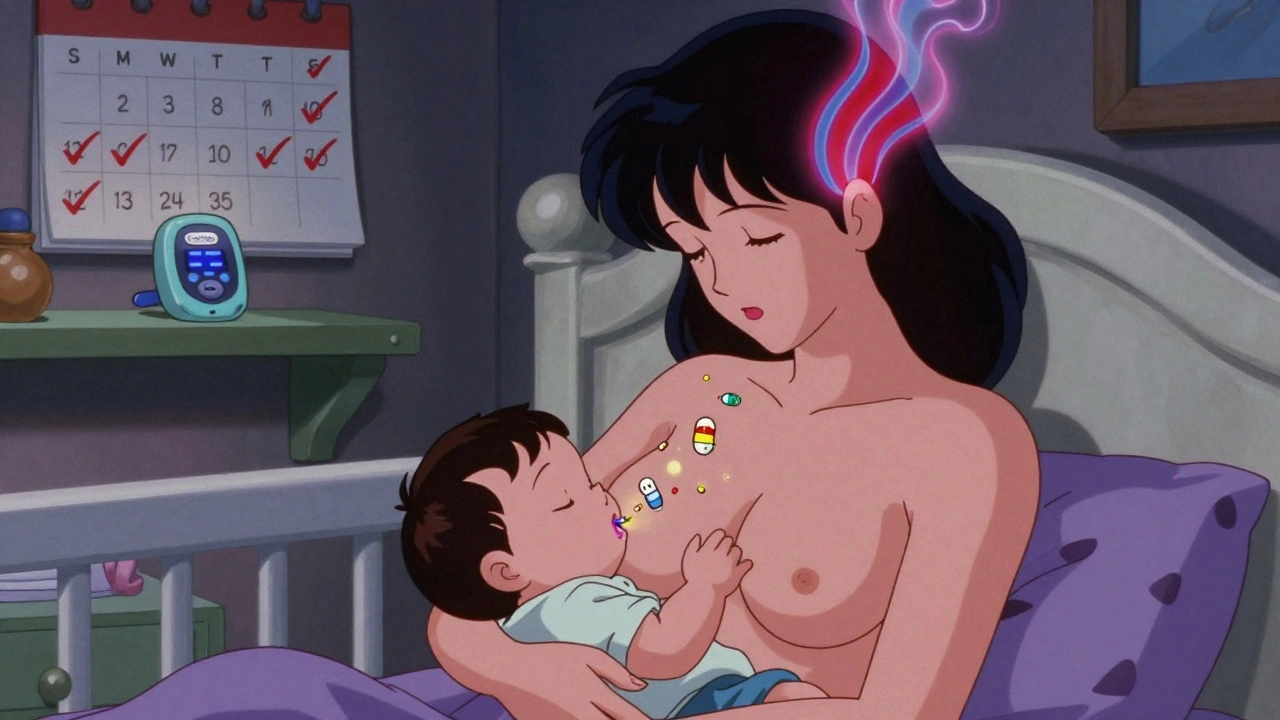
Breastfeeding-Specific: What’s Safe When You’re Nursing?
Once your baby arrives, your options expand. Many meds are safer in lactation than in pregnancy.Acetaminophen and ibuprofen remain top choices. Both have very low RID values and are compatible with breastfeeding.
Sumatriptan and rizatriptan are still safe. The RID is low, and no infant side effects have been reliably reported in dozens of case studies. Many moms use them without issue.
Metoclopramide (Reglan) and ondansetron (Zofran) help with nausea from migraines. Both have RID under 1% and are L2 classified-safe for breastfeeding.
Diphenhydramine (Benadryl) can help with sleep and mild migraines. RID is 3.5%, L2. Use sparingly-it can make babies drowsy.
Propranolol is still an option for prevention. RID is 0.3-0.5%. Watch your baby for signs of lethargy or slow heart rate-rare, but possible.
Amitriptyline and sertraline (antidepressants used for migraine prevention) are among the safest options. RID is low, and they’re often used for postpartum depression too.
Verapamil (a calcium channel blocker) has the lowest RID (.15-.2%) among preventive meds. Great for moms who need daily prevention.
Rimegepant (Nurtec ODT) was approved by the FDA in 2023 for both acute and preventive use. It’s classified as L2 for breastfeeding. No pregnancy data yet, so avoid in pregnancy until more is known.
Timing Matters: When to Take Meds for Breastfeeding Moms
If you’re using a medication with any milk transfer, timing is everything. Take your dose right after you finish nursing. That gives your body 3-4 hours to clear most of the drug before the next feed. This simple trick cuts infant exposure by 80% or more. Lactation consultants report a 94% success rate in helping moms continue breastfeeding using this strategy.What About Newer Treatments? CGRP Antagonists
Drugs like erenumab (Aimovig), fremanezumab (Ajovy), and galcanezumab (Emgality) are powerful migraine preventers. But they’re new-and pregnancy data is almost nonexistent. Experts recommend avoiding them during pregnancy. For breastfeeding? No data yet. The FDA classifies them as L3 (caution). Wait until more evidence is available.
The Bigger Picture: Why Treating Migraines Matters
It’s easy to think, “I should just tough it out.” But untreated migraines don’t just hurt-you. They affect your baby too.Chronic pain raises cortisol by 45-60%, disrupts REM sleep by 30-40%, and triples your risk of postpartum depression. That means less bonding, less responsive care, and higher stress for your infant. Proper migraine management isn’t selfish-it’s essential parenting.
And here’s the kicker: 42% of OB-GYNs and 68% of neurologists say they’re not trained to handle migraines in pregnant or nursing women. That’s a huge gap. Don’t wait for your doctor to bring it up. Bring your own research. Ask: “What’s the safest option for my baby?”
Real Stories, Real Results
A 2023 survey of 1,247 breastfeeding mothers showed:- 78% managed migraines with acetaminophen and ibuprofen alone-no breastfeeding interruption.
- 15% used triptans-92% saw no changes in their babies.
- 12% tried ergots-reported infant irritability.
- 87% who tried valproic acid stopped immediately due to safety fears.
On Reddit’s r/Migraine community, 63% of breastfeeding moms said non-drug tools like yoga and Cefaly helped them avoid meds entirely. One mom wrote: “I used magnesium, Cefaly, and ice packs for six months. No pills. No guilt. My baby slept through the night.”
Your Action Plan
- First trimester: Focus on sleep, hydration, and non-drug tools. Avoid all meds unless absolutely necessary.
- Second and third trimesters: Acetaminophen is safe. Triptans can be used cautiously. Avoid NSAIDs after 30 weeks.
- Postpartum: Acetaminophen, ibuprofen, and triptans are all safe with proper timing. Magnesium and riboflavin help prevent attacks.
- Always: Talk to your OB-GYN and a lactation consultant. Don’t guess. Use the RID scale-anything under 10% is generally safe.
You don’t have to suffer through pregnancy or breastfeeding. Safe, effective options exist. You’re not alone-and you’re not being selfish for wanting relief. Your health matters. Your baby’s well-being depends on it.
Lydia Zhang
December 3, 2025 AT 02:49Kay Lam
December 3, 2025 AT 17:36Irving Steinberg
December 4, 2025 AT 17:37Jack Arscott
December 5, 2025 AT 08:04Eric Vlach
December 6, 2025 AT 16:54Souvik Datta
December 8, 2025 AT 12:28Priyam Tomar
December 9, 2025 AT 22:18Matt Dean
December 10, 2025 AT 03:57Walker Alvey
December 11, 2025 AT 20:01Adrian Barnes
December 13, 2025 AT 14:57Jaswinder Singh
December 13, 2025 AT 18:04Bee Floyd
December 14, 2025 AT 14:57Jeremy Butler
December 15, 2025 AT 20:49