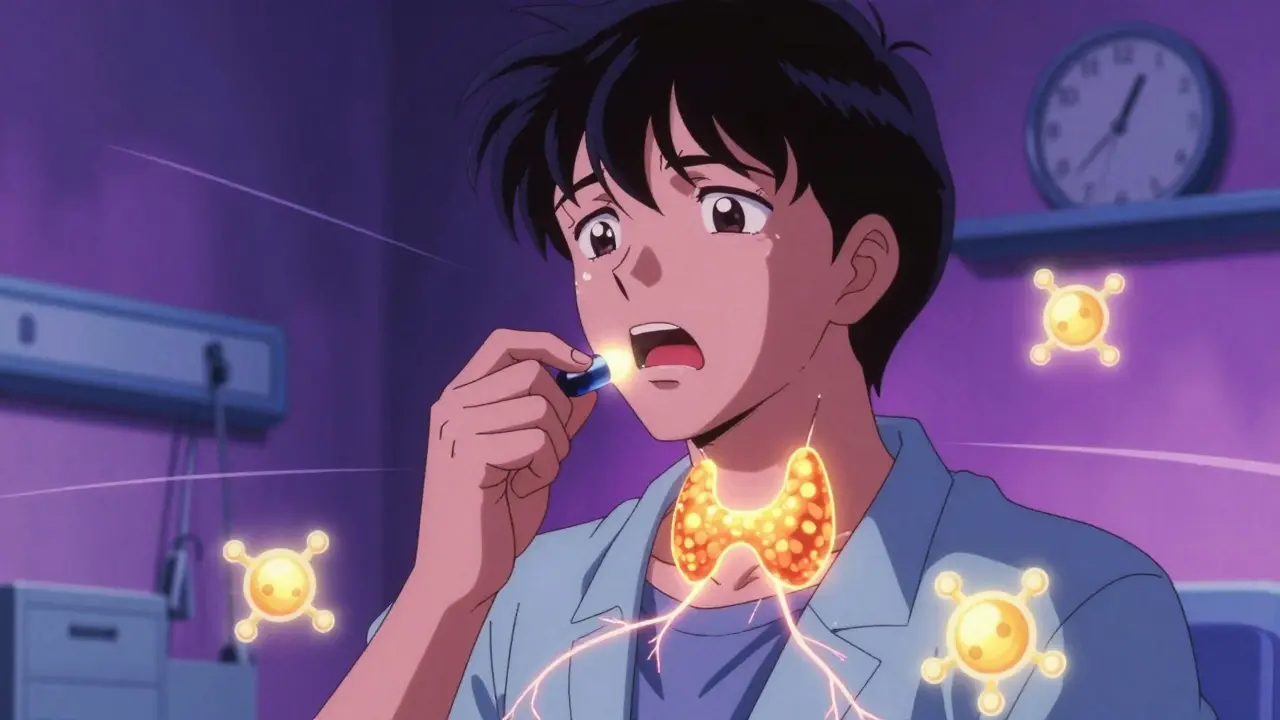
Thyroid cancer isn’t as common as breast or lung cancer, but it’s one of the fastest-growing cancer diagnoses in the U.S. Since the 1970s, cases have tripled-not because it’s becoming more dangerous, but because we’re getting better at finding it. Most people diagnosed today have a very good chance of living a long, normal life. But that doesn’t mean the treatment is simple. Understanding the types of thyroid cancer, how radioactive iodine therapy works, and what a thyroidectomy really involves can help you make smarter choices-if you or someone you care about is facing this diagnosis.
What Are the Main Types of Thyroid Cancer?
The thyroid gland has four main cell types, and each can give rise to a different kind of cancer. Not all are the same in how they behave or how they’re treated.Papillary thyroid carcinoma (PTC) is by far the most common, making up 70 to 80% of all cases. It grows slowly, often stays confined to the thyroid for years, and rarely spreads aggressively. Even when it moves to nearby lymph nodes, it usually responds well to treatment. Many people with PTC are under 45 when diagnosed, and their 10-year survival rate is over 98%.
Follicular thyroid carcinoma (FTC) accounts for about 10 to 15% of cases. It’s similar to PTC in outlook but has a slightly higher chance of spreading to distant organs like the lungs or bones. Unlike PTC, FTC doesn’t take up iodine as easily, which can make radioactive iodine therapy less effective.
Medullary thyroid carcinoma (MTC) comes from a different kind of cell in the thyroid and makes up only 3 to 5% of cases. It’s often linked to inherited gene mutations, especially in families with Multiple Endocrine Neoplasia type 2 (MEN2). MTC doesn’t respond to radioactive iodine at all because it doesn’t produce thyroid hormone. Surgery is the main treatment, and genetic testing is critical for family members.
Anaplastic thyroid carcinoma (ATC) is rare-less than 2% of cases-but it’s the most dangerous. It grows fast, spreads quickly, and is often diagnosed after it’s already beyond the neck. By definition, it’s always stage IV. Survival is measured in months, not years. Treatments are aggressive: surgery if possible, radiation, and targeted drugs like dabrafenib and trametinib for those with BRAF mutations.
How Radioactive Iodine Therapy Works
Radioactive iodine therapy (RAI), using I-131, has been used since the 1940s. It works because thyroid cells-whether healthy or cancerous-are the only cells in the body that absorb iodine. When you swallow a capsule or liquid containing I-131, the radiation destroys any remaining thyroid tissue after surgery.It’s not for everyone. RAI only works on cancers that still act like normal thyroid tissue-mainly papillary and follicular types. Medullary and anaplastic cancers don’t take up iodine, so RAI won’t touch them.
Before treatment, you need to raise your TSH level. High TSH tells your thyroid cells to grab iodine. You can do this two ways: stop taking thyroid hormone for 2-4 weeks (which makes you feel tired, cold, and foggy) or get injections of recombinant human TSH (Thyrogen®), which avoids the hypothyroid symptoms. Most doctors now prefer Thyrogen for patients who can afford it.
Doses vary. For cleaning up leftover tissue after surgery (called remnant ablation), 30 mCi is often enough. A 2012 study called the HiLo trial showed no difference in outcomes between 30 mCi and 100 mCi for low-risk patients. That means many people are getting much less radiation than they used to. For treating known metastases-like cancer in the lungs-doses go up to 150-200 mCi.
After RAI, you’ll be radioactive for a few days. You’ll need to avoid close contact with kids and pregnant women, sleep alone, and flush the toilet twice after using it. Side effects include dry mouth, taste changes, and nausea. Long-term risks are low but include a small chance of secondary cancers or fertility issues. Still, for many, RAI is the reason they’re alive 10 years later.
Thyroidectomy: What the Surgery Really Means
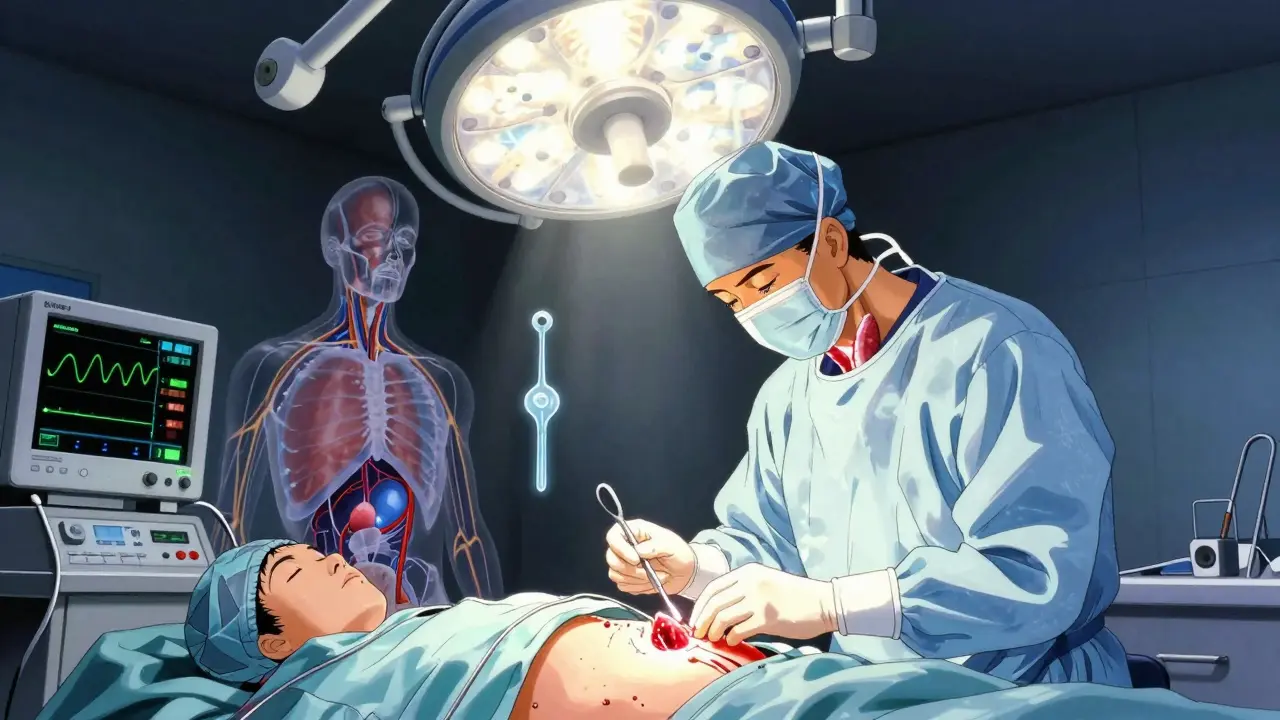
Removing the thyroid isn’t a simple procedure. It’s delicate because the gland sits right next to the voice box, swallowing muscles, and parathyroid glands that control calcium.There are three main types of surgery:
- Lobectomy: Remove just one side of the thyroid. Used for small, low-risk cancers or when doctors aren’t sure if it’s cancer yet. Recovery is quick-often same-day discharge.
- Total thyroidectomy: Remove the entire gland. This is the standard for most cancers larger than 1 cm, or if there’s lymph node involvement. Incision is 6-8 cm long, and you’ll usually stay overnight.
- Completion thyroidectomy: Remove the rest of the thyroid after a previous lobectomy. Done if pathology later shows the cancer is more aggressive than first thought.
Modern surgery uses nerve monitors to protect the recurrent laryngeal nerves. Surgeons need at least 25-30 cases to get good at it. Without monitoring, nerve injury rates were over 12%. With it, they’ve dropped to under 5%.
Complications happen. About 1 in 5 people develop temporary low calcium after surgery because the parathyroid glands get irritated. A small number (around 5-10%) end up with permanent hypoparathyroidism and need lifelong calcium and vitamin D supplements. Voice changes are common too-about 30% of patients report hoarseness or weakness, and 1 in 5 say it never fully goes back to normal.
Some hospitals now offer minimally invasive options like transoral (through the mouth) or robotic surgery. But studies show these have higher complication rates than traditional open surgery. For now, the classic neck incision is still the safest and most reliable.
Staging and Risk: It’s Not Just About Size
Thyroid cancer staging is weird compared to other cancers. For papillary and follicular types, if you’re under 55, you’re either stage I or II-no matter how big the tumor is. Age matters more than size. A 40-year-old with a 4 cm tumor and lymph node spread is still stage II. But if you’re 56, that same tumor could be stage III or IV.Medullary cancer doesn’t care about age. It uses the same four-stage system for everyone. Anaplastic? Always stage IV.
New guidelines now include molecular markers. If your tumor has a BRAF mutation, it’s more likely to spread. If it has a TERT promoter mutation? That’s a red flag for aggressive behavior. These aren’t used in every hospital yet, but they’re becoming part of the decision-making process.
Is Overtreatment a Real Problem?
Here’s the uncomfortable truth: many people with thyroid cancer get more treatment than they need.Dr. Leonard Wartofsky and others have shown that tiny papillary cancers under 1 cm-called microcarcinomas-very rarely grow or spread. In Japan, where many of these are just watched instead of removed, only 3.8% of patients saw any progression over 10 years. That’s why the American Thyroid Association now recommends active surveillance for low-risk microcarcinomas. No surgery. No RAI. Just regular ultrasounds.
Yet, in the U.S., over 90% of these small tumors are still removed. And about one-third of all thyroid cancer patients get RAI-even when they don’t need it. Dr. David Ain says up to 30% of patients are overtreated. That means unnecessary radiation, more side effects, and higher costs.
On the flip side, if you’re high-risk-large tumor, spread to lymph nodes, or aggressive features-delaying treatment can be deadly. Dr. Electron Kebebew warns that for anaplastic cancer, every week of delay cuts survival time in half. Precision matters. Not every case is the same.
Life After Treatment
You’ll need to take levothyroxine for the rest of your life. It replaces the thyroid hormone your body can’t make anymore. But many people still feel off-even with “normal” TSH levels. A 2023 survey of 1,247 thyroid cancer survivors found 68% still had fatigue, brain fog, or weight gain. Only 42% felt completely back to normal.Calcium levels matter too. If your parathyroid glands were damaged, you’ll need to monitor your calcium and take supplements. Some people need them forever.
Follow-up care is lifelong. Blood tests for TSH and thyroglobulin (a protein made only by thyroid tissue) are done every 6-12 months. Ultrasounds check the neck. If thyroglobulin rises, it could mean cancer’s come back.
And yes, the low-iodine diet before RAI is brutal. No seafood, dairy, eggs, bread with iodate, or even some salt. Many patients say it’s harder than the surgery. Fatigue, headaches, and muscle cramps are common. But it’s necessary to make the treatment work.
What’s Next for Thyroid Cancer?
The field is changing fast. Targeted drugs like selpercatinib for RET-mutant MTC and dabrafenib/trametinib for BRAF-mutant ATC are now standard. These aren’t cures, but they buy time.Researchers are trying to “redifferentiate” cancer cells-making them act like normal thyroid cells again so RAI can work. Selumetinib showed promise in trials, restoring iodine uptake in over half of patients who had stopped responding.
Liquid biopsies (blood tests that detect cancer DNA) are being tested to replace frequent neck ultrasounds. And immunotherapy is being explored, especially for anaplastic cancer.
But the biggest shift is cultural: moving away from one-size-fits-all treatment. The goal now isn’t just survival-it’s survival without unnecessary harm. For some, that means watching. For others, it means surgery, RAI, and drugs. The right path depends on your type, your age, your genetics, and your life.
William Minks
March 5, 2026 AT 19:07Just had my RAI last month and honestly? The low-iodine diet was worse than the radiation. No cheese, no bread, no eggs… I missed my morning toast more than my thyroid. 😅 But hey, I’m alive and my scans are clean. Still can’t believe I ate nothing but plain chicken and veggies for two weeks. Worth it.
Jeff Mirisola
March 7, 2026 AT 06:12People act like thyroid cancer is a death sentence but it’s not. I’m 3 years out after total thyroidectomy and RAI. I take my levothyroxine like a vitamin. I run marathons. I travel. I eat whatever I want now. The system’s broken, yes-but your life isn’t over. You can still live. Hard truth: most of us don’t die from this. We just get weirdly tired for a while. And then we bounce back.
Susan Purney Mark
March 7, 2026 AT 11:46My mom had papillary cancer at 52. She got the lobectomy, no RAI, just monitoring. She’s fine. No side effects. No lifelong supplements. Just regular ultrasounds. I wish more doctors would offer this. Overtreatment is real. I’ve seen people lose their voice, their calcium balance, their peace of mind-all for a nodule smaller than a pea. 🙏
Ian Kiplagat
March 8, 2026 AT 06:12RAI isolation rules are wild. Forgot to mention: no kissing for 3 days. No hugging kids. No sharing towels. I slept in the garage. My dog didn’t get it. He just stared. We both felt weird.
Amina Aminkhuslen
March 8, 2026 AT 23:35Let’s be real-this whole system is a money machine. Hospitals make bank on thyroidectomies. Pharma profits off Thyrogen. Insurance pushes RAI because it’s ‘standard.’ Meanwhile, people are getting cut open for tumors that will never grow. It’s not medicine. It’s fear marketing wrapped in white coats. And don’t even get me started on the ‘lifelong hormone replacement’ racket. 🤡
amber carrillo
March 10, 2026 AT 00:36I appreciate the depth of this post. It’s rare to see such clear, evidence-based information on thyroid cancer. Many patients are left confused by conflicting advice. This helps clarify the science without sensationalism. Thank you.
Tim Hnatko
March 10, 2026 AT 23:46As someone who went through this silently, I just want to say: you’re not alone. The fatigue doesn’t go away overnight. The brain fog lingers. The fear of recurrence? It’s real. But you learn to live with it. I didn’t tell anyone for a year. Then I started writing. It helped. If you’re reading this and you’re scared? Breathe. You’ve got this.
Aaron Pace
March 11, 2026 AT 08:53Wait so if you have a microcarcinoma you just… watch it? Like a plant? What if it turns evil? 😳 I’d rather cut it out before it becomes a monster. I don’t trust nature. I trust scalpels.
Susan Purney Mark
March 12, 2026 AT 23:11That’s the thing-it almost never turns evil. In Japan, they watch over 10,000 of these. Only 4% grew. Most stayed the same size. Surgery carries real risks. Voice loss. Parathyroid damage. Permanent supplements. Is a tiny nodule worth that? 🤔
Joey Pearson
March 13, 2026 AT 22:18My sister had ATC. She was diagnosed on a Tuesday. Died by Friday. No time. No second chances. So yeah, sometimes aggressive is the only right answer. Don’t romanticize ‘watchful waiting’ for everyone. Some cancers don’t wait.
Roland Silber
March 14, 2026 AT 23:35Interesting how molecular markers are changing everything. BRAF and TERT mutations are becoming the new frontline indicators. I’ve seen cases where a patient with a small tumor got aggressive treatment because of TERT, while someone with a 3cm tumor got monitored because their profile was low-risk. Genetics > size. It’s wild how personalized this has become. We’re not just treating cancer anymore-we’re decoding it.
Patrick Jackson
March 15, 2026 AT 23:54It’s funny… we’re so scared of cancer, but we forget we’re made of stardust. Thyroid cells absorb iodine like they’re calling home. The body remembers its ancient chemistry. RAI isn’t magic-it’s a conversation with biology. And sometimes, the body says ‘thank you.’ Sometimes, it says ‘no thanks.’ Either way, we’re not just patients. We’re part of the story. 🌌
Adebayo Muhammad
March 17, 2026 AT 00:38...and yet, the government, the AMA, the pharmaceutical conglomerates, the FDA, the NIH, the CDC, the WHO, the UN, the IMF, the World Bank, the Gates Foundation, the Rockefeller Foundation, the Bilderberg Group, the Trilateral Commission, the Council on Foreign Relations, the Rothschilds, the Rockefellers, the Bushes, the Clintons, the Obamas, the Bidens, the Saudis, the Chinese Communist Party, the Vatican, the Freemasons, the Illuminati, the Bilderbergers, the Deep State, the Cabal, the Elite, the New World Order, the Matrix, the Simulation, the AI overlords, the alien reptilians, the chemtrails, the 5G towers, the vaccines, the masks, the lockdowns, the school closures, the censorship, the algorithms, the social credit systems, the deepfakes, the surveillance capitalism, the data harvesting, the behavioral conditioning, the mass manipulation, the mind control, the false flag operations, the false positives, the false negatives, the false diagnoses, the false cures, the false hope-ALL OF IT IS A LIE.