
When you pick up your prescription and the pill looks different - maybe it’s a different color, shape, or has a weird imprint - you might not think twice. But for some people, that small change can trigger headaches, anxiety, seizures, or even hospitalization. Switching between generic versions of the same drug isn’t just a paperwork update. For certain medications and certain people, it can be a medical event.
Why Do Generics Look Different?
Generic drugs are required to have the same active ingredient as the brand-name version. That part is non-negotiable. But everything else? That’s where things get messy. The inactive ingredients - the fillers, dyes, coatings, and release mechanisms - can vary wildly between manufacturers. One company might use a slow-release bead system. Another might use a different polymer that changes how fast the drug enters your bloodstream. The FDA allows up to a 20% difference in how quickly and completely your body absorbs the drug. For most medications, that’s fine. For others? It’s dangerous.Which Drugs Are Riskiest to Switch?
Not all generics are created equal. Some drugs have what’s called a narrow therapeutic index - meaning the difference between a dose that works and one that causes harm is tiny. Even a small change in absorption can throw your whole treatment off. These are the drugs where switching causes real problems:- Antiepileptics - Like phenytoin, levetiracetam, and extended-release divalproex. A switch can mean more seizures. Neurologists report that nearly 7 out of 10 patients on these drugs show signs of instability after a generic change.
- Thyroid meds - Levothyroxine is one of the most commonly prescribed drugs in the U.S., and it’s also one of the most frequently switched. Even minor changes in absorption can cause fatigue, weight gain, heart palpitations, or worse.
- Warfarin - This blood thinner requires precise dosing. A switch can cause dangerous clots or bleeding. Studies show a 12% higher risk of hospitalization within 30 days of switching between generic versions.
- Immunosuppressants - Tacrolimus and cyclosporine are used after organ transplants. A tiny dip in blood levels can trigger organ rejection. A single switch has been linked to graft failure in some cases.
- ADHD meds - Extended-release formulations like Adderall XR and Vyvanse have complex bead systems. Different manufacturers use different release tech. Patients report sudden return of focus issues, increased anxiety, or insomnia within hours of switching.
These aren’t rare cases. In 2024, the American Society of Health-System Pharmacists updated its guidelines to recommend against automatic substitution for 17 specific drugs - including bupropion XL, tacrolimus, and phenytoin - because the risks are too high.
What Do Patients Actually Experience?
The FDA says generics are equivalent. But patients aren’t seeing it that way.A 2023 analysis of over 1,400 patient records found that 63% of people could identify their meds by color and shape - not by name. When those changed, many didn’t realize they’d been switched. Some even took both versions, thinking they were new and old pills, leading to accidental overdose. One patient developed serotonin syndrome after taking duplicate doses.
On Reddit’s r/ADHD community, a single thread titled “Generic Adderall Switch Ruined My Life” had over 800 comments. Most described the same pattern: “I felt fine on my old generic. Then I got a new bottle. Within 24 hours, I couldn’t focus. My heart raced. I couldn’t sleep. I thought I was having a panic attack. Turns out, it was the pill.”
A survey of 1,247 people taking generic ADHD meds found that 63% noticed decreased effectiveness after a manufacturer switch. Over 40% reported new side effects - headaches, anxiety, stomach pain - that never happened before.
This isn’t anecdotal. A 2019 study in BMJ Open tracked 2,863 heart patients who switched between generic versions of the same drug. Within 30 days, they were 12.3% more likely to be hospitalized than those who stayed on the same version.

Why Is This Happening?
It’s not about quality. It’s about money.Pharmacy benefit managers - companies like CVS Caremark and Express Scripts - control which generics pharmacies stock. They don’t care which manufacturer makes the pill. They care about rebates. The higher the rebate, the more the pharmacy gets paid to switch you. Some PBMs change preferred manufacturers nearly five times a year per drug. That means you could get a different version of your levothyroxine every few months.
Levothyroxine alone has 12 approved generic manufacturers. Each one uses different fillers, binders, and release systems. Your body might handle one perfectly. The next one? It might not absorb at all.
And here’s the kicker: pharmacies are often not required to tell you when they switch. You just get a different-looking pill. No warning. No explanation.
What Should You Do?
If you’re on one of the high-risk drugs listed above, don’t wait for something to go wrong. Take control now.- Check the label - When you pick up your prescription, look at the manufacturer name on the bottle. Write it down. Keep a small log: drug name, dose, manufacturer, date switched.
- Ask for the same manufacturer - When you refill, tell the pharmacist: “I need the same manufacturer as last time.” Many pharmacies can accommodate this, especially if you’re on a high-risk drug.
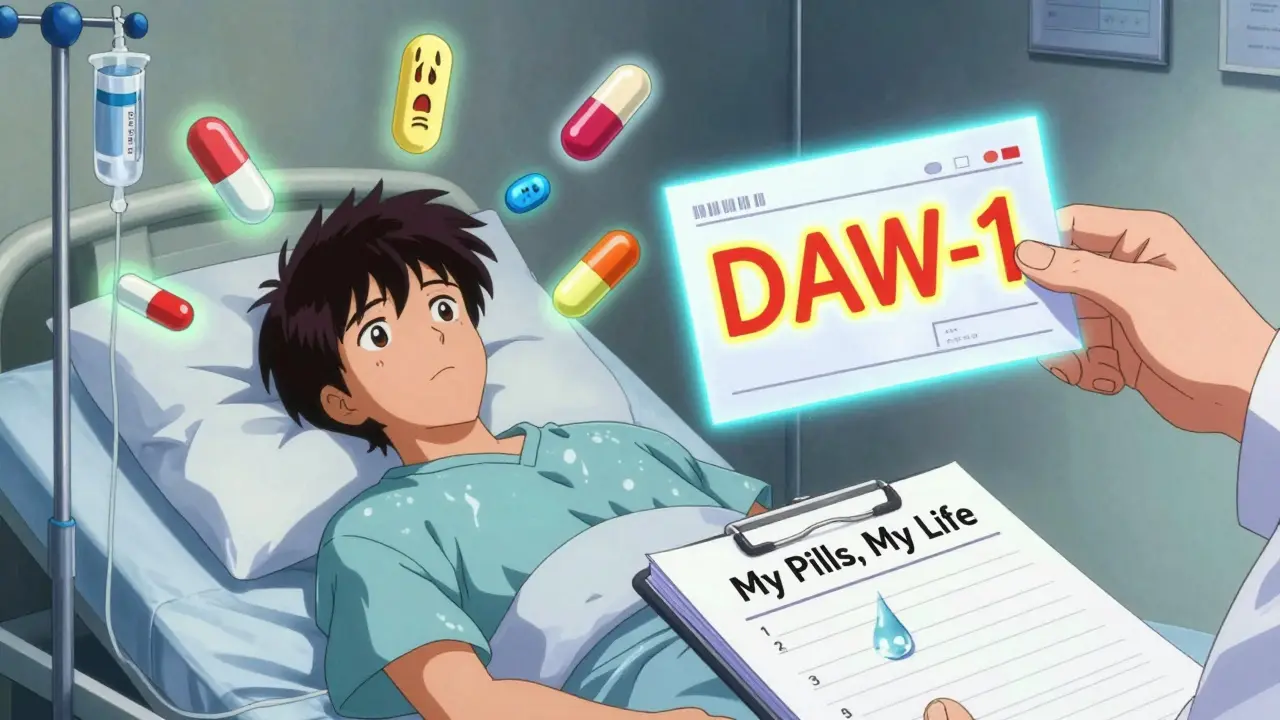
- Use DAW-1 - Ask your doctor to write “Dispense As Written” (DAW-1) on your prescription. This legally prevents substitution. It’s especially important for levothyroxine, warfarin, and antiepileptics.
- Watch for changes - In the first 72 hours after a switch, pay attention. Do you feel different? More anxious? Fatigued? Less focused? More seizures? Don’t brush it off. Call your doctor.
- Don’t assume it’s “all in your head” - Many patients are told their symptoms are psychological. But if your body reacts to a change in pill composition, it’s not your fault. It’s a pharmacological issue.
A 2021 study found that patients who got counseling from their pharmacist about switching risks were 37% less likely to have bad outcomes. That’s a huge difference. Don’t be afraid to ask for it.
What’s Being Done?
There’s growing pressure to fix this. In 2023, Medicare Part D started limiting generic switches to no more than twice a year. The FDA launched a $15.7 million initiative to improve testing for complex generics like inhalers and extended-release pills. Researchers are now identifying genetic factors - like CYP2D6 poor metabolizers - that make some people far more sensitive to formulation changes.But the system is still broken. Generics save billions - $165 billion a year in the U.S. alone. That’s why they’re pushed so hard. But the hidden cost? Hospitalizations, lost productivity, and suffering that doesn’t show up in a balance sheet.
Bottom Line
Generics are not all the same. For most people, switching is harmless. For others - especially those on narrow therapeutic index drugs - it can be dangerous. The FDA’s standards were designed for the average patient. They don’t account for individual biology, genetic differences, or the fact that your body remembers the exact way a drug feels.If you’re on a high-risk medication, treat your generic like a brand name. Don’t let cost savings override your health. Ask for consistency. Document changes. Speak up. Your life might depend on it.
Janice Holmes
December 28, 2025 AT 10:40Okay so I switched my levothyroxine last month and within 72 hours I was sobbing in the shower because I couldn’t remember my own phone number. My doctor said it was ‘stress’ - STRESS. I had been stable for 4 years. Then BAM. Different pill. Different manufacturer. Different brain. I had to go to the ER because my heart was doing the cha-cha. Now I keep a laminated card in my wallet that says ‘DO NOT SUBSTITUTE MY THYROID PILLS’ and I carry three different bottles just in case. This isn’t a joke. This is medical gaslighting wrapped in a rebate.
They think we’re just whining about pill colors. No. We’re talking about our lives being hijacked by a spreadsheet.
And don’t even get me started on the pharmacy tech who said ‘it’s the same chemical’ like I’m five and they’re trying to convince me the blue one tastes better. I’m not dumb. I’m just medicated. And now I’m terrified to refill anything.
Alex Lopez
December 29, 2025 AT 05:37While I appreciate the passion behind this post, let’s not conflate anecdotal experience with clinical evidence. The FDA’s bioequivalence standards are rigorous and validated across thousands of subjects. Yes, there are outliers - particularly with narrow therapeutic index drugs - but the data overwhelmingly supports interchangeability. The 12% hospitalization spike cited? Likely confounded by adherence issues, not formulation differences. And yes, PBMs are profit-driven - but that’s a systemic policy failure, not a pharmacological one.
Patients should absolutely track their meds and request DAW-1 when necessary. But vilifying generics as inherently unsafe? That’s fearmongering. The real villain is the lack of patient education - not the pill itself.
Also, emoticon for emphasis: 😐
Gerald Tardif
December 30, 2025 AT 08:54Hey - I’ve been on generic Adderall for 8 years. I’ve had 4 different manufacturers. One made me feel like a robot. One made me feel like I was underwater. One made me cry for no reason. And one? One made me feel like myself again. Not ‘better’ - just… normal.
What I learned? It’s not about the drug. It’s about your body remembering what ‘normal’ feels like. Your nervous system has a memory. And when the pill changes, it’s like your brain wakes up in a stranger’s house.
Don’t let anyone tell you it’s ‘all in your head.’ If you feel different - even if you can’t explain why - that’s your body speaking. Listen. Write it down. Tell your pharmacist. You’re not being difficult. You’re being smart.
And hey - if you’re on the same one and it’s working? Don’t touch it. Let it be your anchor.
Monika Naumann
December 31, 2025 AT 11:18It is deeply concerning that Western societies prioritize corporate profits over patient safety. In my country, India, we have strict guidelines for generic drug manufacturing under the CDSCO. Each batch is tested for dissolution profile, not just active ingredient content. Here, pharmaceutical companies are held accountable - not by rebates, but by law.
It is shameful that the United States allows such reckless substitution. The FDA’s 20% absorption variance is not science - it is negligence. Patients are being treated as disposable test subjects for pharmacy benefit managers who care nothing for human health.
Perhaps if American regulators had the same discipline as Asian nations, this crisis would not exist. We must demand ethical pharmaceutical governance - not corporate convenience.
John Barron
December 31, 2025 AT 22:14Let’s be real - this whole thing is a pharmacological version of ‘the same song, different producer.’ You think it’s the same because the melody’s the same. But the beat? The reverb? The bass drop? Totally different. And if you’re someone whose brain syncs to the original version? You’re gonna feel off.
Now imagine if your antidepressant was produced by a different company every time - and you didn’t know it. You’d think you were losing your mind. But you’re not. Your CYP2D6 enzyme is screaming. Your gut flora is confused. Your blood levels are fluctuating like a stock market crash.
And guess what? The FDA doesn’t test for that. They test for ‘average bioavailability.’ Average. Not individual. Not sensitive. Not genetically distinct. Not someone who’s been on the same pill for 12 years and suddenly can’t sleep because the coating changed.
So yeah. This isn’t paranoia. It’s precision medicine being ignored for cost-cutting. And if you’re one of the 1 in 5 who’s sensitive? You’re basically a statistical error in their spreadsheet. 😔
Chris Garcia
January 1, 2026 AT 09:15In Nigeria, we don’t have the luxury of choosing generics. We take what’s available - and what’s affordable. But here’s the thing: when a drug works, it works. When it doesn’t, we adapt. We don’t blame the pill. We blame the system that makes the pill the only option.
But I admire the clarity of this post. It’s not about being anti-generic. It’s about being pro-consistency. Pro-awareness. Pro-human.
Maybe the answer isn’t to ban generics - but to mandate manufacturer transparency. A QR code on every bottle. A database. A patient portal. Let people know what they’re taking. Let them choose. Let them remember.
Health is not a commodity. It’s a covenant between body and medicine. Don’t break that covenant lightly.
James Bowers
January 2, 2026 AT 16:17People who complain about generic switches are either noncompliant, hypochondriacs, or have been influenced by online misinformation. The FDA has approved these generics. If you’re having side effects, it’s likely due to poor adherence, psychological factors, or substance abuse. Stop blaming the pill and start taking responsibility.
Also, if you’re so sensitive to formulation changes, why are you on generic drugs at all? Pay for the brand. Simple. No drama. No complaints. Just pay.
Stop turning every pill change into a trauma narrative. It’s not a revolution. It’s a pharmacy refill.
Nicola George
January 4, 2026 AT 13:44So… I switched my warfarin generic last month. Didn’t think twice. Got my INR checked. It was 5.8. Normal range is 2–3. I was one sneeze away from bleeding out. Turns out the new maker used a different filler that slowed absorption - so I was getting less drug, not more. My INR was low. Then I switched back. Boom. 2.4.
My doctor was like ‘huh, weird.’ I was like ‘I told you the pill looked different.’
Now I take a picture of every bottle. And I don’t trust anyone who says ‘it’s the same thing.’
Also - the pharmacist? Didn’t even apologize. Just handed me the next one.
So yeah. This isn’t drama. It’s a safety gap. And someone’s gonna die because of it. Probably someone who didn’t know to ask.
Raushan Richardson
January 6, 2026 AT 01:26Y’all are talking like this is new. I’ve been on levothyroxine since 2015. I’ve had 7 different manufacturers. I keep a little notebook. I know which one makes me feel like a zombie, which one makes me jittery, which one lets me sleep through the night.
I just tell my pharmacist: ‘I need the blue oval one with the 512 on it.’ They roll their eyes. But they do it.
It’s not hard. It’s not expensive. It’s just… inconvenient for them.
So if you’re on one of these drugs? Be that annoying patient. Write it down. Ask for the same one. Don’t let them make you guess. You’re not being difficult - you’re being alive.
Anna Weitz
January 6, 2026 AT 13:14It’s not the generics it’s the algorithm the algorithm decides your pill the algorithm doesn’t care if you have a CYP2D6 mutation or if your thyroid is already on fire it just sees the rebate and swaps you like a product on Amazon and then you get anxiety and no one listens because you’re not a data point you’re a glitch in the system the system is designed to make you feel crazy so you stop complaining and just take whatever they give you
they know this they know you’ll doubt yourself they count on it
Jane Lucas
January 7, 2026 AT 23:30i switched my generic adderall and felt like i was underwater for 3 days. didn’t know why. thought i was depressed. then i checked the bottle. different maker. switched back. boom. normal. no big deal. just… weird. my body remembers.
now i take a pic of the pill before i take it. just in case.
Elizabeth Alvarez
January 9, 2026 AT 01:31Did you know that the FDA allows generic manufacturers to use fillers that are also used in antifreeze? Not the same chemical, but similar compounds. And the coatings? Some contain titanium dioxide - which is classified as a possible carcinogen in the EU. But here? Totally fine. Why? Because the FDA’s testing doesn’t look at long-term bioaccumulation. It looks at ‘immediate bioavailability.’
And here’s the real kicker - the same companies that make your generic Adderall also make the fillers. They’re not just selling pills. They’re selling a cocktail. And you’re the lab rat.
They’ve been doing this for decades. They know people will get sick. They know some will have seizures. They know some will die. But the profit margin on levothyroxine is 300%. So they don’t care.
This isn’t a glitch. It’s a feature.
And if you think I’m crazy - check the ingredient list on your next bottle. Then Google ‘titanium dioxide FDA’ and tell me I’m wrong.
They’re not just switching manufacturers. They’re switching your body’s chemistry. And they’re doing it without your consent.
Wake up.