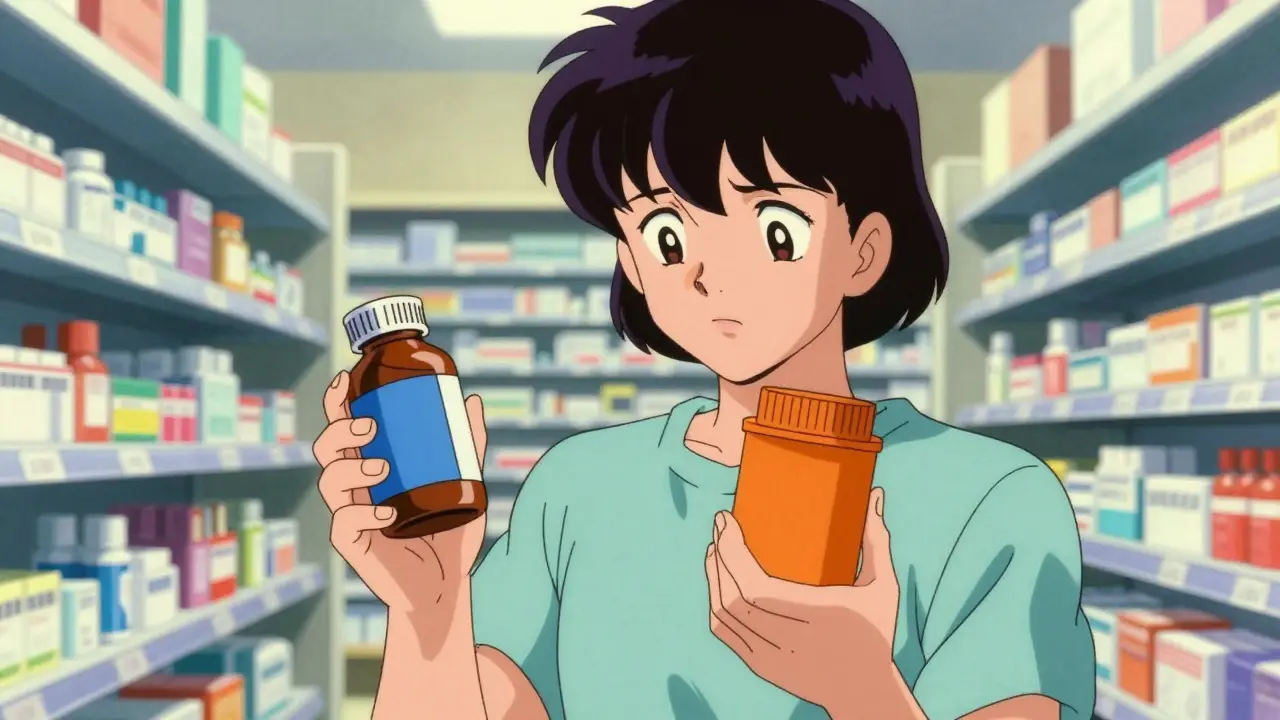
We often assume that if science says two things are the same, everyone agrees. But when it comes to medicine, numbers don't always win over feelings. A patient holding a prescription for a generic version of their usual heart medication might look at the orange box next to their trusted blue bottle and hesitate. That hesitation isn't just doubt; it's a calculated assessment of risk based on experience, psychology, and information gaps. Understanding how patients weigh the safety of generic drugs against brand-name versions reveals a complex web of trust, demographics, and communication.
The reality is stark. While generic medications account for the vast majority of prescriptions filled today, a significant portion of people still believe the cheaper option is less safe. This belief persists even though regulatory bodies have set strict rules for approval. In the United States alone, generic drugs make up over 90% of all prescriptions, yet surveys consistently show that around one-fifth of patients specifically worry these medicines aren't as effective or safe as the brands. This gap between scientific consensus and public belief costs the healthcare system billions every year, creating unnecessary barriers for patients who need treatment.
The Science Behind the Label
To understand the risk, you first need to understand the standard. When a pharmaceutical company applies for a generic version of a drug, they face rigorous testing. The FDA requires that the generic drug demonstrate "bioequivalence" to the brand-name original. This means the generic must release the active ingredient into the bloodstream within a specific range of the brand-typically between 80% and 125% of the original parameters.
Bioequivalenceis a statistical measure ensuring that a generic drug performs similarly to its brand-name counterpart in terms of safety and efficacy. For most solid oral dosage forms like tablets and capsules, this standard ensures the body absorbs the medicine just as well. However, this technical definition doesn't always translate into patient confidence. Patients don't see the bioequivalence graphs; they see a different color pill or a lower price tag. Some experts argue that while the average batch passes these tests, individual variations in excipients (the inactive ingredients) can cause subtle side effects that feel real to the user.
This technical nuance is often lost. A 2024 study utilizing machine learning analysis found that participants over the age of 60 were significantly more concerned about side effects, regardless of the actual clinical data. These concerns often stem from misconceptions that the manufacturing facilities for generics are substandard or that the active ingredient itself is weaker. Research indicates four primary myths drive these safety concerns: that generics are less effective, take longer to work, are not safe, or are made in dirty factories. The truth is that the FDA inspects generic manufacturing facilities under the same Good Manufacturing Practices (GMP) as brand manufacturers, yet only 12% of the public knows about these oversight programs.
Who Worries More?
Risk perception isn't distributed evenly across the population. If you walk into a clinic in a wealthy urban neighborhood, the conversation about generics might differ entirely from one in a rural community. Demographics play a massive role in whether someone trusts a substitution.
| Demographic Factor | Impact on Risk Perception | Supporting Evidence |
|---|---|---|
| Education Level | Lower education correlates with higher skepticism | Lower-educated individuals are 1.73 times more likely to view generics as different |
| Ethnicity | Non-Caucasian groups show higher concern | Black and Hispanic patients are 1.8 times more likely to express safety concerns |
| Employment Status | Unemployed/Retired groups more accepting | These groups show 39.5% positive attitude toward generic switching |
| Geography | Rural areas focus on potency | Rural patients often incorrectly believe generics require higher doses due to lower strength |
Health literacy is a major predictor. If a patient struggles to read medical instructions, they are far less likely to trust a switch from a name they know to a one-letter code they don't. Data shows that among patients with inadequate health literacy, approximately 50% believe generics are less safe, compared to only 20% of the general population. Education changes how people process this information. Interestingly, those with higher education levels are sometimes more concerned about changing treatment regimens rather than the drug itself, worrying about breaking the rhythm of their care.
Socioeconomic status adds another layer. You might think money buys trust in the expensive brand, but unemployment often forces a pragmatic acceptance of generics due to cost necessity. Conversely, employed individuals sometimes view the higher price of the brand as a signal of quality-a classic cognitive bias where cost equals value. This psychological shortcut is dangerous. It ignores the fact that high pricing often reflects marketing budgets and patent exclusivity rather than superior manufacturing quality.

The Hidden Cost of Doubt
When patients refuse a generic, the financial hit is immediate. In 2022, generic drugs accounted for only 23% of total U.S. drug spending despite making up 90% of prescriptions. This gap represents nearly $370 billion in annual savings. However, when a doctor prescribes a generic and the patient insists on the brand, or demands a higher copay tier to bypass the substitution, that savings evaporate.
The Congressional Budget Office estimates that overcoming these barriers could save the healthcare system roughly $1.67 trillion over the next decade. But the cost isn't just monetary; it's measured in untreated conditions. If a patient refuses a medication because they fear the generic version won't work, they might skip doses or stop taking it entirely. This drop in adherence increases the likelihood of hospital readmissions, especially for chronic conditions like diabetes or heart disease.
Insurance design exacerbates the issue. Medicare Part D plans that set generic copays at $0 see much higher utilization of these safer, cheaper options compared to plans using tiered copay structures. However, even with free access, some patients prefer to pay out-of-pocket for the brand because they view the cost as an insurance policy against failure. This highlights the intense difficulty of changing behavior without addressing the underlying emotional safety net the brand provides.

Bridging the Trust Gap
The most effective tool a physician or pharmacist has is communication. Studies consistently show that physician communication is the strongest predictor of generic acceptance. If a doctor takes a moment to explain bioequivalence during the initial prescription process, patients are 3.2 times more likely to accept the generic. The timing matters immensely. Waiting until the pharmacy call-up is too late for many skeptics.
Counseling strategies need to be tailored. A 2017 study found that educational interventions designed specifically for low-health-literacy patients reduced safety concerns by 42% compared to handing out standard pamphlets. Clear, non-jargon explanations help. Instead of saying "it meets the 80-125% rule," a provider might say, "This medication works in your body the exact same way, so it treats your condition equally well." Community pharmacists are particularly crucial here. They are often the last point of contact before the patient takes the medicine home. Pharmacists who spend extra time counseling on safety report 37% higher adherence rates among patients.
Despite this, time is a barrier. The average consultation regarding a generic substitution lasts only 47 seconds. Expanding this window or training staff to deliver concise, high-impact reassurance could shift the landscape. Digital tools are also emerging. New predictive models can identify which patients are likely to struggle with generic switches based on their history and demographics, allowing staff to prioritize those conversations.
Future Challenges and Complexity
As we move further into the 2020s, the conversation is evolving beyond simple pills. Complex generics-inhalers for asthma, insulin pens, and topical creams-are entering the market. Bioequivalence is harder to prove for these delivery systems. For instance, an inhaler relies on the patient's technique to deliver the drug effectively. Even small differences in spray patterns can lead to perceived failures.
A 2023 survey noted that 48% of patients expressed specific concerns about these complex products, fearing the mechanism itself was compromised. Regulatory efforts like the Generic Drug User Fee Amendments (GDUFA) aim to tighten quality monitoring, investing millions to track manufacturing issues more closely. Yet, public awareness of these safety nets remains low. The gap between regulatory assurance and patient feeling is widening with technology.
Furthermore, the rise of "authorized generics" adds confusion. Sometimes, the brand manufacturer sells their own product as a generic. To the consumer, this sends mixed signals: if it's truly identical, why does it come in two packages? These nuances challenge the industry to find better ways to build transparency. Until the trust gap closes, we will continue to see suboptimal utilization that drives up costs unnecessarily.
Are generic drugs exactly the same as brand-name drugs?
Not exactly in every single detail, but yes in terms of therapeutic effect. Generic drugs must contain the same active ingredient and meet strict bioequivalence standards (80-125% absorption rate). They may differ in color, shape, or inactive fillers, but the FDA requires them to work the same way in the body.
Why do some patients feel the generic version didn't work?
While studies show most generics work fine, individual experiences vary. Different inactive ingredients can affect absorption slightly in rare cases, or the placebo effect/nocebo effect plays a role. If a patient believes the drug is worse, they may psychologically perceive it as ineffective. About 38% of reported experiences online mention different side effects after switching.
How can doctors improve patient trust in generics?
Direct, early communication is key. Explaining bioequivalence simply and checking understanding at the point of prescribing increases acceptance by over 3x. Using plain language and acknowledging past bad experiences helps rebuild trust faster than just presenting statistics.
Do older adults worry more about generic drugs?
Yes, age is a factor. Research indicates that people over 60 are more likely to express concern about side effects and safety compared to younger groups. Machine learning analysis suggests this group requires targeted education about safety profiles to alleviate anxiety.
What is the financial impact of refusing generics?
Refusing generics increases costs significantly. Brand loyalty driven by safety fears costs the US healthcare system approximately $8 billion annually. On a larger scale, closing this utilization gap could save the system over $1.6 trillion in the coming decade by maximizing the use of lower-cost equivalent therapies.
Rachael Hammond
March 29, 2026 AT 00:24I read the article and its realy crazy how peopel trust the blue bottle more than the orange one even tho its the same thing inside.
We all think the expensive one works better cuz we pay more for it but that isnt always true science wise.
My grandma gets scared whenever the pharmacy gives her the generic version and she worries it wont help her heart as much.
Its hard to explain to them that the orange pill has the exact same magic powder inside it.
I hope they find ways to tell patients better so they stop worrying about the colors on the wrapper.
We need to teach families about these things earlier so they dont get stressed about saving money later.
Devon Riley
March 30, 2026 AT 01:29The data really shows that cost bias drives most decisions here 🧐💡
Tommy Nguyen
March 30, 2026 AT 14:13yeah i feel like doctors could do a better job explaining it but people still get nervous about anything cheap looking
Kameron Hacker
March 30, 2026 AT 15:08It is frankly alarming that public health literacy remains so deficient regarding pharmaceutical standards.
We see evidence of systemic fear-mongering disguised as consumer caution.
Regulatory bodies operate under rigorous protocols that the average voter refuses to acknowledge.
This hesitation creates unnecessary financial burdens on the entire healthcare infrastructure.
Manufacturers must prove bioequivalence within tight margins before approval occurs.
Yet patients choose brand loyalty over proven clinical equivalence without fail.
This behavior reflects a deeper societal distrust in scientific institutions globally.
Education initiatives currently funded by government agencies are insufficient to counter these biases.
Pharmacists often lack the time required to dismantle these deeply held misconceptions effectively.
Insurance incentives push for generics while psychological factors pull patients back toward brands.
We cannot ignore the cognitive dissonance present in paying more for perceived safety.
The cost of this irrationality amounts to billions in wasted resources annually.
Physicians need mandatory training to address these perceptions during routine appointments.
Without structural change this cycle of avoidance will continue unchecked.
It is time we demand accountability from both policymakers and patient educators.
Jeannette Kwiatkowski Kwiatkowski
March 31, 2026 AT 06:35Clearly you lack basic knowledge of behavioral psychology to assume logic works here.
Most folks just want what feels safe regardless of facts.
Its cute how you think rules matter when feelings rule everything else.
The working class just cant afford their peace of mind apparently.
You sound like one of those policy wonks trying to fix what cant be fixed by math.
Aaron Olney
April 1, 2026 AT 22:27i had a heart attack last year and was scared to switch to the generic because i thought i was gonna die.
My doctor said its safe but my body felt different im telling you.
The color changed to pink and i felt like i was getting less medicine somehow.
I dont know wtf was wrong but i paid extra for the brand anyway.
It wasnt worth it financially but i sleep better now.
Everyone needs to listen to their own gut feeling about stuff like this.
Paul Vanderheiden
April 2, 2026 AT 03:20hey your feelings are vaild and scary situations deserve respect but remember science does support these switches often its ok to take small steps forward with your health choices and know you did your best research 💪✨
Jordan Marx
April 3, 2026 AT 01:37Pharmacokinetic profiles suggest minimal variance in steady-state concentration levels between approved equivalents despite excipient differences noted in formulation studies.
Clinicians must interpret adverse event reporting data within the context of nocebo phenomena rather than assuming pharmacological failure.
Adherence metrics drop significantly when substitution triggers anxiety responses in chronic disease management pathways.
Health literacy interventions targeting numeracy skills would likely yield higher conversion rates for therapeutic interchange programs.
Excipients impact absorption rates marginally but rarely breach the eighty to one hundred twenty five percent equivalence window established by regulatory guidelines.
Bioavailability testing ensures systemic exposure remains consistent across batches for oral solid dosage forms predominantly used in primary care settings.
kendra 0712
April 4, 2026 AT 12:25Wow!! That is such a technical explanation!!!
You always talk like that!
I mean you made points about the nocebo effect which is super interesting!
But regular people dont read papers like that...
They just want answers fast!
You might need to simplify things for the layman audience here...!
Sophie Hallam
April 4, 2026 AT 14:17It seems like communication is the main barrier here.
Trust needs to be built slowly between providers and the community.
Understanding the reasons behind hesitation helps everyone move forward safely.
Costs are high but well-being matters more in the end.
Rohan Kumar
April 6, 2026 AT 03:45Sure sure trust the system 🙄🚫
Just another way to save money for the big pharma giants who run this whole game show 🎭💸
Your trustworthiness score is low when profits come first always 📉😤
Nobody believes the pills are the same unless they test themselves live.
Sabrina Herciu
April 6, 2026 AT 21:41Research indicates that targeted counseling reduces switching refusal by significant percentages!
Patients benefit immensely from clear explanations of bioequivalence parameters!
Healthcare providers should prioritize these conversations during initial prescription issuance!
Data suggests early intervention prevents costly non-adherence later!
Clinical outcomes improve when misconceptions are addressed directly and thoroughly!