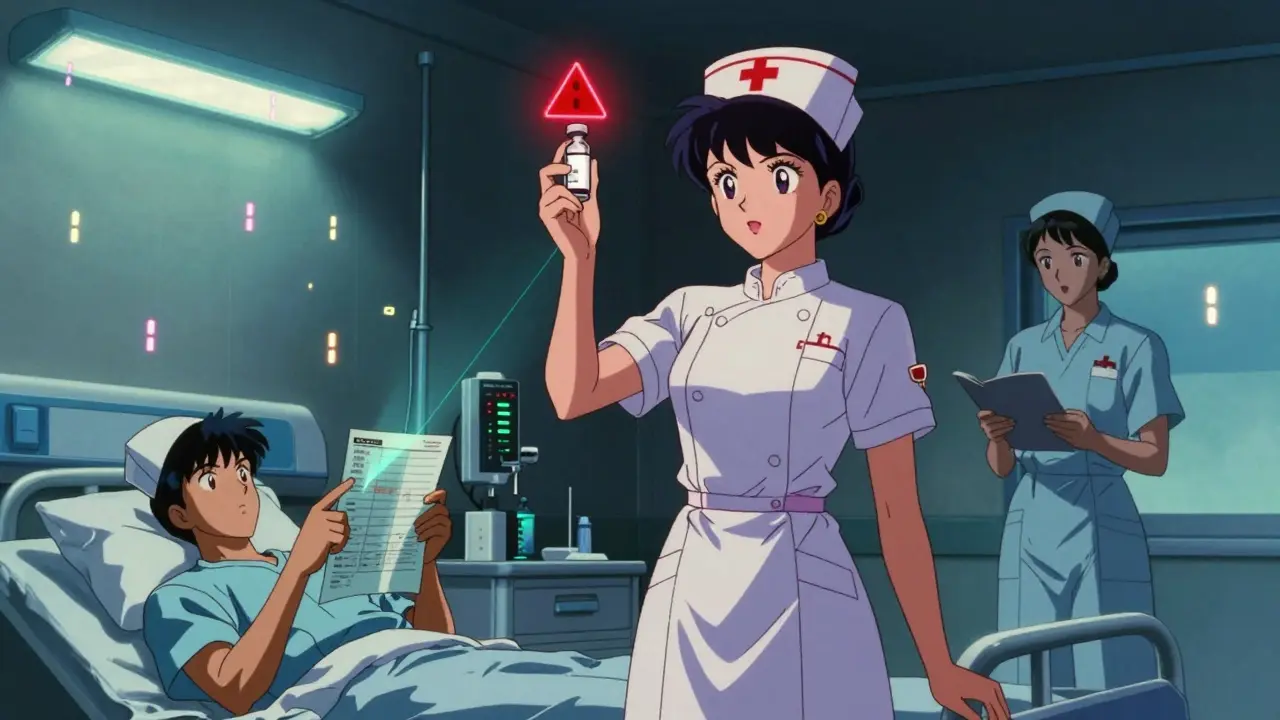
Imagine this: a nurse prepares a dose of insulin for a diabetic patient. The label says 10 units. But the vial was misread - it’s actually 100 units. One mistake. One wrong decimal. And the patient could go into a coma - or die. This isn’t fiction. It happens. That’s why high-risk medications require more than just a quick glance before they’re given. They need a second set of eyes - and a second brain - to catch what the first one might miss.
What Makes a Medication High-Risk?
Not all drugs are created equal when it comes to danger. A high-risk medication isn’t just strong. It’s unforgiving. A tiny error - a wrong decimal, a misread vial, a confused route - can turn a routine treatment into a life-threatening event. The Institute for Safe Medication Practices (ISMP) calls these high-alert medications: drugs that carry a heightened risk of causing serious harm if used incorrectly. These aren’t obscure drugs. They’re commonly used in hospitals, clinics, and even at home. Insulin. Heparin. IV opioids. Chemotherapy agents. Concentrated potassium chloride. Each one has a narrow safety margin. A little too much? You could trigger cardiac arrest, internal bleeding, respiratory failure, or organ damage. A little too little? The condition worsens. No room for error. The Joint Commission, which sets hospital safety standards across the U.S., requires every facility to list its own high-alert medications based on local use patterns, past errors, and national data. But there’s a shared core list that almost every hospital follows. These include:- Insulin (all forms - injections, infusions, even oral)
- IV opioids like morphine, fentanyl, hydromorphone
- IV heparin (both low-dose and high-dose)
- Chemotherapy drugs (antineoplastic agents)
- Concentrated potassium chloride (not the kind you take by mouth - this is the IV version)
- Cardiovascular drugs like IV epinephrine, nitroglycerin, and sodium nitroprusside
- Neuromuscular blocking agents (used during surgery)
- IV calcium gluconate or chloride
Why Double Checks? It’s Not Just a Rule - It’s a Lifeline
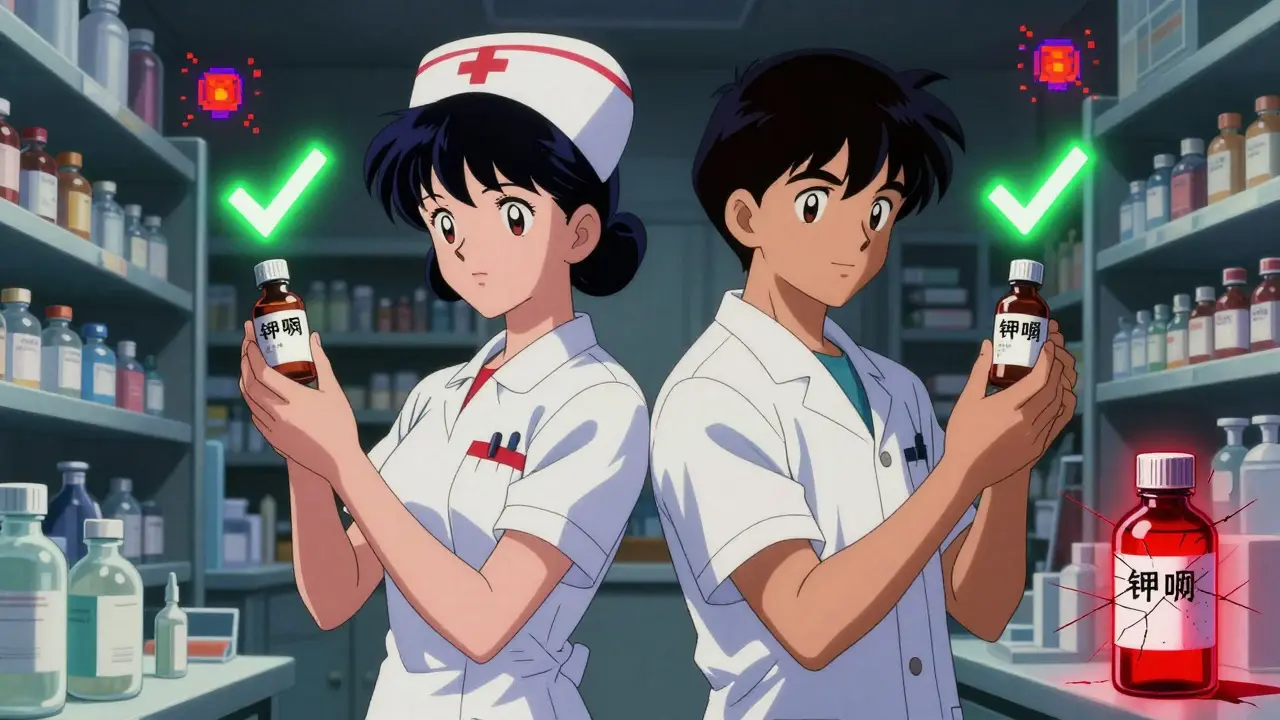
The standard medication check - one person verifying the patient, drug, dose, route, and time - is the baseline. But for high-risk drugs, that’s not enough. That’s why independent double checking (IDC) became standard practice in the early 2000s. An independent double check means two qualified healthcare professionals - usually a nurse and another nurse, or a nurse and a pharmacist - verify the medication separately. One doesn’t watch the other. They don’t talk through it together. Each person does their own calculation, checks the label, confirms the patient’s ID, and reviews the order. Only after both agree does the drug get given. This isn’t about redundancy. It’s about catching different kinds of mistakes. One person might miss a decimal point. Another might overlook that the vial looks wrong. One might be distracted by a ringing phone. The other might be focused. Together, they create a safety net. The process follows the Nine Rights:- Right patient
- Right drug
- Right dose
- Right route
- Right time
- Right documentation
- Right reason
- Right response
- Right to refuse
Who Can Do the Check? Not Just Anyone
This isn’t something you can hand off to a unit clerk or a student. Only licensed professionals who are trained, competent, and authorized can perform these checks. That usually means:- Registered nurses
- Pharmacists
- Physicians or physician assistants
- Advanced practice registered nurses (APRNs)
The Problem With Double Checks - And How Hospitals Are Fixing It
Here’s the uncomfortable truth: double checks don’t always work. And sometimes, they make things worse. A 2022 ISMP survey found that 68% of nurses admitted skipping required double checks during busy shifts. Why? 42% said there simply wasn’t a second person available. Others said the process took too long. Some felt it was a box-ticking exercise - something done just to satisfy policy, not to protect patients. The ECRI Institute warns that when double checks become routine, people start going through the motions. They look at the label, say “yes,” and move on. That’s not safety. That’s false confidence. So hospitals are changing tactics. Instead of requiring double checks for every high-risk drug all the time, they’re getting smarter. They’re focusing on the most dangerous moments:- When preparing IV infusions
- When programming infusion pumps
- When giving chemotherapy or concentrated electrolytes
What Happens If You Skip the Check?
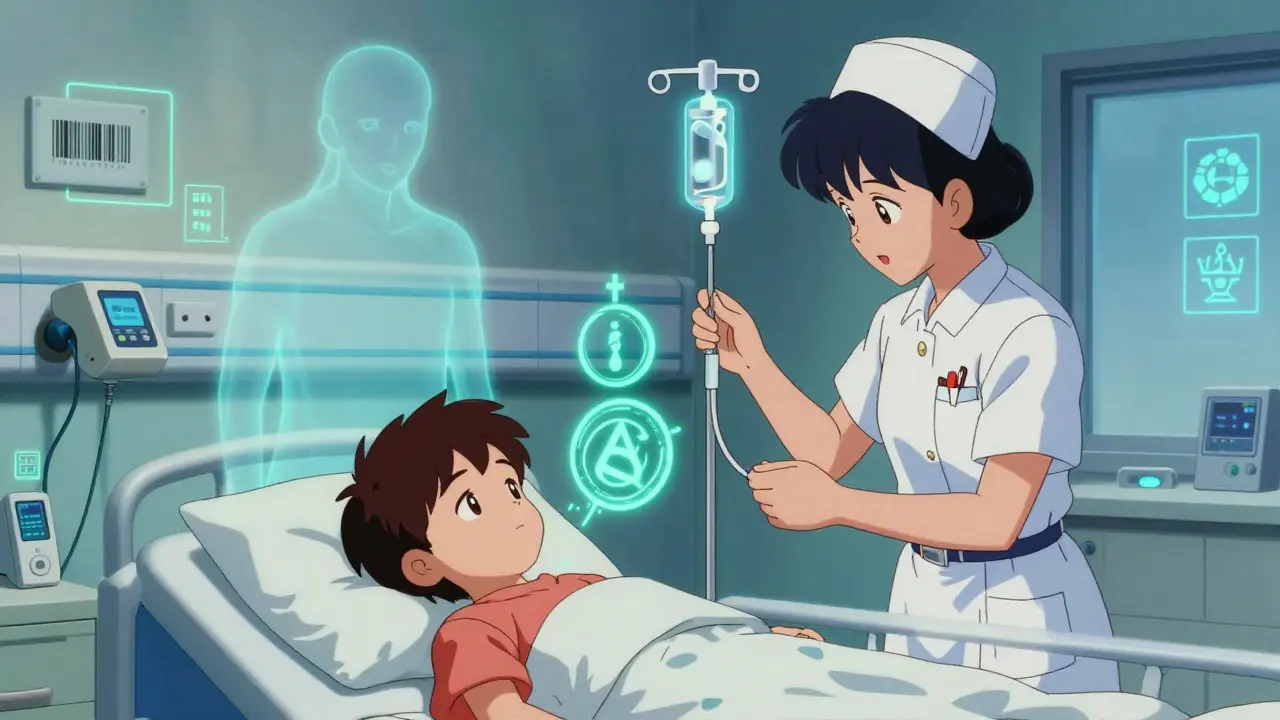
Skipping a double check might seem harmless - especially if you’re rushed. But the consequences are real. In 2021, a patient in a Texas hospital received 10 times the intended dose of insulin. The nurse skipped the second check. The patient went into a diabetic coma. He survived - but suffered permanent brain damage. Another case: a woman in Ohio received a fatal overdose of potassium chloride because the IV bag was mislabeled. The nurse didn’t double-check the concentration. The pharmacy didn’t catch it. No one questioned why the bag looked so small. These aren’t rare. The U.S. Food and Drug Administration’s MedWatch database logs hundreds of medication errors involving high-alert drugs every year. Many are preventable. Hospitals that take this seriously have seen drops in errors. One VA facility reduced insulin errors by 70% after implementing mandatory double checks and barcode scanning. A children’s hospital cut cardiac drug errors by 65% after requiring two licensed staff to verify every dose.The Future: Smarter Checks, Not More Checks
The trend isn’t toward more double checks. It’s toward better ones. Hospitals are now asking: “What are we trying to catch?” If the goal is to prevent a wrong dose, then barcode scanning works better than a second nurse eyeballing a label. If the goal is to catch a mislabeled bag or a wrong concentration, then human eyes are still essential. The VHA is on track to fully integrate barcode scanning with electronic health records by the end of 2024. Other systems are testing AI-powered alerts that flag mismatched doses in real time. But no technology replaces judgment - especially when it comes to complex drug mixtures or unusual patient responses. The bottom line? High-risk medications demand more than protocol. They demand attention. They demand accountability. And they demand that we never treat safety as an inconvenience. If you’re a nurse, pharmacist, or doctor - never rush a double check. If you’re a patient or family member - ask: “Is this being double-checked?” Your life might depend on it.What are the most common high-risk medications that need a double check?
The most common high-risk medications requiring double verification include insulin (all forms), IV opioids like morphine and fentanyl, IV heparin, concentrated potassium chloride, chemotherapy drugs, IV calcium, and neuromuscular blocking agents. These drugs have narrow safety margins - even small mistakes can cause death or permanent injury.
Who is allowed to perform an independent double check?
Only licensed healthcare professionals with proper training can perform double checks. This typically includes registered nurses, pharmacists, physicians, physician assistants, and advanced practice nurses. Support staff like unit clerks or students are not permitted to act as the second checker.
Why must the second person check independently?
If the second person sees what the first person did, they’re likely to agree without thinking - a phenomenon called confirmation bias. True independence means each person does their own calculation, reads the label, and confirms the dose without influence. This is what catches hidden errors.
Can technology replace manual double checks?
Technology like barcode scanning and automated dispensing systems can reduce errors in drug selection and dosage - but they can’t catch everything. A mislabeled vial, a wrong concentration, or a drug that looks abnormal still needs human eyes. The best approach combines technology for routine checks with manual verification for high-risk moments.
Why do nurses sometimes skip double checks?
Nurses skip double checks mainly due to staffing shortages, time pressure, or feeling the process is redundant. A 2022 survey found 42% of nurses cited lack of a second available person as the top reason. But skipping these checks increases the risk of fatal errors - which is why hospitals are now redesigning workflows to make safety easier, not harder.
Are double checks required in all hospitals?
Yes - but not in the same way. The Joint Commission requires every hospital to identify its own list of high-alert medications and define verification procedures. Some hospitals require double checks for all listed drugs. Others focus only on the most dangerous ones, like IV insulin or chemotherapy. The key is that the policy is written, trained, and enforced.
Alec Stewart Stewart
February 4, 2026 AT 18:04Man, I’ve seen nurses skip double checks during midnight shifts when they’re running on fumes. 😔 One time, I watched a nurse hand me a vial of insulin and say, ‘It’s 10 units’ - I didn’t even ask her to check again. We got lucky. But not everyone does. This post? Needed.
Demetria Morris
February 6, 2026 AT 05:13It’s not just about double checks-it’s about systemic neglect. Hospitals treat safety like a checklist item, not a sacred duty. Nurses are overworked, underpaid, and expected to be perfect while being treated like disposable cogs. And yet, when something goes wrong, it’s always ‘human error.’ No one takes responsibility for creating the conditions that make errors inevitable.
Susheel Sharma
February 6, 2026 AT 18:56Let’s be real: double checks are a Band-Aid on a hemorrhage. The real problem? Pharma companies packaging insulin in vials that look identical to 10x concentrated versions. The real problem? EHR systems that auto-populate doses based on ‘typical’ orders. The real problem? Regulatory bodies that approve dangerous drug formats because ‘it’s always been done this way.’ Double checks are theater. Real change requires redesigning the entire system. 🤷♂️
Janice Williams
February 8, 2026 AT 15:09It is not acceptable that healthcare workers are permitted to bypass protocols under the pretext of ‘time constraints.’ This is not a corporate meeting; it is the administration of life-altering substances. The normalization of cutting corners is a moral failure. One must ask: if this were your mother, would you still rush? Would you still skip? The answer, if you are honest, should terrify you.
Roshan Gudhe
February 9, 2026 AT 17:50There’s a deeper truth here: we treat safety like a rule, not a relationship. We think if we just add another step, another signature, another scan, we’ve fixed it. But safety isn’t procedural-it’s cultural. It’s the quiet nurse who pauses because something feels off. It’s the pharmacist who asks, ‘Why is this dose 10x higher than usual?’ It’s the patient’s family member who says, ‘Wait, let me see that label.’ That’s the real double check-the human one. And it’s disappearing.
Rachel Kipps
February 10, 2026 AT 11:18i read this whole thing and it made me cry. i work in a clinic and we dont even have barcode scanners for insulin. sometimes the only check is me looking at the label while the nurse says ‘its right’ and i just nod. i know its wrong but i dont know how to say it without sounding like i dont trust them. 😔
Alex LaVey
February 11, 2026 AT 08:51Big respect to everyone who does these double checks-even when they’re tired, even when no one’s watching. You’re the quiet heroes. And to the hospitals that are finally adding tech like barcode scans? Keep going. We need more of that. But never forget: the best scanner in the world can’t replace a human who cares enough to pause, look, and say, ‘Wait.’
Jhoantan Moreira
February 13, 2026 AT 05:04As someone from the UK, I’m glad to see this. We’ve got similar protocols here, but I’ve seen nurses get yelled at for ‘slowing things down’ during double checks. It’s a cultural issue as much as a procedural one. We need to celebrate caution-not punish it. 🙏
Justin Fauth
February 14, 2026 AT 05:15USA still the only country where nurses have to beg for basic safety tools while Big Pharma makes billions off these mistakes. We got AI that can predict your Netflix binge, but we can’t make vials that don’t look like poison? Pathetic. Double checks? Yeah, but fix the damn system first.