Drug Interaction Checker
Check for Dangerous Combinations
Enter medications you're taking to see if there's a dangerous interaction. This tool highlights high-risk combinations that could cause serious health complications.
Why This Matters
Many dangerous drug interactions happen because pharmacists miss them due to "alert fatigue" from too many warnings. Research shows customized alert systems that focus only on high-severity risks increase detection rates from 48% to 89%.
Always ask your pharmacist: "Could this interact with anything I'm already taking?" and "What should I watch for?"
Every year, tens of thousands of Americans end up in emergency rooms because of dangerous drug combinations that could have been prevented. Imagine taking two common medications that seem harmless on their own, but together they could cause a stroke, kidney failure, or even death. That's why pharmacists are trained to spot these red flags-but sometimes they miss them. A 2016 Chicago Tribune investigation found 52% of pharmacies failed to warn patients about life-threatening drug interactions during controlled testing. This isn't just a numbers game; it's a real threat to patient safety.
Why Drug Interactions Matter
Drug interactions happen when two or more medications affect each other's effectiveness or safety. Some combinations can make a drug too strong, leading to overdose effects, while others can cancel out the medication entirely. The consequences are serious: loss of consciousness, organ damage, unexpected pregnancy, or birth defects. In severe cases, these interactions can be fatal. The Tribune report tested five specific combinations that could cause these outcomes, highlighting how critical it is for pharmacists to catch them.
Common Dangerous Combinations
Here are real-world examples of dangerous drug combinations:
| Drug Combination | How It Works | Potential Danger |
|---|---|---|
| Simvastatin + Clarithromycin | Clarithromycin blocks the liver enzyme that processes simvastatin | Severe muscle damage (rhabdomyolysis), kidney failure |
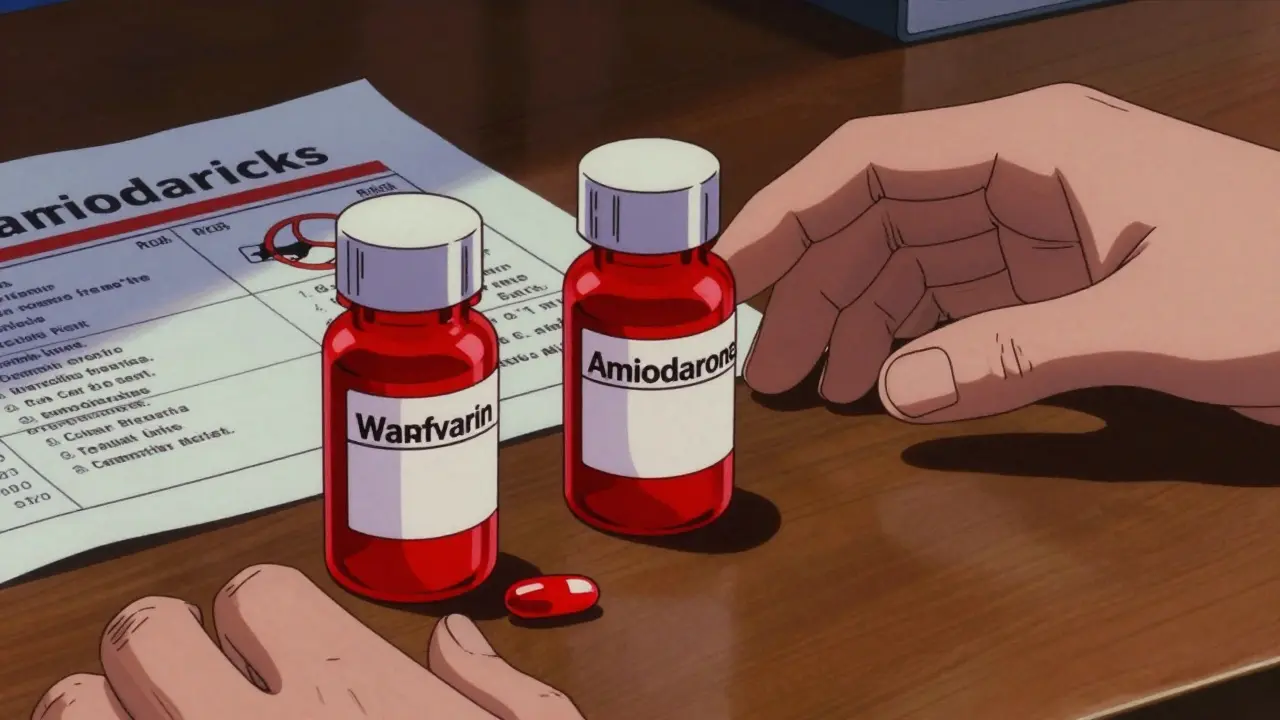
| Warfarin + Amiodarone | Amiodarone slows down warfarin's metabolism | Excessive bleeding, stroke risk |
| Digoxin + Verapamil | Verapamil reduces kidney clearance of digoxin | Heart block, dangerously slow heartbeat |
| Tizanidine + Ciprofloxacin | Ciprofloxacin inhibits the enzyme breaking down tizanidine | Loss of consciousness, severe dizziness |
| Norgestimate/Ethinyl Estradiol + Griseofulvin | Griseofulvin reduces effectiveness of birth control | Unplanned pregnancy, birth defects |
These combinations aren't just theoretical. In one case, a patient at an Evanston CVS pharmacy was given clarithromycin and simvastatin together without any warning. The pharmacist didn't catch the interaction, which could have led to kidney failure. This is why pharmacists need to be vigilant.
Why Pharmacists Miss These Red Flags
Pharmacists aren't ignoring risks-they're overwhelmed. The Tribune investigation found that pharmacists face "alert fatigue" from too many computer warnings. Many of these alerts are for low-risk interactions, so they start ignoring them. When systems generate 10-20 warnings per prescription, critical ones can slip through. Professor John Horn from the University of Washington School of Pharmacy explains that systems often produce excessive alerts, with 70-80% being irrelevant for high-risk cases. This means pharmacists might miss the truly dangerous ones.
For example, a pharmacist might see 50 alerts for a single patient's medication list. Most are minor, like a drug that slightly affects digestion. But when a high-risk combination like warfarin and amiodarone slips through, the consequences can be deadly. Studies show that when systems are customized to show only high-severity alerts, pharmacists catch 89% of critical interactions-up from 48% before the changes.
How Patients Can Protect Themselves
Patients play a crucial role in preventing dangerous interactions. Here's what you can do:
- Keep a complete medication list: Include all prescriptions, over-the-counter drugs, vitamins, and supplements. Bring this list to every appointment and pharmacy visit.
- Ask specific questions: When starting a new medication, ask, "Could this interact with anything I'm already taking?" and "What should I watch out for?"
- Use one pharmacy: Using the same pharmacy for all prescriptions helps pharmacists track your full medication history.
- Check for updates: If your doctor changes a prescription, ask if the new medication interacts with others.
These steps might seem small, but they make a huge difference. A 2022 CDC report found that pharmacist-patient counseling for high-risk medications could prevent 150,000 adverse events each year.
What to Ask Your Pharmacist
Pharmacists are your allies in medication safety. Don't hesitate to ask:
- "Is this medication safe with my current prescriptions?"
- "Are there any side effects I should watch for right away?"
- "Do I need to adjust the timing of my doses to avoid interactions?"
- "What should I do if I miss a dose of this medication?"
Also mention all supplements and over-the-counter drugs you use-many people forget these can interact too. For example, St. John's Wort can reduce the effectiveness of birth control pills and blood thinners. Your pharmacist needs the full picture to keep you safe.
What are the most dangerous drug combinations to watch for?
The most dangerous combinations include simvastatin with clarithromycin (causing muscle damage), warfarin with amiodarone (increasing bleeding risk), and digoxin with verapamil (leading to heart problems). Other high-risk pairs involve tizanidine and ciprofloxacin (loss of consciousness) and birth control with griseofulvin (unplanned pregnancy). Always check with your pharmacist when starting new medications.
Why do pharmacists sometimes miss drug interactions?
Pharmacists often face "alert fatigue" from too many computer warnings. Many alerts are for minor interactions, so they start ignoring them. When systems generate 10-20 warnings per prescription, critical ones can slip through. Customizing alert systems to focus only on high-severity risks has boosted detection rates from 48% to 89% in some pharmacies.
What should I ask my pharmacist about drug interactions?
Ask: "Could this new medication interact with anything I'm already taking?" "Are there specific side effects I should watch for?" and "Do I need to adjust the dose of my current medications?" Also, mention all supplements and over-the-counter drugs you use-many people forget these can interact too.
How can I keep track of my medications?
Keep a written list of all medications, including doses and why you take them. Update it every time your prescription changes. Many pharmacies offer digital tools or apps to manage this. Sharing this list with every healthcare provider ensures they know your full medication history.
Are there safe alternatives to risky drug combinations?
Yes. For example, if you take warfarin, choosing atorvastatin or pravastatin instead of simvastatin reduces interaction risks. Similarly, for gout treatment, colchicine alternatives exist when taking blood pressure medications. Always discuss alternatives with your doctor and pharmacist-they can find safer options tailored to your situation.
Samantha Beye
February 5, 2026 AT 09:55Always check with your pharmacist.
Nancy Maneely
February 5, 2026 AT 17:18This is why I'm so paranoid about meds.
My cousin died from a bad combo.
They never warned him.
Pharmacists are supposed to catch this, but they miss it.
It's a fucking disaster.
Always check yourself.
Phoebe Norman
February 6, 2026 AT 01:35The data shows 52% of pharmacies failed to warn that's staggering.
But alert fatigue is real.
Systems need to prioritize high-risk interactions.
70-80% of alerts are irrelevant.
Customizing reduces misses.
But patients must advocate for themselves.
Albert Lua
February 6, 2026 AT 19:01In my country, pharmacists always double-check with doctors.
We have strict protocols.
But in the US, it's different.
More emphasis on speed than safety.
We need better systems.
Always ask questions.
Katharine Meiler
February 8, 2026 AT 13:25Pharmacists are overwhelmed.
They need better tools.
The current system generates too many false positives.
This leads to missed critical interactions.
We need AI-driven systems that learn from past errors.
It's not just about training, it's about tech.
Rene Krikhaar
February 9, 2026 AT 03:14I've worked with patients who had bad interactions.
The key is keeping a complete med list.
Always tell your pharmacist about vitamins and supplements.
Many forget that.
St. John's Wort can mess with blood thinners.
Always check.
I've seen cases where people take herbal supplements without telling anyone.
It's crazy how many interactions happen because of that.
I had a patient who took garlic supplements with warfarin.
Almost caused bleeding.
Always disclose everything.
Even if you think it's harmless.
Pharmacists need full info.
It's not just about pills.
OTC meds too.
Check labels.
Keep a list.
Update it regularly.
It's simple but life-saving.
Matthew Morales
February 10, 2026 AT 01:41Totally agree! I always list my meds.
Even my daily vitamins.
Had a friend who took St. John's wort and it messed with his blood thinner.
Scared him.
Use apps to track. 😅
Diana Phe
February 11, 2026 AT 03:27This whole system is rigged.
Big Pharma and pharmacies colluding.
They want you to get sick so they can sell more drugs.
The 'alerts' are fake.
They're designed to ignore real dangers.
Always distrust the system.
Check everything yourself.
Carl Crista
February 12, 2026 AT 11:29The real problem is the FDA.
They approve dangerous drugs.
Pharmacies are just following orders.
They don't care about safety.
It's all about profit.
You're on your own.
Always check.
Jennifer Aronson
February 12, 2026 AT 15:13While systemic issues exist, it's important to focus on actionable steps.
Patients should maintain medication lists and communicate openly with pharmacists.
Collaboration between healthcare providers and patients can mitigate risks.
Awareness is key.