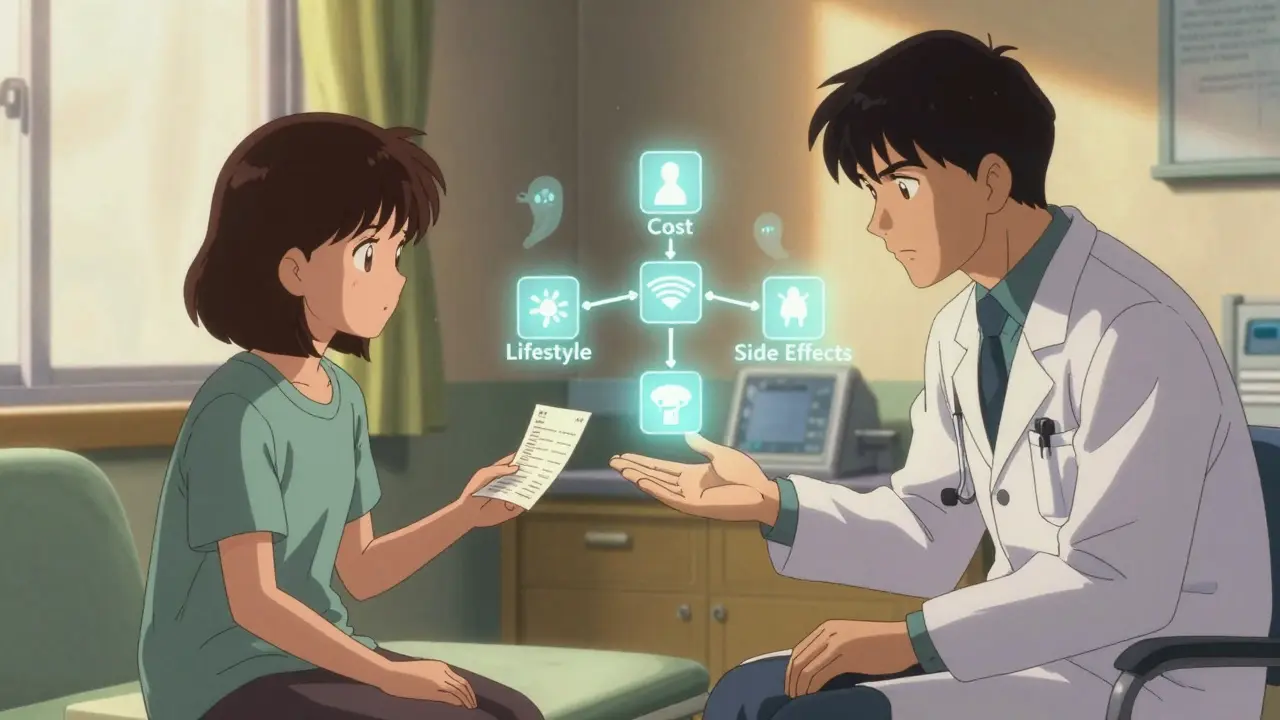
When you’re handed a prescription, do you feel like you’re making the choice-or just accepting it? For too long, medication decisions have been treated like orders from a doctor, not conversations between equals. But that’s changing. Today, medication autonomy isn’t just an ethical ideal-it’s becoming a practical expectation in healthcare. It means you have the right to understand your options, weigh the trade-offs, and pick what fits your life, values, and goals-even if your doctor doesn’t love your choice.
Why Your Body, Your Call
Medication autonomy isn’t about being difficult. It’s about recognizing that drugs don’t just treat symptoms-they change how you feel, sleep, work, and even relate to people. A pill that helps one person’s anxiety might make another feel numb. A diabetes drug that drops blood sugar fast might cause nausea so bad you can’t keep food down. These aren’t minor side effects. They’re life-altering. The idea that patients should have a real say in what goes into their bodies didn’t come from nowhere. After the horrors of the Nuremberg Trials, medical ethics began to shift. In 1972, a U.S. court ruled that doctors must tell patients everything that matters before they agree to treatment. That’s the foundation. Today, it’s clear: if you’re mentally capable of understanding your options, you get to decide. Even if your doctor thinks you’re wrong.What Really Goes Into a Medication Decision
Making an informed choice isn’t just hearing the name of a drug. It’s knowing:- How well it works-for people like you
- What side effects are likely, and how bad they can get
- How much it costs-and whether you can afford it long-term
- What other options exist, including non-drug approaches
Shared Decision-Making: It’s Not Just a Buzzword
The best tool for real medication autonomy is shared decision-making (SDM). It’s not a formality. It’s a process. A good SDM conversation includes:- Explaining what each option does-and doesn’t do
- Asking what matters most to you: sleep? Energy? Avoiding needles? Staying off social media?
- Helping you weigh risks against your personal goals
- Documenting your choice so it’s not forgotten at the next visit
Where It Falls Short-and Why
Autonomy looks great on paper. But in practice, gaps are wide. - Only 42% of clinics in rural areas consistently practice shared decision-making.- Just 38% of Epic electronic health records (used by 78% of U.S. hospitals) have fields to record patient preferences.
- Black and Hispanic patients are significantly less likely to feel involved in their medication choices-just 49% and 53% respectively, compared to 74% of white patients. And then there’s the influence of ads. Direct-to-consumer drug ads shape what patients ask for. One in four patients now request a specific brand because they saw it on TV-even if it’s not the best fit. That’s not autonomy. That’s marketing. Even doctors struggle. Some assume low-income patients won’t stick with expensive meds, so they don’t offer them. Others think older patients won’t understand, so they don’t explain. That’s not care. That’s paternalism dressed up as concern.
Real Stories, Real Choices
One cancer patient refused opioids because of her religious beliefs about suffering. Her doctor didn’t push back. Instead, they built a pain plan around non-opioid meds, physical therapy, and frequent check-ins. She stayed in control-and in comfort. Another patient with type 2 diabetes was prescribed Ozempic but didn’t want to deal with nausea. Her doctor shrugged and said, “It’s the best option.” She switched providers. The next one sat down, listed alternatives: metformin, GLP-1s with lower nausea rates, even lifestyle programs covered by insurance. She chose one that worked-with no vomiting. These aren’t outliers. They’re what autonomy looks like when it’s done right.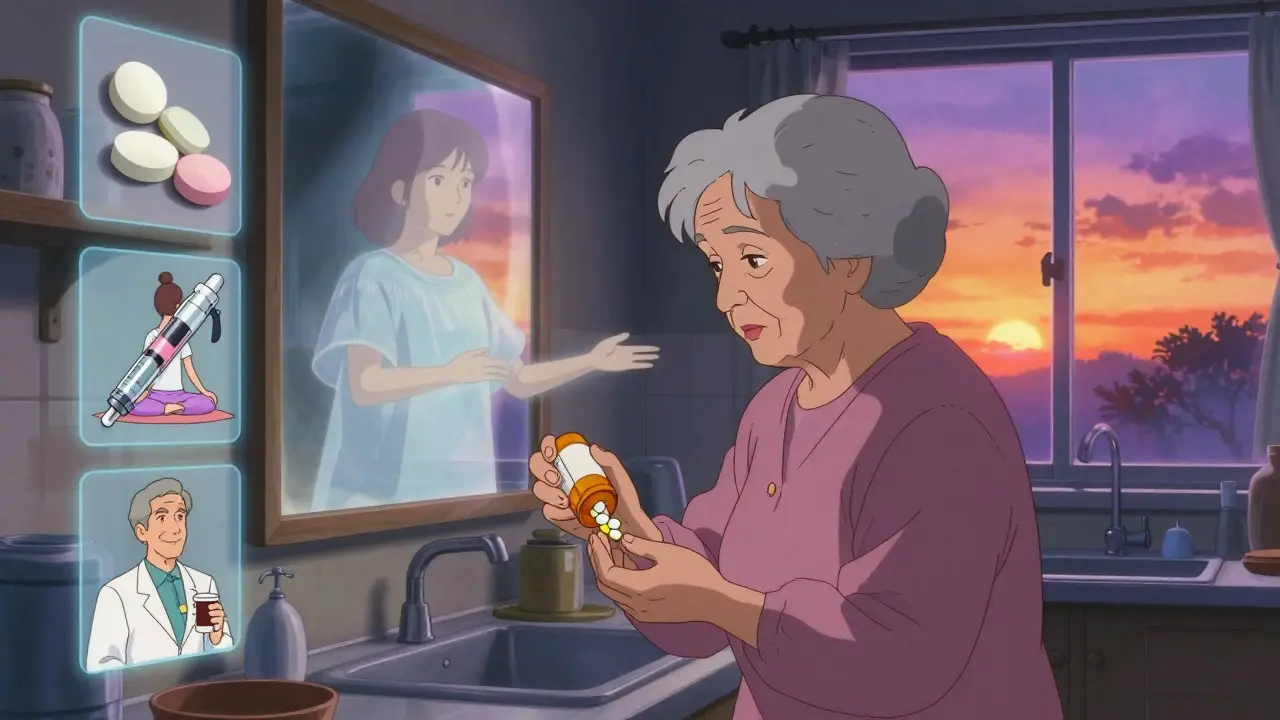
How to Get Started-Even If Your Doctor Doesn’t
You don’t need a perfect system to take charge. Here’s how to start:- Ask for alternatives. “What are the other options?” is a simple, powerful question.
- Ask about cost. “Can you tell me what this costs out-of-pocket?” Many doctors don’t know-but they can find out.
- Ask about side effects. “What’s the most common one? And how often does it happen?”
- Ask for time. “I need to think about this. Can we schedule a follow-up?”
- Use free tools. The Mayo Clinic and the National Institutes of Health offer easy-to-read decision aids for common conditions like high blood pressure, depression, and diabetes.
The Future Is Personalized
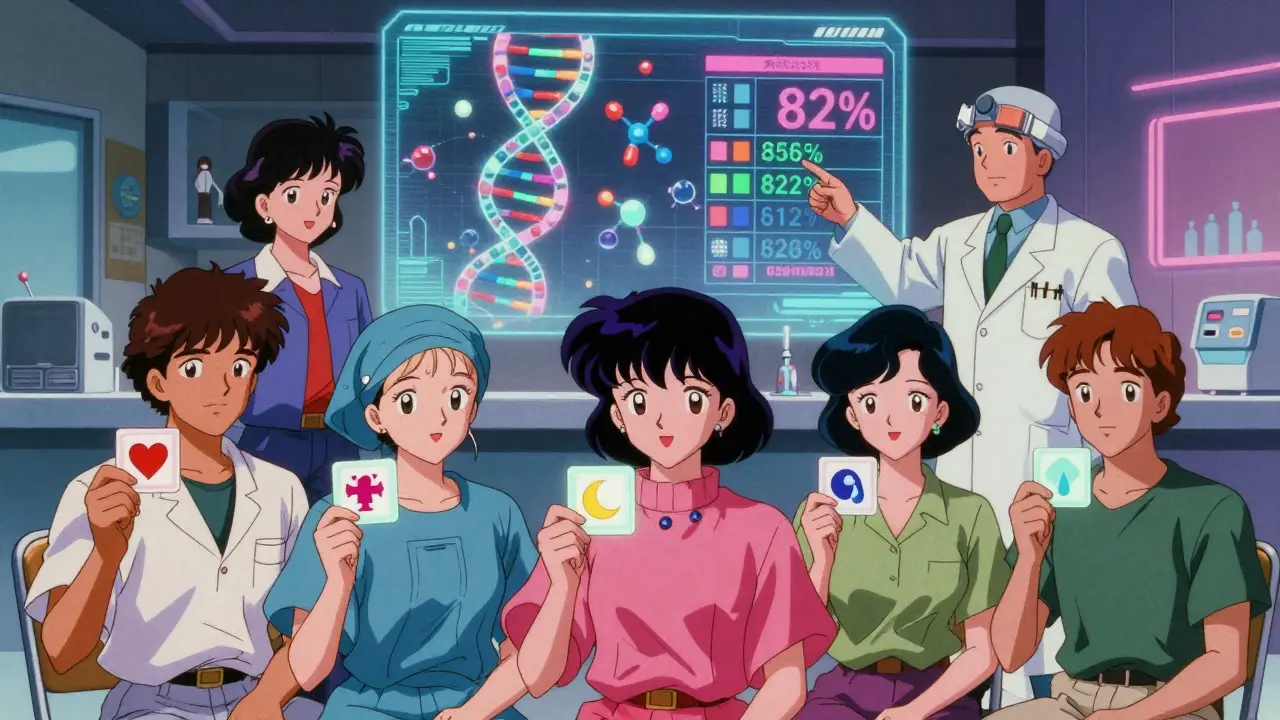
The next big shift? Personalization. Genetic testing for how your body processes drugs is now under $250-down from over $1,200 just four years ago. That means your next antidepressant might be chosen not by trial and error, but by your DNA. Digital tools are also growing. Apps that help you track side effects, compare costs, or even simulate how a drug might affect your daily routine are becoming more common. But here’s the catch: 37% of adults over 65 say they can’t use these tools. That’s a risk. Autonomy shouldn’t depend on tech skills.What’s Next?
Medication autonomy is no longer optional. By 2025, Medicare Advantage plans must document your medication preferences. The FDA now requires drugmakers to collect patient input before launching new treatments. Hospitals with patient advisory councils implement these practices over twice as fast. This isn’t about rebellion. It’s about respect. You’re not a passive recipient of medicine. You’re the one living with the results. Your values, your schedule, your budget, your body-these matter. If your doctor doesn’t ask you what you want, ask them why not. If they dismiss your concerns, find someone who won’t. Because in the end, the most effective medication isn’t the one with the highest success rate-it’s the one you’ll actually take.Can I refuse a medication even if my doctor says it’s necessary?
Yes. If you have decision-making capacity-meaning you understand the risks, benefits, and consequences-you have the legal and ethical right to refuse any medication, even if your doctor believes it’s essential. This is protected under the principle of informed consent. Doctors can explain why they recommend a treatment, but they cannot force it. If they pressure you or threaten to stop care, that’s a violation of medical ethics.
What if I don’t understand the medical terms my doctor uses?
You have the right to ask for plain language. Say: “Can you explain that like I’m not a doctor?” or “Can you use an example?” Many clinics now offer patient education materials in simple language. You can also ask for a pharmacist to review your meds-they’re trained to explain drugs in everyday terms. Free resources like MedlinePlus and the Mayo Clinic’s decision aids are also great for breaking down complex info.
Why do some doctors seem resistant to discussing alternatives?
Time is the biggest barrier. A 15-minute visit doesn’t leave room for deep conversations. Some doctors also worry about causing confusion or being seen as undermining their authority. Others may assume what’s best for the majority is best for you-without asking. But research shows patients who feel heard are more likely to stick with treatment. If your doctor dismisses your questions, it’s a red flag-not a normal part of care.
Does medication autonomy apply to mental health drugs?
Absolutely-and it’s especially important here. Psychiatric medications often have side effects that affect identity, emotions, and daily function. Some people refuse SSRIs because they fear emotional numbness. Others avoid antipsychotics due to weight gain or sedation. These aren’t irrational fears-they’re valid life considerations. Psychiatrists are more likely than other specialists to use shared decision-making (78% do), but you still need to push for it if it’s not offered.
Can I change my mind after I’ve started a medication?
Yes, and you should feel free to. Medication decisions aren’t permanent contracts. Many people stop or switch meds because side effects appear, life changes, or their goals shift. If you’re not feeling better-or you’re feeling worse-talk to your provider. Don’t just quit cold turkey. But do speak up. Your autonomy doesn’t disappear after the first prescription.
How do I know if my doctor is truly practicing shared decision-making?
Look for these signs: They ask what matters most to you, not just what’s wrong. They list at least two options, not just one. They explain risks and benefits in numbers you can understand (like “1 in 4 people get nausea”). They don’t rush you. They check in later to see how you’re doing with your choice. If they say, “This is what I recommend,” without asking your input, they’re not practicing shared decision-making.
Joseph Snow
January 5, 2026 AT 06:43Let’s be real-this whole ‘medication autonomy’ thing is just Big Pharma’s new marketing ploy to make you feel empowered while they jack up prices on drugs you didn’t even ask for. You think you’re choosing? Nah. You’re being manipulated into buying the most expensive option because the ad made you feel like your life depends on it. Doctors are just the middlemen now, and the real power is in the boardroom. Wake up.
melissa cucic
January 6, 2026 AT 07:37Autonomy isn't just a buzzword-it's the ethical bedrock of modern medicine, and yet, we treat it like an optional add-on. The fact that patients must fight for basic information-cost, side effects, alternatives-reveals a system that prioritizes efficiency over dignity. When we reduce human beings to diagnostic codes, we don't just fail them; we betray the very purpose of healing. This isn't about rebellion; it's about restoration.
Akshaya Gandra _ Student - EastCaryMS
January 8, 2026 AT 02:59so i read this and im like wow but wait how do i even ask my doc for alternatives? like i dont even know what to say 😅 also is there a website where i can check side effects without getting scared by every possible rare thing??
Jacob Milano
January 9, 2026 AT 21:53Man, I had a doctor once tell me ‘this pill will fix your anxiety’-then I spent three months feeling like a zombie who forgot how to laugh. When I asked about alternatives? He shrugged and said, ‘Well, it works for most people.’ Most people? I’m not ‘most people.’ I’m me. And I’m tired of being treated like a statistic with legs. That’s when I started digging-found a pharmacist who actually listened. Now I’m on metformin for mood swings, not some fancy SSRI that stole my libido and my joy. Autonomy doesn’t mean being difficult. It means being human.
Aaron Mercado
January 11, 2026 AT 02:56THIS IS WHY AMERICA IS FALLING APART. People think they can just ‘choose’ their meds like picking a flavor of yogurt? You think your body is a buffet? No. You think your doctor is just some suggestions guy? NO. They went to school for TEN YEARS. They know better. And now you want to ‘weigh trade-offs’? That’s not autonomy-that’s dangerous narcissism. You want to live? Then shut up, take the pill, and stop turning medicine into a TikTok debate.
saurabh singh
January 12, 2026 AT 23:00From India, I just wanna say-this is HUGE. In my village, people take whatever the doctor gives, no questions. But my cousin in Delhi? She asked for cost options, found a generic, saved 80%. Now she’s healthy and proud. Autonomy isn’t Western-it’s human. If you can understand your body, you deserve to choose. No doctor should make you feel dumb for asking. You’re not a patient-you’re a person. And that’s beautiful.
Dee Humprey
January 14, 2026 AT 14:41100%. I used to be scared to ask anything. Then I started writing down my questions before appointments. One simple phrase changed everything: ‘What’s the downside?’ That’s it. No drama. No guilt. Just facts. And guess what? My doctor started giving them. Now I’m on a med I actually tolerate. And yes, I cried. Not from sadness-from relief.
John Wilmerding
January 14, 2026 AT 20:37It is imperative to underscore that the principle of informed consent, enshrined in both legal precedent and ethical frameworks, constitutes a non-negotiable component of the physician-patient relationship. The documented disparities in shared decision-making across demographic strata, particularly concerning racial and socioeconomic factors, represent a systemic failure of equitable care delivery. It is not merely advisable-it is obligatory-that clinicians institutionalize structured decision aids and allocate sufficient temporal resources to facilitate patient-centered dialogue. The data are unequivocal: adherence increases, outcomes improve, and trust is cultivated when patients are not merely informed, but actively engaged.
Allen Ye
January 16, 2026 AT 08:37What fascinates me is how autonomy-this noble, almost sacred concept-is being reduced to a transactional checklist. We’ve turned the deeply existential act of choosing what enters our body into a bullet-pointed, consumerist menu. But here’s the paradox: the more we’re told we have control, the more we’re steered by algorithms, ads, insurance formularies, and time-limited appointments. Is this autonomy? Or is it the illusion of choice, carefully curated by institutions that profit from our compliance? The real revolution isn’t asking for alternatives-it’s demanding that the system stop pretending we’re free when it’s designed to make us believe we are.
mark etang
January 17, 2026 AT 00:09The future of personalized medicine is here. Genetic testing, AI-driven side effect predictors, digital adherence trackers-these are not science fiction. They are tools that empower patients to make decisions grounded in biology, not guesswork. However, their implementation must be equitable. We cannot allow a digital divide to create a new class of medical second-class citizens. Investment in accessible technology, multilingual interfaces, and community-based education is not optional-it is essential to true autonomy.
Mandy Kowitz
January 18, 2026 AT 15:31Oh wow. So now we’re all experts because we read a blog post? Next thing you know, people will be prescribing themselves insulin based on a YouTube video. Thanks for the ‘autonomy,’ I’ll just stick with the guy who actually went to med school. 😘