
Medication Driving Safety Calculator
Medication Driving Safety Calculator
Enter details about your medication to determine if you're safe to drive. Note: Individual reactions vary. Always consult your doctor or pharmacist.
Enter medication details to see safety results.
Important Safety Information
Important: This tool provides general guidance only. Individual reactions vary significantly. Always consult your doctor or pharmacist before driving after taking medication.
Legal Note: In all U.S. states, you can be charged with DUI for driving while impaired by prescription or OTC medications. There is no legal blood concentration limit for most drugs like there is for alcohol.
Many people don’t realize that the pills they take every day - for sleep, pain, anxiety, or allergies - can make them just as dangerous behind the wheel as someone who’s been drinking. You might feel fine. You might even think you’re safe because you took your medicine last night. But your body doesn’t work the way you assume it does. And the law doesn’t care how you feel.
What Medications Actually Do to Your Driving Skills
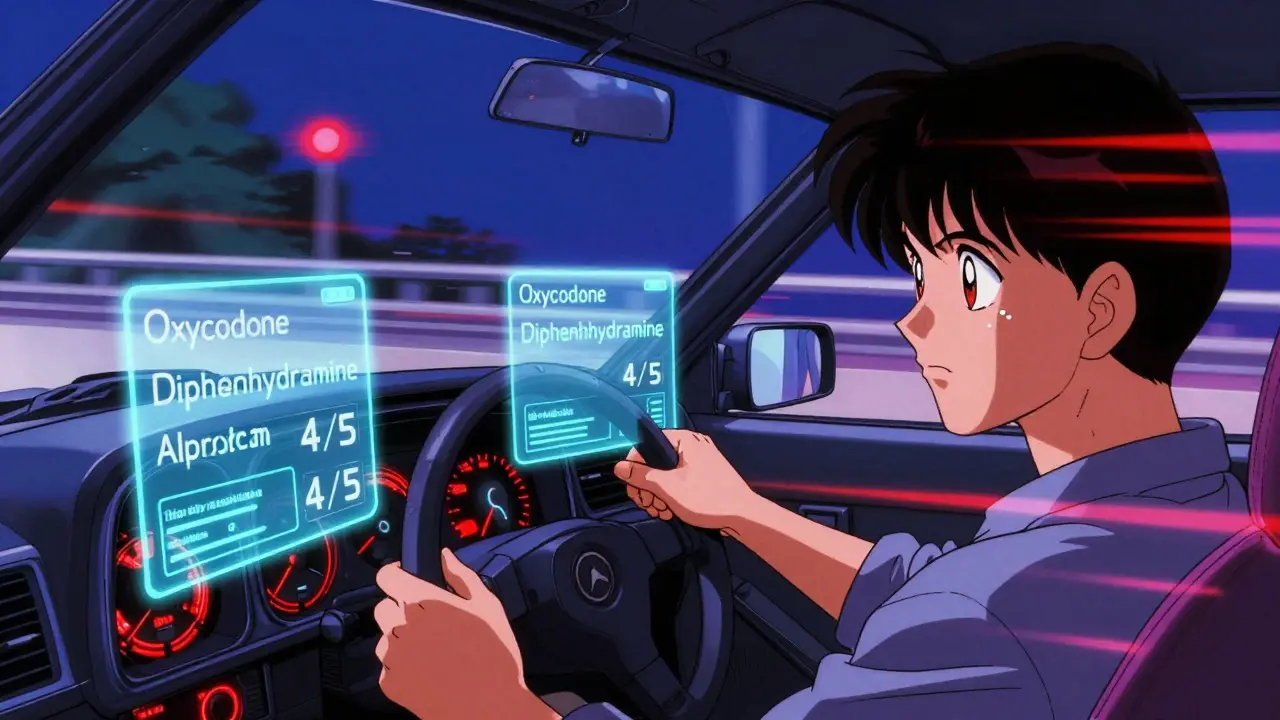
It’s not just about feeling sleepy. Driving requires quick decisions, steady hands, clear vision, and fast reaction times. Many common medications interfere with all of these. Benzodiazepines like alprazolam and diazepam - often prescribed for anxiety or insomnia - can slow your brain’s processing speed by 25 to 40%. That means if a car suddenly brakes in front of you, you might not respond fast enough. Opioids like oxycodone or fentanyl cause droopy eyelids, narrowed pupils, and reduce reaction time by up to 300 milliseconds. That’s longer than the blink of an eye - enough to turn a near-miss into a crash. Even over-the-counter drugs you pick up without a prescription can be risky. Diphenhydramine, the active ingredient in Benadryl and Tylenol PM, impairs driving as much as a blood alcohol concentration of 0.10%. That’s above the legal limit of 0.08% in every U.S. state. People take it for allergies or to help them sleep, then wake up feeling "normal" - but the drug lingers in their system. One Reddit user described taking Tylenol PM at night, waking up at 7 a.m., and driving to work at 9 a.m. - only to fail a field sobriety test because the drowsiness hadn’t fully cleared. NSAIDs like ibuprofen and naproxen are often dismissed as harmless, but research shows users have a 58% higher risk of crashing. Antidepressants, especially older tricyclic types and mirtazapine, increase the chance of a motor vehicle accident by 40%. And it’s not just one drug. When you combine medications - say, a sleep aid with an anxiety pill and an allergy med - the effects multiply. Studies show that drivers with multiple drugs in their system suffer impairment worse than the sum of each drug alone.Who’s Most at Risk - And Why
Older adults are especially vulnerable. As we age, our bodies change. The liver and kidneys don’t process drugs as quickly. Fat and muscle ratios shift. The brain becomes more sensitive to sedatives. By age 65, the same dose of a medication can have twice the effect it did at 40. The American Geriatrics Society’s Beers Criteria lists over 30 medications that should be avoided in seniors because they increase fall and crash risk. Yet, only 41% of doctors routinely talk to their older patients about driving risks when prescribing these drugs. People taking three or more medications are the most likely to drive while impaired. A 2022 AAA Foundation study found that 70% of those drivers took their meds within two hours of getting behind the wheel. They didn’t think it mattered. They assumed "if I feel okay, I’m okay." But that’s exactly the mindset that leads to accidents.What the Law Says - And How It’s Changing
In the U.S., every state now includes prescription drugs in its DUI laws. You don’t need to be drunk to be charged. If a drug impairs your ability to drive - even if it’s legal - you can be arrested. But here’s the problem: there’s no standard test like a breathalyzer for drugs. Police use Drug Recognition Experts (DREs), but these programs are only active in 47 states. And even then, they can’t measure how much of a drug is in your system - only that it’s there. Only 28 states have set specific legal blood concentration limits for prescription drugs. For alcohol, it’s simple: 0.08% and you’re over the limit. For medications? It’s a mess. A driver could have a level of oxycodone that’s perfectly legal for pain relief but still high enough to impair driving. There’s no clear line. That makes prosecution harder - and gives people false confidence. The federal government is trying to fix this. In January 2023, NHTSA launched a $22 million initiative to develop saliva-based roadside tests that can detect 12 common prescription drugs with 92.7% accuracy. By 2027, most new cars will have biometric systems that track eye movement and steering patterns to detect impairment before you even get pulled over.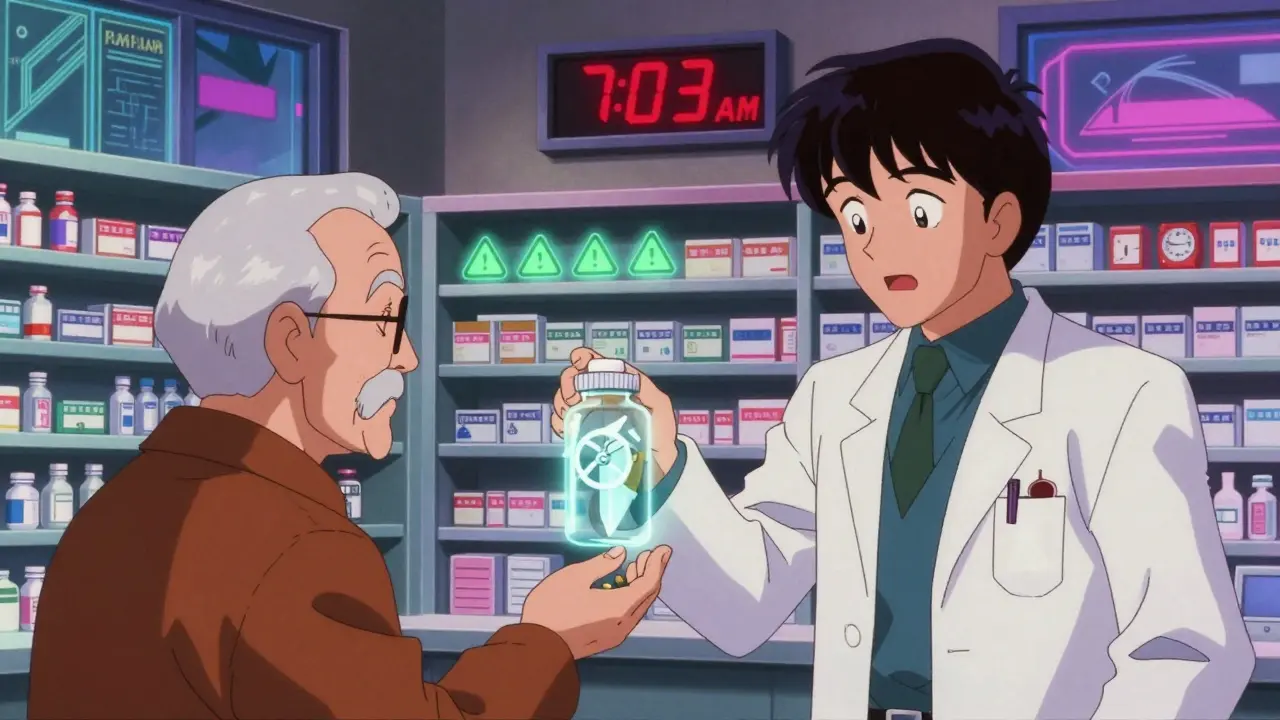
Why Warning Labels Don’t Work
You’ve seen the tiny print on your pill bottle: "May cause drowsiness." That’s it. No timing. No guidance. No warning that the effect could last 11 hours - like with zolpidem (Ambien). A 2021 FDA review found that only 32% of medication inserts gave any specific advice about driving. And 68% of patients said their doctor never told them not to drive. Pharmacists are doing better. By 2023, 89% of community pharmacists now discuss driving risks when dispensing medications. But most people don’t ask. They assume the label is enough. It’s not.What You Can Do - Practical Steps to Stay Safe
You don’t have to stop taking your meds. But you need to be smart about them. Here’s what works:- Ask your doctor or pharmacist: "Will this affect my ability to drive?" Don’t settle for "it might make you sleepy." Ask for specifics: "How long should I wait after taking this before driving?"
- Know the timing: First-generation antihistamines (like diphenhydramine) need at least 6 hours before driving. Zolpidem requires 8-12 hours. Opioids? Don’t drive for at least 8 hours after your last dose.
- Test yourself: If you’re unsure, do a quick self-check. Can you focus on a moving object? Can you walk a straight line? Can you react quickly to sudden sounds? If you’re even slightly off, don’t drive.
- Use a ride-share or public transit: If you’re on a new medication, skip driving for the first 2-3 days. Your body is adjusting. Wait until you’re certain.
- Don’t mix drugs: Alcohol and sleep aids? Painkillers and anxiety meds? Never. The combination can be deadly.
The Hidden Cost - Beyond Tickets and Fines
A conviction for drug-impaired driving doesn’t just mean a fine or license suspension. It can mean losing your job - especially if you drive for work. Insurance rates jump. Criminal records follow you. And if you hurt someone? The consequences are lifelong. The National Highway Traffic Safety Administration says drug-impaired driving causes about 18% of fatal crashes - second only to alcohol. That’s tens of thousands of lives lost each year. Most of those crashes are preventable. Not because drivers are reckless. But because they didn’t know.What’s Next - And How to Stay Informed
The FDA now requires new prescription labels to include a "Driving Risk Score" from 1 to 5. A score of 5 means "do not drive." This change started in May 2023 and will roll out to all CNS-acting drugs over the next few years. It’s the first real step toward clear, standardized warnings. But the real change has to come from you. Don’t assume your medication is safe. Don’t trust vague labels. Ask questions. Track how you feel after taking a new drug. If you’re ever unsure - don’t drive. It’s not worth the risk.Can I drive after taking ibuprofen or other NSAIDs?
While NSAIDs like ibuprofen don’t cause drowsiness, research shows they increase crash risk by 58%. The reason isn’t fully understood, but it may involve subtle effects on attention and reaction time. If you’re taking them regularly or in high doses, avoid driving until you know how they affect you personally.
Is it legal to drive while taking prescription painkillers?
It’s legal to take them - but not to drive while they impair you. Every state has laws against driving under the influence of any drug that affects your ability to operate a vehicle safely. Even if your doctor prescribed the medication, you can still be charged with DUI if you’re impaired.
How long does it take for allergy medicine to wear off?
First-generation antihistamines like diphenhydramine (Benadryl) can impair driving for 6-12 hours. Second-generation ones like loratadine (Claritin) or cetirizine (Zyrtec) have minimal effects and are generally safe for driving. Always check the active ingredient - not the brand name.
Can I be tested for prescription drugs during a traffic stop?
Yes. Police can use a Drug Recognition Expert (DRE) to evaluate signs of impairment, and roadside saliva tests for common prescription drugs are now being rolled out. These tests can detect drugs like oxycodone, alprazolam, and diphenhydramine with over 90% accuracy. Refusing a test can lead to automatic license suspension in most states.
What should I do if I’m prescribed a new medication?
Ask your doctor or pharmacist: "Will this affect my driving?" Then, don’t drive for the first 2-3 days while your body adjusts. Keep a log of how you feel after each dose - dizziness, blurred vision, sluggishness - and share it with your provider. If you feel even slightly off, choose another way to get around.
Are there any medications that are safe to drive on?
Many are - but you can’t assume. Second-generation antihistamines (Claritin, Allegra), most blood pressure meds, and thyroid medications typically don’t impair driving. But everyone reacts differently. Always check the label, ask your pharmacist, and test your own response before getting behind the wheel.
Trevor Davis
January 13, 2026 AT 19:48I used to take Benadryl for allergies and drive to work like it was nothing. One morning I got pulled over for swerving - didn’t even realize I was that messed up. Turns out I was at 0.11 BAC equivalent. My boss found out. Lost my job. Now I just use Zyrtec and take the bus. Don’t be like me.
Lethabo Phalafala
January 14, 2026 AT 16:15OH MY GOD. I had no idea ibuprofen could make you crash your car?! I take two every morning like it’s coffee. I just thought my brain was slow because I’m tired. Now I’m terrified. I’m calling my pharmacist right now. This post just saved my life - seriously. Thank you.
Lance Nickie
January 15, 2026 AT 04:38lol so now i cant even take tylenol pm? what’s next, they gonna ban breathing?
Milla Masliy
January 16, 2026 AT 07:52As someone who grew up in a household where medicine was treated like candy, this hits hard. My grandma took three different sleep aids and drove to church every Sunday. We never thought twice. Now I make sure my elderly relatives have rideshare apps on their phones. It’s not about distrust - it’s about love.
Damario Brown
January 17, 2026 AT 20:55the data here is kinda sus. 58% higher risk for ibuprofen? that’s like saying walking makes you 300% more likely to get hit by lightning. also, who tested this? did they do double-blind placebo-controlled trials or just ask people who got in crashes if they took advil? also, why are we blaming the pills and not the fact that people are dumb? 🤷♂️
Clay .Haeber
January 19, 2026 AT 06:41Oh wow. So now the government’s gonna turn every car into a bio-surveillance drone that watches your pupils and judges your life choices? Brilliant. Next they’ll confiscate your Advil and replace it with a pamphlet titled "How to Be a Perfect Human (And Also Not Die)." Meanwhile, I’ll be over here taking my oxycodone and driving through the desert like a goddamn cowboy. 🤠💊
Priyanka Kumari
January 20, 2026 AT 23:38This is such an important conversation. In India, we often assume that because a medicine is sold over the counter, it’s harmless. But I’ve seen friends drive after taking cough syrup with codeine - and no one thinks it’s a problem. We need community awareness campaigns. Maybe pharmacies can put stickers on bottles: "Wait 8 hours before driving." Simple. Clear. Life-saving.
Avneet Singh
January 21, 2026 AT 16:34The entire premise is reductionist. You’re conflating pharmacokinetics with behavioral risk without accounting for confounding variables like socioeconomic status, sleep deprivation, or cognitive load. Also, "impairment" is a socially constructed metric - how do we know what "normal" driving even looks like? The data is statistically noisy and ethically suspect.
Nelly Oruko
January 21, 2026 AT 17:25we’re all just trying to survive. the pills are just the latest thing we’ve been taught to blame. but the real issue? no one teaches us how to listen to our own bodies. we’re trained to take, take, take - and never ask "how does this make me feel?"
vishnu priyanka
January 23, 2026 AT 03:33bro i took tramadol once and drove 2 hours to my cousin’s wedding. felt like i was in a dream. everyone thought i was just chill. turns out i was barely conscious. now i just say "nah i’m good" if someone offers me meds. peace out 🙏
Angel Tiestos lopez
January 23, 2026 AT 14:09just got prescribed melatonin for the first time. read the label: "may cause drowsiness." that’s it? no time? no warning? no emoji? 😵💫 i’m gonna sleep in my car tonight. #medicationawareness #dontdrivedrugged