Blood Thinner & NSAID Safety Checker
Check Your Medication Risk
Select your blood thinner and NSAID to see your bleeding risk level
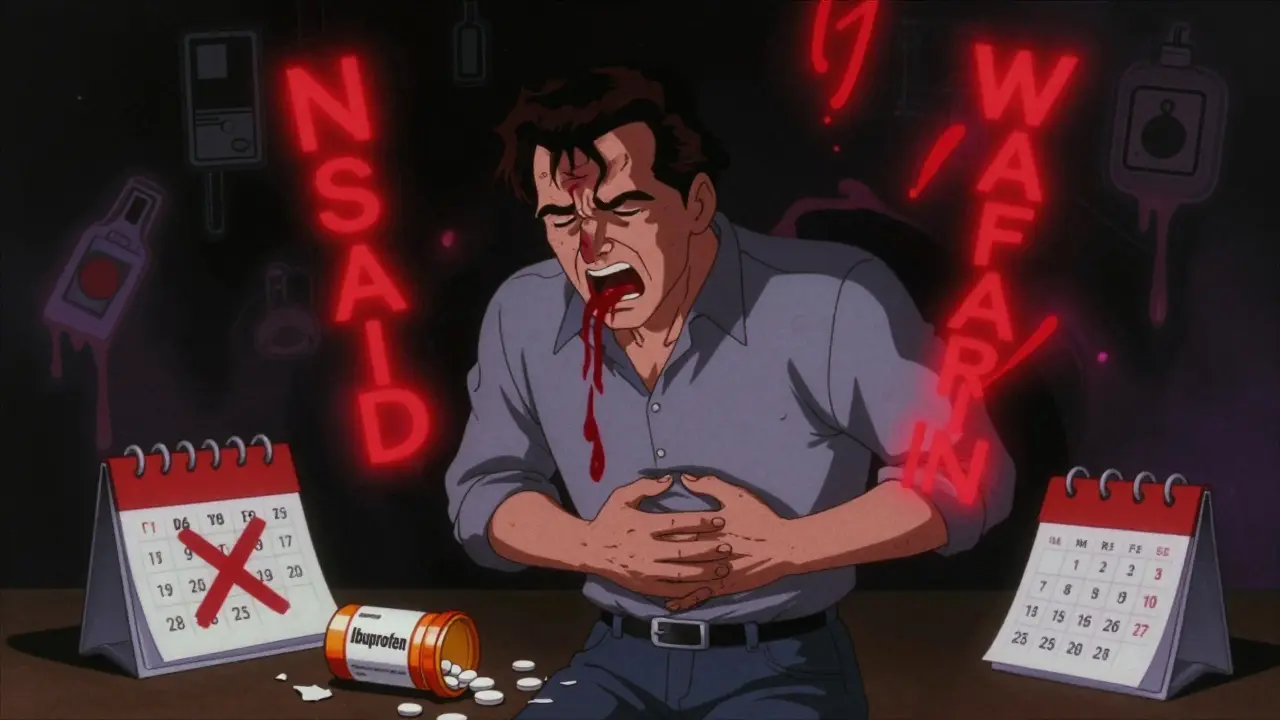
When you’re on a blood thinner, even a simple headache can become a dangerous decision. Taking ibuprofen or naproxen for pain might seem harmless - it’s over the counter, widely available, and millions of people use it every day. But if you’re taking warfarin, apixaban, rivaroxaban, or any other anticoagulant, combining it with an NSAID isn’t just risky - it’s life-threatening.
How Blood Thinners and NSAIDs Work Together to Cause Bleeding
Blood thinners don’t actually thin your blood. They stop it from clotting too easily. That’s crucial for people with atrial fibrillation, deep vein thrombosis, or artificial heart valves. But they work by slowing down the body’s natural clotting process. NSAIDs like ibuprofen, naproxen, and diclofenac do something different - they mess with platelets. Platelets are the tiny cells that rush to a cut and start forming a plug. NSAIDs block their ability to stick together. So now you’ve got two systems working against clotting: one slows down the chemical signals, the other disables the physical responders. On top of that, NSAIDs irritate the lining of your stomach and intestines. This isn’t just heartburn. It’s microscopic damage that turns into ulcers. When your blood can’t clot properly and your gut lining is already damaged, even a small tear can turn into a major bleed. The combination doesn’t just add risk - it multiplies it.The Numbers Don’t Lie: How Much Higher Is the Risk?
A 10-year study of 200,000 patients found that taking an NSAID while on a blood thinner made internal bleeding more than twice as likely. But the risk isn’t the same for every NSAID. Naproxen increased bleeding risk by over four times. Diclofenac? More than three times. Even ibuprofen, the most common one, raised the risk by nearly 80%. And it’s not just your stomach. The same study showed a 3.2 times higher chance of bleeding in the brain - a stroke-like event that can be fatal. Gastrointestinal bleeding was the most common, happening 2.2 times more often. But bleeding in the lungs, kidneys, and urinary tract also spiked. One patient on apixaban took ibuprofen for a toothache and ended up in the ER with a hemoglobin level that dropped from 14.2 to 8.7 - enough to need a blood transfusion. That’s not rare. About 12% of all emergency visits for anticoagulant-related bleeding involve NSAIDs.It’s Not Just Warfarin - All Blood Thinners Are Affected
Many people think this only applies to warfarin because it’s been around the longest. But newer drugs like Eliquis (apixaban), Xarelto (rivaroxaban), Pradaxa (dabigatran), and Savaysa (edoxaban) carry the same danger. The mechanism is different - they don’t affect INR levels like warfarin does - but they still prevent clots. And NSAIDs still disable platelets and damage the gut. Studies show the bleeding risk is just as high with these newer medications. There’s no safe blood thinner to pair with an NSAID.
Why Do So Many People Still Take Them Together?
There are about 12 million Americans on blood thinners. And over 17 million use NSAIDs daily. Many are older adults with arthritis, back pain, or joint issues. It’s common for someone to be prescribed a blood thinner for AFib and then reach for ibuprofen for stiff knees. Doctors don’t always catch it. Patients don’t realize the danger. A 2022 study found only 43% of people on anticoagulants knew NSAIDs could cause serious bleeding. Two-thirds thought occasional use was fine. Even worse, some believe that taking a COX-2 inhibitor like celecoxib is safer. It’s not. Studies show the bleeding risk remains high. The gut damage doesn’t disappear just because the drug targets a different enzyme. And acetaminophen (Tylenol) isn’t perfect either - high doses can hurt the liver, especially in older adults. But it’s still the best alternative.What Should You Do Instead?
If you’re on a blood thinner and need pain relief, here’s what actually works:- Acetaminophen (Tylenol) - Stick to 3,000 mg or less per day. Higher doses increase liver risk, especially if you drink alcohol or have liver disease.
- Physical therapy - For chronic joint or back pain, movement is often more effective than pills.
- Heat or cold packs - Simple, safe, and surprisingly helpful for muscle and joint pain.
- Topical NSAIDs - Gels like diclofenac gel (Voltaren) applied to the skin carry far less risk than pills because very little enters the bloodstream.
- Consult your doctor about alternatives - If pain is severe, your doctor might consider non-NSAID prescriptions like low-dose gabapentin or duloxetine for nerve-related pain.
What If You’ve Already Taken Them Together?
If you accidentally took ibuprofen or naproxen while on a blood thinner, don’t panic - but don’t ignore it either. Watch for signs of bleeding:- Black, tarry stools or blood in stool
- Unexplained bruising or large bruises
- Bleeding gums without brushing
- Unusual headaches, dizziness, or vision changes (possible brain bleed)
- Dark urine or pain when urinating
- Feeling unusually weak, tired, or short of breath

What About Before Surgery or Dental Work?
Many people stop their blood thinner before a procedure - but they forget about NSAIDs. That’s a mistake. NSAIDs stick around in your system longer than you think. Here’s how long to stop them before surgery or major dental work:- Ibuprofen - Stop 2 days before
- Naproxen - Stop 2 to 3 days before
- Piroxicam - Stop 10 days before
Bottom Line: This Interaction Is Avoidable - But Only If You Act
This isn’t a theoretical risk. It’s happening every day. People are bleeding internally because they didn’t know ibuprofen could be deadly with their blood thinner. The good news? You don’t have to be one of them. Acetaminophen is safe. Topical gels work. Physical therapy helps. And if you’re in pain, your doctor can help you find a real solution - not just a quick fix that could kill you. Don’t rely on memory. Write down your medications. Show them to every new doctor. Ask: “Is this safe with my blood thinner?” If they say yes, ask how they know. If they hesitate, get a second opinion. Your life isn’t worth the risk of a single ibuprofen.Can I take aspirin with my blood thinner?
No. Aspirin is an NSAID and a blood thinner itself. Taking it with another anticoagulant doubles your bleeding risk. Even low-dose aspirin for heart protection should only be used with blood thinners if your doctor specifically prescribes it - and even then, it’s closely monitored.
Is Tylenol completely safe with blood thinners?
Tylenol (acetaminophen) is the safest OTC painkiller for people on blood thinners - but it’s not risk-free. Don’t exceed 3,000 mg per day. Higher doses can damage your liver, especially if you drink alcohol, have hepatitis, or are older. Always check with your doctor if you need it long-term.
What if I need an NSAID for a short time, like after surgery?
If absolutely necessary, your doctor might allow a very short course of the lowest possible dose - but only if you’re closely monitored. This includes frequent blood tests to check your clotting levels and possibly taking a stomach-protecting drug like omeprazole. Never self-prescribe NSAIDs during recovery.
Do topical NSAIDs like Voltaren gel carry the same risk?
Topical NSAIDs are much safer than pills because only about 6% of the drug enters your bloodstream. For localized pain - like a sore knee or elbow - they’re a good alternative. But avoid applying them to large areas or broken skin. Even topical use isn’t risk-free if you’re on a strong anticoagulant.
Can I take ibuprofen once in a while if I feel fine?
No. There’s no safe threshold. Bleeding can happen after just one dose. Studies show the risk increases immediately - even with occasional use. The idea that "it’s only once" is dangerous. Your blood thinners are working every hour of every day. One NSAID can tip the balance.
How do I know if I’m bleeding internally?
Internal bleeding doesn’t always look like a cut. Watch for unexplained fatigue, dizziness, pale skin, shortness of breath, or sudden pain in your abdomen, chest, or head. Black, tarry stools or blood in urine are late signs. If you feel off - even mildly - and you’ve taken an NSAID recently, get checked. Don’t wait for symptoms to get worse.
Why do doctors still prescribe NSAIDs to people on blood thinners?
Sometimes they don’t know the patient is on a blood thinner. Other times, they assume the patient won’t follow advice and prescribe it anyway. But most often, it’s because pain is hard to manage, and better alternatives aren’t always accessible. This isn’t about negligence - it’s about systemic gaps in patient education and pain management options.
Are there any new medications being developed to solve this problem?
Yes. The FDA’s 2024 pain management initiative is funding research into new painkillers that don’t affect platelets or the gut lining. Early candidates include novel non-opioid analgesics and targeted anti-inflammatory agents. But none are available yet. Until then, the safest strategy remains avoiding NSAIDs entirely.
What to Do Next
If you’re on a blood thinner:- Check your medicine cabinet right now. Remove all NSAIDs - ibuprofen, naproxen, diclofenac, aspirin.
- Replace them with acetaminophen - but don’t exceed 3,000 mg daily.
- Make a list of all your medications and show it to your doctor at your next visit.
- Ask: "Is there a safer way to manage my pain?"
- Set a phone reminder to review your meds every 6 months.