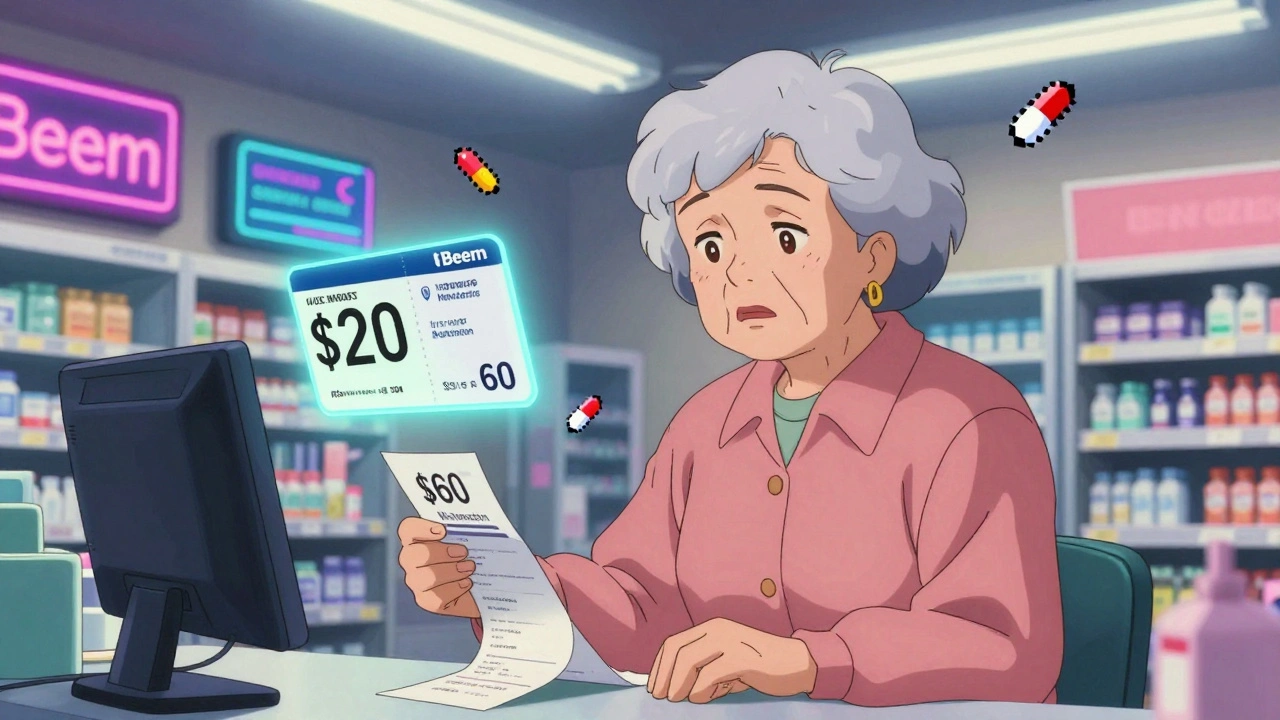
Buying generic prescription drugs online can save you hundreds - even thousands - of dollars a year compared to walking into your local pharmacy. But not all online platforms are the same, and not every retail store charges the same. If you’re paying cash for medications like metformin, amoxicillin, or atorvastatin, you might be overpaying without even realizing it.
Why the Same Pill Costs $60 at CVS and $20 Online
The price difference isn’t random. It’s built into how the system works. Retail pharmacies - think CVS, Walgreens, Walmart - set their cash prices using a formula most people never see: Average Wholesale Price (AWP) plus a markup and a dispensing fee. For example, a common formula is AWP + 20% + $5. That means if the AWP for a 30-day supply of metformin is $40, your final price could be $60 or more. Online discount platforms like Beem, GoodRx, and SingleCare don’t use that system. Instead, they negotiate fixed, discounted rates directly with pharmacies. These aren’t insurance deals. They’re cash prices you can use whether you have insurance or not. And because they cut out middlemen like pharmacy benefit managers (PBMs), they pass the savings straight to you. Take Lipitor (atorvastatin) 20mg, 30 tablets. At a retail pharmacy, you might pay $250. On Beem? $50. Metformin 500mg, 30 tablets? $60 at CVS, $20 online. Amoxicillin 500mg, 30 capsules? $30 retail, $10 online. These aren’t outliers. They’re the norm.How Online Pharmacies Actually Work
Most e-pharmacy platforms aren’t pharmacies themselves. They’re price comparison tools. You enter your medication and dosage, and they show you the lowest price from nearby pharmacies that have agreed to honor the discount. You pay online, get a voucher, and pick up your pills at a local pharmacy - same as if you walked in. This model gives you control. No insurance paperwork. No copay surprises. You know the price before you commit. And because these platforms negotiate volume deals across thousands of pharmacies, they get rates most individual customers never could. Platforms like Beem claim savings of up to 80% compared to retail. Even compared to other discount services like GoodRx, Beem often comes out cheaper for the same drugs. That’s because they work with a different network of pharmacies and have tighter negotiated rates.What You Save - And What You Don’t
For routine, generic medications - the kind you take daily for high blood pressure, diabetes, or infections - online savings are massive. A 2023 analysis found that for most common generics, the difference between retail and online cash prices was over $200 a year. For some, it was over $1,000. But not all drugs follow the same pattern. Specialty medications - like those for multiple sclerosis, rheumatoid arthritis, or cancer - are a different story. These drugs are complex, often require refrigeration, and come with strict handling rules. Online platforms don’t always offer discounts on them. Mark Cuban’s Cost Plus Drug Company, for example, sells these at transparent prices, but they’re still expensive: glatiramer acetate costs $24,186 a year, fingolimod $2,185. Even so, those prices are still lower than what you’d pay at a retail pharmacy without insurance. For the average person taking 2-3 generic meds, switching to an online discount service can cut annual drug spending by 50% or more. That’s not a small change. That’s life-altering.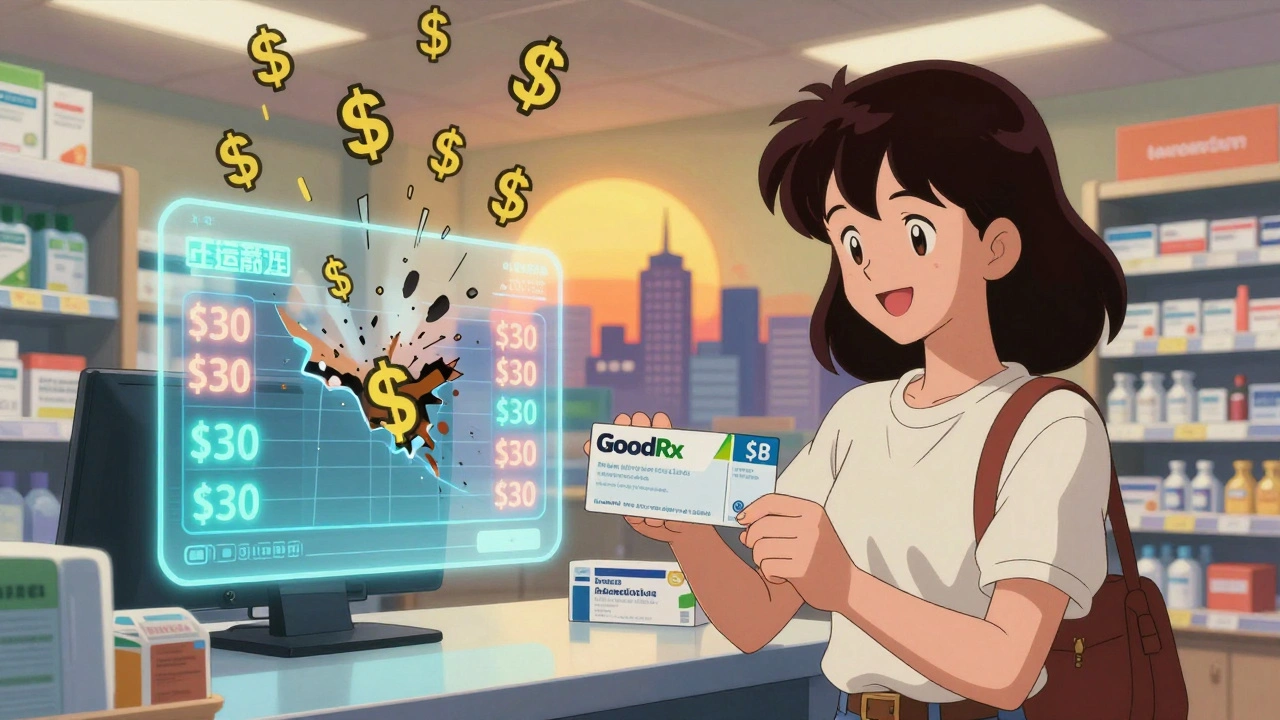
Why Retail Pharmacies Still Have Value
Don’t write off your local pharmacy just yet. They offer things online platforms can’t: immediate access, face-to-face pharmacist consultations, and help with complex medication regimens. If you’re starting a new drug, have questions about side effects, or are mixing multiple prescriptions, talking to a pharmacist in person can prevent dangerous interactions. Retail pharmacies also handle insurance better. If you’re on Medicare Part D or a private plan, your copay might be cheaper than the cash price you’d pay online - especially if your plan has negotiated low rates for your specific drugs. The key is knowing which one works for you. Use online platforms for routine refills of stable, generic medications. Stick with retail when you need advice, have a new prescription, or are managing multiple conditions.Real People, Real Savings
A 68-year-old retiree in Ohio switched from paying $80 a month for metformin at her local CVS to $18 through Beem. She saves $744 a year. A single mom in Texas uses GoodRx to buy her son’s amoxicillin for $8 instead of $35 - saving enough to cover his school supplies for the semester. These aren’t rare stories. J.D. Power’s 2025 U.S. Pharmacy Study found that overall satisfaction with mail-order and online pharmacy services is rising steadily. More people are realizing they don’t need to pay retail prices just because they’re not on insurance.What’s Changing in the Market
The pharmacy landscape is shifting fast. In 2017, mail-order and online pharmacies made up 37% of all retail prescription sales. By 2029, the global market for mail-order pharmacies is projected to hit $249 billion - growing at 18.2% per year. That’s not just growth. That’s a revolution. Why? Because people are tired of being overcharged. The Congressional Budget Office reported that brand-name drug prices rose 4% annually in recent years, far outpacing inflation. Generic drugs, while cheaper, still vary wildly in price depending on where you buy them. Online platforms are forcing transparency. Retail chains are starting to respond. Walmart and Kroger now offer their own discount lists for generics - sometimes matching online prices. But they still don’t offer the same level of comparison or convenience.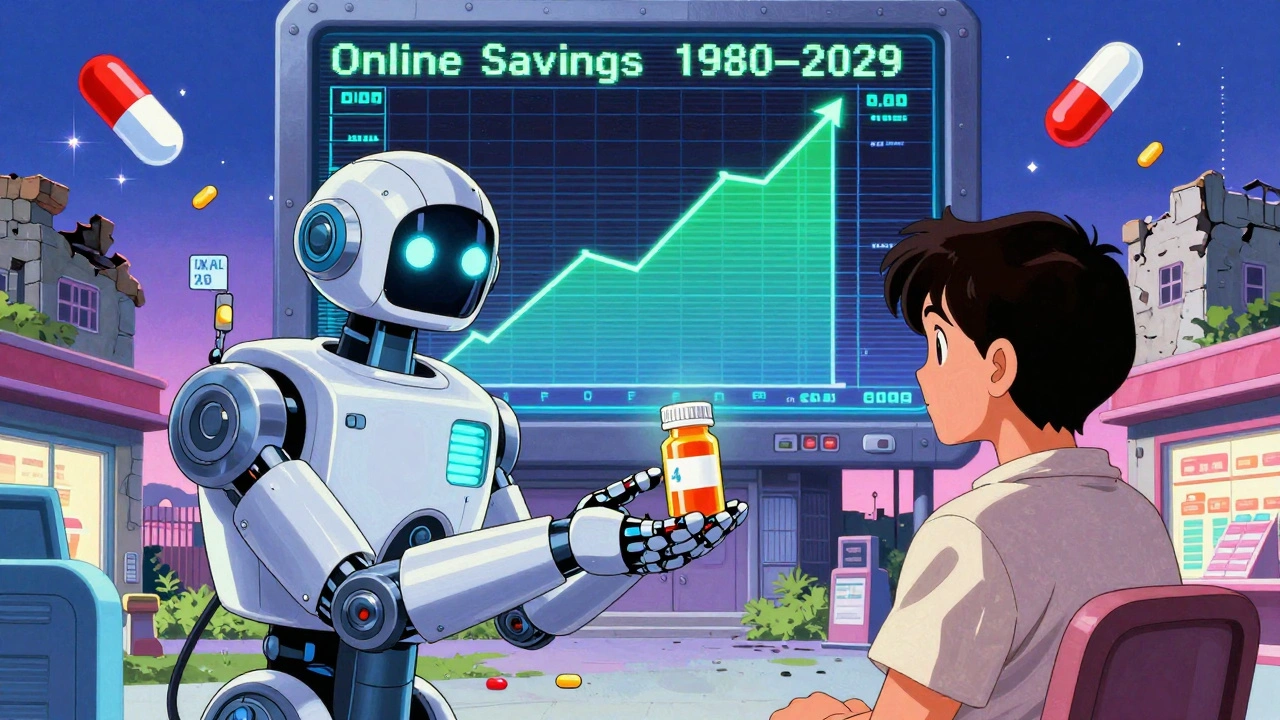
How to Start Saving Today
You don’t need to be tech-savvy. Here’s how to get started in five minutes:- Find the name and dosage of your generic medication (e.g., “metformin 500mg”)
- Go to Beem, GoodRx, or SingleCare on your phone or computer
- Enter your drug and zip code
- See the lowest cash price at nearby pharmacies
- Click “Get Coupon,” show it at the pharmacy, and pay
When to Stick With Retail
There are times when walking into a pharmacy is still the better move:- You’re starting a new medication and need to talk to a pharmacist
- You’re on a complex regimen and need help managing interactions
- You need your medication right away - online pickup can take 1-2 days
- Your insurance copay is lower than the online cash price
Arun Kumar Raut
December 8, 2025 AT 16:44This is huge for people like my uncle in Delhi who pays $80 a month for his blood pressure meds. He didn’t even know he could get it for $15 online. Just showed him Beem on his phone and he cried. No one talks about this stuff enough.
Everyone deserves to breathe easy without going broke for pills.
precious amzy
December 10, 2025 AT 11:04One cannot help but observe the commodification of pharmaceutical care under neoliberal market logics - a phenomenon wherein the sanctity of health is reduced to transactional efficiency, thereby eroding the therapeutic relationship that once grounded medical ethics. The convenience of a coupon is not a cure for systemic moral decay.
Carina M
December 10, 2025 AT 15:17How dare you suggest people should bypass licensed pharmacists? This isn't just about cost - it's about responsibility. You're encouraging people to treat life-saving medication like they're buying socks on Amazon. What happens when someone misreads a dosage? Who takes accountability then?
William Umstattd
December 11, 2025 AT 20:33Let me be absolutely clear: this is not ‘saving money.’ This is exploiting a broken system by circumventing the very infrastructure that ensures drug safety, traceability, and professional oversight. You’re not a savvy consumer - you’re a liability. And yes, I’m speaking to you, the person who thinks a QR code is a substitute for a pharmacist’s warning about alcohol interactions.
Lisa Whitesel
December 13, 2025 AT 08:23Online prices are lower because those pharmacies are often offshore or unregulated. You think you’re saving money but you’re risking your life. One study found 40% of online pills don’t contain what they claim. Also your ‘$20 metformin’? Probably fake. Good luck explaining that to your ER doctor.
Larry Lieberman
December 14, 2025 AT 09:45OMG this is life changing 😭 I just saved $300 on my diabetes meds using Beem! I’m crying happy tears 🥹 also my cat just licked my phone after I showed the coupon and now he’s obsessed. 🐱💊
Philippa Barraclough
December 16, 2025 AT 07:47While the economic rationale underpinning the adoption of online discount platforms for generic pharmaceuticals is undeniably compelling, one must also consider the sociological implications of the erosion of localized healthcare infrastructure. The displacement of community pharmacies, which historically served as nodes of health literacy and interpersonal care, may yield short-term financial gains but potentially long-term public health consequences that are not yet quantifiable. The convenience of digital intermediation must be weighed against the loss of embodied, contextualized medical guidance.
Tim Tinh
December 16, 2025 AT 10:43bro i just used goodrx for my antibiotics and paid $9 instead of $35. my pharmacist was like ‘wait you paid that much before?’ and i was like yea dumbass i didnt know 😅
also he gave me a free lollipop. small wins.
ps: dont be scared of it. its just a coupon. you still walk into the same pharmacy. same guy behind the counter. just less money gone.
Shubham Mathur
December 17, 2025 AT 00:31Stop acting like this is some new idea - people in India and Thailand have been doing this for decades! Why are you shocked? The system is rigged and you’re only now noticing because you’re not poor enough to care until it hits your wallet.
Don’t glorify ‘saving’ - call it survival. And stop pretending retail pharmacies care about you. They care about your insurance bill.
Use Beem. Use GoodRx. Use whatever works. And don’t let anyone make you feel bad for not being rich enough to pay retail.
Katie Harrison
December 17, 2025 AT 13:19I appreciate the practical advice - but I must emphasize that while cost reduction is critical, the integrity of the supply chain cannot be compromised. I have personally encountered counterfeit medications purchased through unverified channels, and the consequences are not theoretical. I encourage users to verify pharmacy licensure via state boards and to prioritize platforms that display verified seals - not just lowest price.
Michael Robinson
December 19, 2025 AT 13:03It’s funny how we treat medicine like a commodity. We don’t do that with water or air. But pills? Sure, just find the cheapest one. Maybe the real problem isn’t the price - it’s that we’ve forgotten that healing isn’t a transaction. It’s a trust.