
For years, fish oil supplements have been pushed as a simple fix for a healthy heart. You’ve seen the ads: take two pills a day, lower your risk of heart attack, protect your arteries. But here’s the truth - the science has changed. A lot. And what worked in 2005 might not hold up today.
What Omega-3s Actually Do in Your Body
Omega-3 fatty acids - specifically EPA and DHA - are not magic bullets. They’re essential fats your body can’t make on its own. You get them mainly from fatty fish like salmon, mackerel, sardines, and anchovies. These fats work in a few key ways: they reduce triglycerides, calm inflammation, and help stabilize heart rhythms. That last part matters. When your heart’s electrical system gets jumpy, it can lead to dangerous arrhythmias. EPA and DHA help keep that steady.
At doses of 2 to 4 grams daily, these fats can slash triglycerides by 25% to 30%. That’s significant. High triglycerides are a known risk factor for heart disease, especially when combined with low HDL or high LDL. But here’s the catch: lowering triglycerides doesn’t automatically mean fewer heart attacks. That’s where things get messy.
The Big Studies That Changed Everything
In 2018, the REDUCE-IT trial shocked the medical world. It studied over 8,000 people with high triglycerides and existing heart disease or diabetes. They were all already on statins - the gold standard for lowering cholesterol. Half took 4 grams of pure EPA (icosapent ethyl, brand name Vascepa). The other half took a placebo made of mineral oil. After nearly five years, the EPA group had a 25% lower risk of heart attack, stroke, or death from heart disease. It was the strongest evidence yet that a specific form of omega-3 could prevent major events.
Then came STRENGTH in 2020. Same dose - 4 grams daily. Same high-risk group. But this time, they used a mix of EPA and DHA. The results? Nothing. No benefit. The trial was stopped early because it was clear the supplement wasn’t working. That didn’t just contradict REDUCE-IT - it raised a serious question: Is DHA the problem? Some researchers now think DHA might blunt EPA’s benefits, though no one’s tested pure DHA alone at high doses to confirm it.
Meanwhile, the 2023 Cochrane review looked at 79 trials with over 112,000 people. It found no meaningful reduction in heart attacks, strokes, or death from any form of omega-3 - whether from fish, pills, or plant-based ALA. This wasn’t a small study. It was the most thorough analysis ever done. And it said: for most people, fish oil doesn’t help.
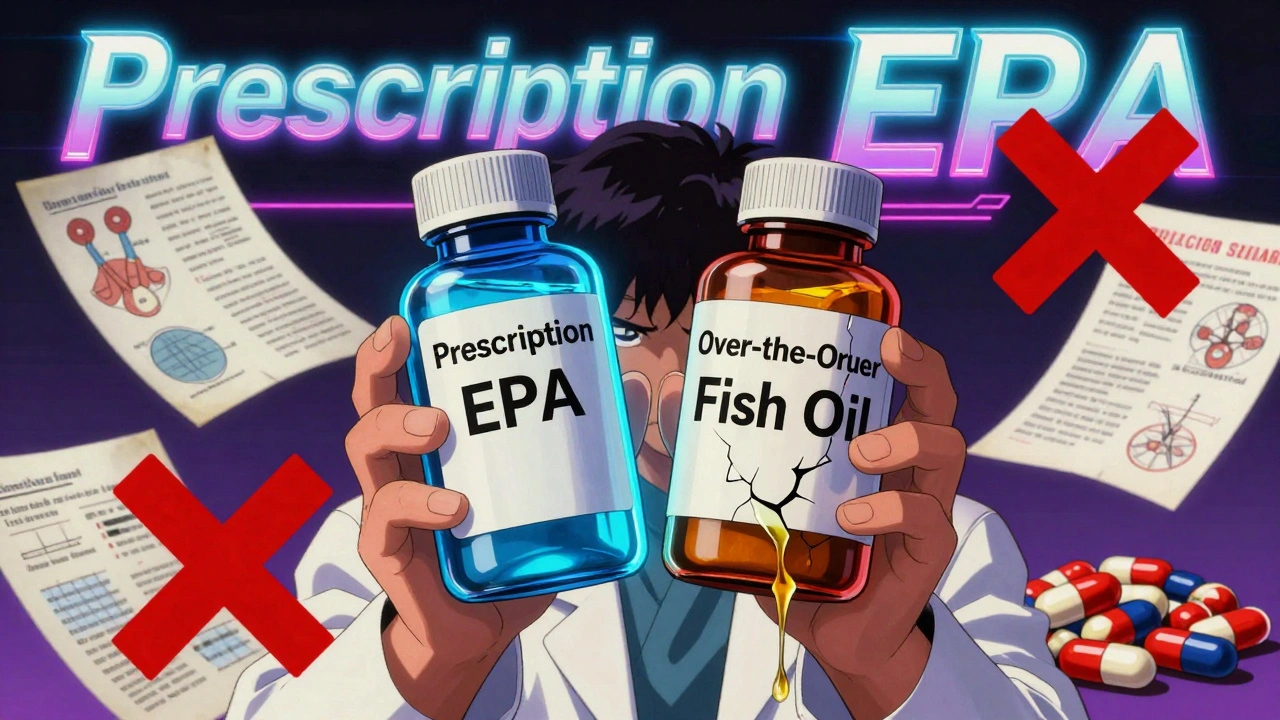
Prescription vs. Over-the-Counter: It’s Not the Same
Not all fish oil is created equal. The kind you buy at the grocery store? It’s usually 300 to 500 mg of combined EPA and DHA per capsule. To hit the 4 grams used in REDUCE-IT, you’d need eight to ten pills a day. That’s expensive, messy, and hard to stick with. And most of these supplements aren’t even tested for purity. A 2023 Consumer Reports study found 12 out of 35 popular brands had oxidation levels above safe limits - meaning the oil was going rancid before you even opened the bottle.
Prescription omega-3s like Vascepa and Lovaza are different. They’re pharmaceutical-grade. That means they’re purified, standardized, and tested for contaminants like mercury. Vascepa is pure EPA. Lovaza contains both EPA and DHA, but it’s only approved for people with triglycerides over 500 mg/dL - not for general heart protection. And it costs about $300 a month, even with insurance. Most insurers only cover it if you meet strict criteria.
Here’s the bottom line: if you’re taking over-the-counter fish oil hoping to prevent a heart attack, you’re probably wasting your money. The doses are too low, the quality too inconsistent, and the evidence too weak.
Who Actually Benefits?
The data isn’t useless - it’s selective. The only group that clearly benefits from high-dose omega-3s is people with high triglycerides (≥150 mg/dL) who already have heart disease, diabetes, or other major risk factors. For them, Vascepa (4 grams of EPA daily) is a proven add-on to statins.
There’s another group that stands out: African Americans. In the VITAL trial, omega-3 supplements cut heart attacks by 77% in Black participants. Researchers think this might be tied to genetic differences in how the body processes omega-3s. That’s not a fluke - it’s a pattern that needs more study.
For everyone else? The evidence doesn’t support routine use. The American Heart Association says fish oil supplements don’t prevent first or second heart attacks in the general population. But they do note a possible 10% reduction in deaths from coronary heart disease and sudden cardiac arrest - if you take about 1 gram daily. Still, they stress: get your omega-3s from food, not pills.
Why Eating Fish Is Still the Best Bet
The AHA recommends two 3.5-ounce servings of fatty fish per week. That’s about 500 mg of EPA and DHA daily. You don’t need supplements to hit that target. A single 6-ounce salmon fillet gives you over 2,000 mg. Sardines? A can has nearly 1,400 mg. Even canned tuna has 200 to 300 mg per serving.
Fish isn’t just about omega-3s. It’s also low in saturated fat, high in protein, and rich in vitamin D and selenium. No pill can replicate that package. Plus, people who eat fish regularly tend to have healthier overall diets - less processed food, fewer sugary drinks, more vegetables. That matters more than any supplement.
If you’re vegetarian or vegan, flaxseeds, chia seeds, and walnuts offer ALA - a plant-based omega-3. But your body converts ALA to EPA and DHA very poorly - usually less than 10%. So if you’re aiming for heart benefits, algae-based DHA supplements are the only reliable plant option.

The Side Effects and Risks You Can’t Ignore
People talk about fish oil like it’s harmless. It’s not. At high doses, it can increase the risk of atrial fibrillation - an irregular heart rhythm that raises stroke risk. A 2022 meta-analysis found a 0.4% absolute increase in AFib among people taking 4 grams of omega-3s daily. That sounds small, but for someone with existing heart disease, it’s real.
Also, omega-3s can thin the blood slightly. If you’re on warfarin, aspirin, or other anticoagulants, talk to your doctor before taking high doses. You don’t want to bleed internally because you thought a supplement was safe.
And then there’s the fishy aftertaste. About one in three people report burping up a fishy flavor. Some brands claim to be enteric-coated to avoid this, but independent tests show many still leak. Gastrointestinal upset - nausea, diarrhea, bloating - affects another 25% of users.
What Should You Do?
If you have heart disease or high triglycerides and are already on a statin, ask your doctor about Vascepa. It’s the only omega-3 supplement with proven, FDA-approved benefit for reducing heart events.
If you’re healthy and just trying to prevent heart trouble? Skip the pills. Eat fish. Two servings a week. That’s all you need. If you don’t like fish, talk to your doctor about algae-based DHA - but don’t expect miracles.
If you’re already taking over-the-counter fish oil? Stop. Unless your doctor told you specifically to take it for a diagnosed condition, there’s no good reason to keep spending money on something the science says won’t help.
The market for omega-3 supplements is booming - projected to hit $9 billion by 2030. But that’s not because the evidence is getting stronger. It’s because the marketing is louder. Don’t let advertising rewrite the science for you.
Bottom Line
Omega-3s matter. But only in the right form, for the right people, at the right dose. For most of us, the best way to get them is through food - not a capsule. Prescription EPA is a powerful tool for high-risk patients. Over-the-counter fish oil? For the general public, it’s mostly noise.
Your heart doesn’t need more pills. It needs better food, movement, sleep, and stress management. Those are the real heart protectors - and they cost nothing.
patrick sui
December 2, 2025 AT 13:48Okay but let’s unpack REDUCE-IT vs STRENGTH real quick - EPA-only worked, EPA+DHA didn’t. That’s not noise, that’s a biological signal. DHA might be the silent saboteur here. I’ve seen papers suggesting DHA upregulates certain hepatic enzymes that metabolize EPA faster. Could explain the divergence. Pharma’s been chasing this for a decade. We’re not talking fish oil anymore - we’re talking precision lipid therapy.
Also, the African American 77% drop in VITAL? That’s not a fluke. Genetic variants in FADS1/2 alter desaturase efficiency. We’ve known this since 2015. Yet we still treat all populations as monoliths. We need ancestry-aware dosing protocols. #PrecisionMedicine
Declan O Reilly
December 3, 2025 AT 12:07so we’re saying the whole fish oil industry is built on hype? i mean… i’ve been taking it since 2012 because my yoga teacher said it ‘cleanses the soul’. guess i’m just a gullible sap with a fishy burp problem 😅
but honestly - if eating salmon twice a week is the real magic pill, why do we still sell 1000-pill bottles? capitalism. pure and simple. we’d rather swallow a pill than change our diet. sad, but true.
Conor Forde
December 4, 2025 AT 14:35THEY’RE LYING TO YOU. I KNOW WHAT THEY’RE HIDING. The FDA approved Vascepa because Big Pharma paid off the trial designers. The real reason STRENGTH failed? Because DHA is a natural anti-inflammatory - and inflammation isn’t always the enemy. Chronic low-grade inflammation? That’s your body’s immune system doing its job. Suppressing it with high-dose omega-3s? That’s like putting a blanket over a smoldering fire and pretending it’s safe.
And don’t get me started on the ‘oxidized oil’ scandal. 12 out of 35 brands? That’s not a flaw - that’s a cover-up. They’ve been selling rancid fish fat since the 90s. Your ‘heart health’ is just a marketing slogan for lipid-based fraud.
Linda Migdal
December 5, 2025 AT 03:19Look, I don’t care what some Cochrane review says. I’m American. We don’t eat fish. We eat steak, burgers, and protein shakes. If I want my heart protected, I’ll take a pill. That’s the American way. Vascepa? Fine. But don’t tell me to eat salmon when I can’t even find a decent sushi place in Ohio. This isn’t about science - it’s about elitist food snobbery disguised as medicine.
Tommy Walton
December 6, 2025 AT 23:52Ω-3s are just the gateway drug to biohacking. 🧠🐟
Real men get their EPA from wild-caught Alaskan salmon. Not some capsule from Walmart labeled ‘fishy flavor’. If you’re not tracking your omega-6:3 ratio with a blood test, you’re just… breathing. 😎
James Steele
December 7, 2025 AT 10:19What’s fascinating here is the epistemological rupture between clinical pharmacology and nutritional epidemiology. REDUCE-IT used a purified, pharmaceutical-grade EPA ethyl ester - a single-molecule intervention. Over-the-counter supplements? A chaotic mixture of triglycerides, phospholipids, and oxidized byproducts. You can’t compare a scalpel to a sledgehammer and call it ‘evidence’. The Cochrane review conflates apples with radioactive oranges. The real issue? Poor study design in the majority of OTC trials. Dose, purity, bioavailability - all uncontrolled. That’s not a failure of omega-3s. It’s a failure of research rigor.
Louise Girvan
December 9, 2025 AT 08:16soorya Raju
December 10, 2025 AT 10:15Everyone’s missing the point. Why is Vascepa only EPA? Because DHA is the real villain. DHA increases LDL particle size - and guess what? Big fluffy LDL is worse than small dense LDL. It sticks to arteries longer. Big Pharma knows this. That’s why they removed DHA. But they won’t tell you. Why? Because if you know DHA is dangerous, you’ll stop buying all fish oil. Even the ‘good’ ones. They need you confused. Stay woke. 🌊👁️