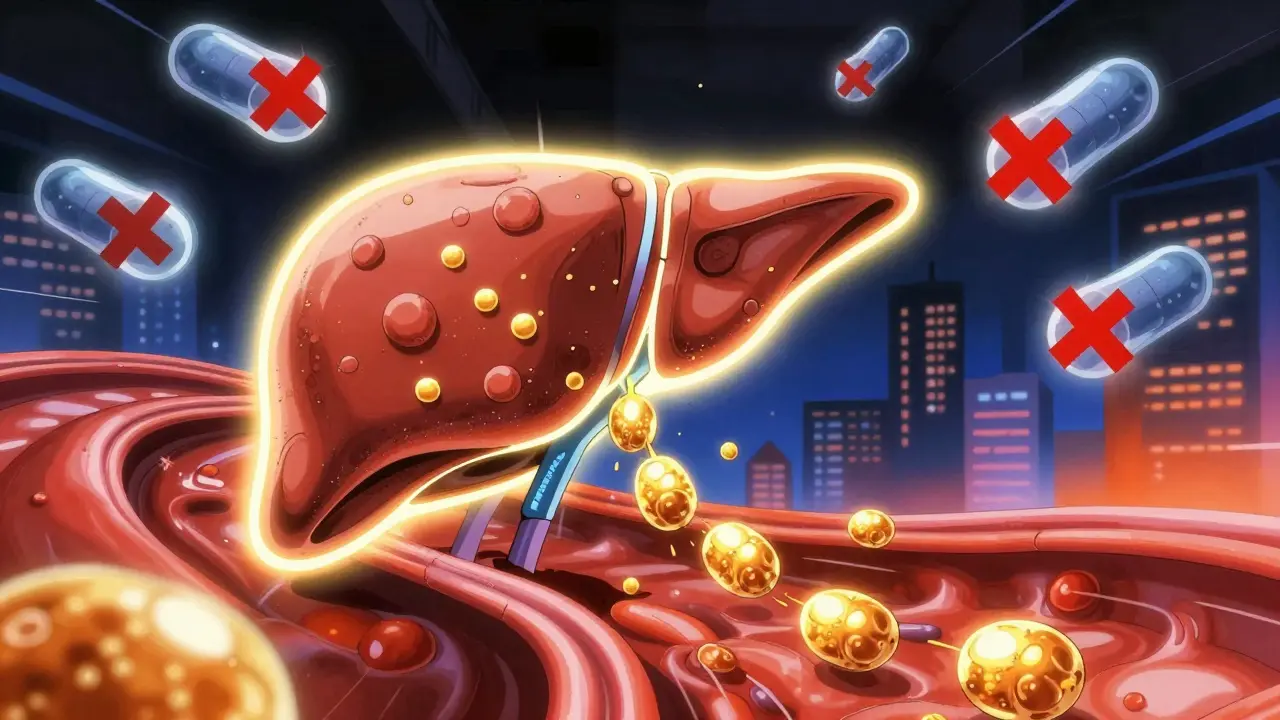
High cholesterol doesn’t always show symptoms, but it quietly increases your risk of heart attack and stroke. For millions of people, especially those with a history of heart disease or diabetes, lowering LDL (bad) cholesterol isn’t just a number on a lab report-it’s about staying alive and active. Statins have been the go-to treatment for over 30 years, but they don’t work for everyone. If you’ve tried statins and had side effects, or if your cholesterol still won’t budge, you’re not alone. And you’re not out of options.
How Statins Actually Work
Statins don’t just block cholesterol from food. They work inside your liver, where most of your body’s cholesterol is made. By blocking an enzyme called HMG-CoA reductase, they force your liver to pull more LDL cholesterol out of your bloodstream. The result? A drop in LDL levels-often by 30% to 50%, depending on the drug and dose.
The most common statins in the UK and US are atorvastatin (Lipitor) and rosuvastatin (Crestor). These are the most powerful, and they’re also the most studied. Simvastatin and pravastatin are older, cheaper options, but they don’t lower cholesterol as much. One key thing to know: doubling your statin dose rarely doubles the benefit. Going from 20mg to 40mg of atorvastatin might only drop your LDL another 6%. That’s why doctors don’t just keep cranking up the dose.
Statins also have a side effect profile that catches people off guard. About 1 in 10 people report muscle aches, weakness, or cramps. For most, it’s mild and manageable. But for a smaller group-around 5%-the side effects are bad enough to stop taking them. That’s where alternatives come in.
Why Some People Can’t Take Statins
It’s not always about muscle pain. Some people have liver enzyme spikes, others get digestive upset, and a few develop new-onset diabetes (though the heart benefits usually outweigh this risk). But the biggest reason people stop statins? They think the side effects are worse than they are. A 2022 study found that nearly half of patients who quit statins could’ve stayed on them if they’d switched to a different statin or lowered the dose. Rosuvastatin and pravastatin, for example, are less likely to cause muscle issues than simvastatin because they’re not broken down by the same liver enzyme.
Still, for those who truly can’t tolerate statins-or need even lower LDL levels-there are other tools. The key is understanding what each one does, how well it works, and whether it’s right for your situation.
Ezetimibe: The Gentle Alternative
If statins aren’t working for you, ezetimibe (brand name Zetia) is often the next step. Unlike statins, it doesn’t touch your liver. Instead, it blocks cholesterol absorption in your small intestine. Think of it like a sieve that catches dietary cholesterol before it enters your blood.
Alone, ezetimibe lowers LDL by about 15% to 22%. That’s not as strong as a statin, but it’s reliable. When you combine it with a low-dose statin, the drop jumps to 21% to 27%. Many patients find it easier to tolerate-fewer muscle complaints, no liver concerns. One patient on MyHeart.net said, “Zetia alone got my LDL from 190 to 160, but adding it to my low-dose simvastatin brought it down to 110.” That’s a real-world win.
It’s also cheap. Generic ezetimibe costs under £10 a month in the UK. NICE guidelines recommend it for people who can’t take statins, or as a combo therapy for those who need extra help. It’s not flashy, but it’s solid.
PCSK9 Inhibitors: The High-Powered Injectables
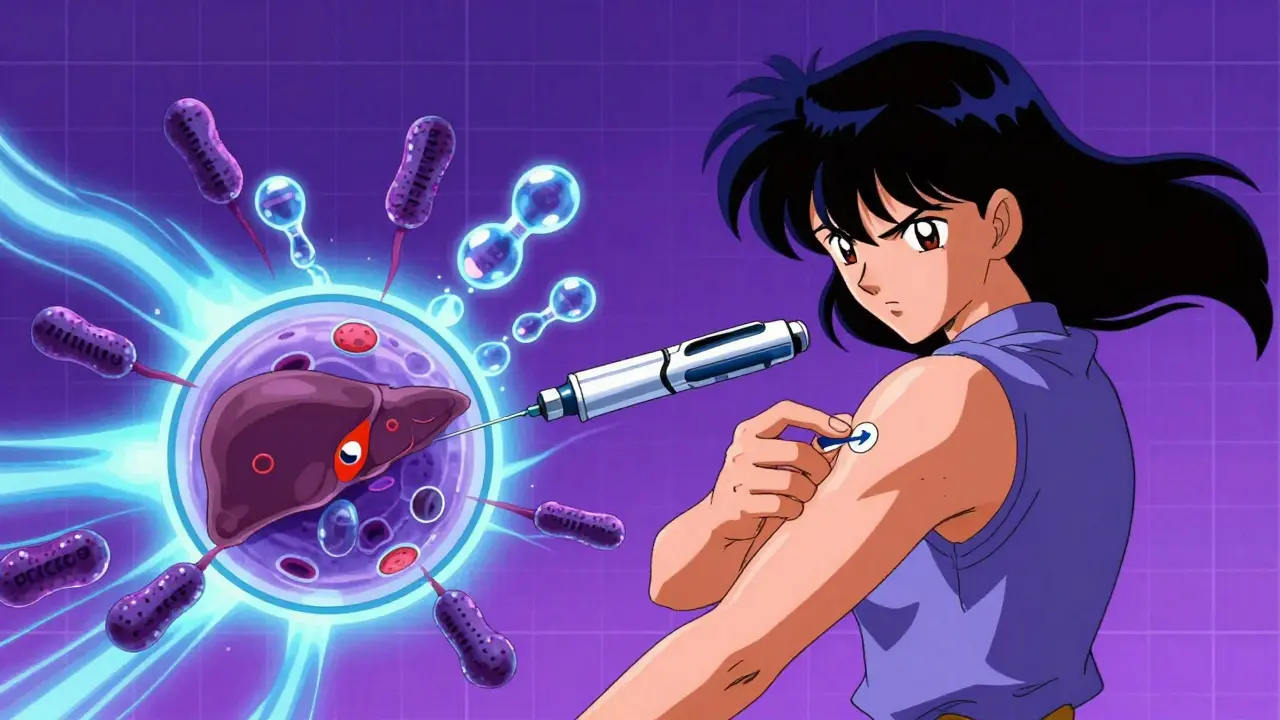
If you’ve got established heart disease, and your LDL is still above 1.8 mmol/L despite statins and ezetimibe, you might be a candidate for PCSK9 inhibitors. These are injectable drugs-alirocumab (Praluent) and evolocumab (Repatha)-that came onto the market around 2015.
They work by disabling a protein called PCSK9, which normally tells your liver to destroy LDL receptors. When PCSK9 is blocked, your liver keeps more receptors on its surface, so it can suck up more LDL from your blood. The result? LDL drops by 50% to 60%. That’s more than most statins can do alone.
And here’s the kicker: in people with heart disease, PCSK9 inhibitors reduce the risk of heart attack, stroke, or death from heart problems by about 20%. That’s huge. What’s more, unlike statins, they don’t increase the risk of bleeding in the brain-a concern for people who’ve had a prior hemorrhagic stroke.
The downside? Cost and delivery. Each injection costs around £5,000 a year in the UK. Insurance approvals can take months. Patients report being denied coverage three or four times before getting approval. You also have to learn how to give yourself a subcutaneous shot every two to four weeks. But for those who need it, the payoff can be life-changing. One Reddit user wrote, “Repatha lowered my LDL from 220 to 60 in 3 months.”
Newer Options: Bempedoic Acid and Inclisiran
Two newer drugs are changing the game. First is bempedoic acid (Nexletol), approved in 2020. It works in the liver like a statin, but in a different way-blocking an enzyme called ATP citrate lyase. That means it doesn’t cause muscle pain in most people. It lowers LDL by about 17% on its own, and works well with ezetimibe. It’s taken as a daily pill, and costs less than PCSK9 inhibitors, though still more than statins.
Then there’s inclisiran (Leqvio), approved in 2021. This is the most innovative one. It’s a small RNA molecule that silences the PCSK9 gene. You get two injections a year-once in December, once in June. It lowers LDL by 40% to 50% when combined with a statin. No daily pills. No monthly shots. Just two visits a year. For someone who struggles with adherence, this is a game-changer.
But access is limited. In the UK, NICE only recommends inclisiran for people with familial hypercholesterolemia or those who’ve had a heart event and still have high LDL despite maximum tolerated therapy. It’s not for everyone-but for the right person, it’s revolutionary.
What About Supplements and Natural Remedies?
You’ve probably seen ads for red yeast rice, plant sterols, or omega-3s that claim to lower cholesterol. Red yeast rice contains a compound similar to statins, but it’s unregulated. One batch might have a safe dose; another might have too much, causing muscle damage without warning. Plant sterols can lower LDL by 5% to 10%, but you’d need to eat fortified foods daily-like margarine or orange juice-just to see a small effect.
Harvard Health put it bluntly: “Statins lower harmful LDL cholesterol better than dietary supplements.” There’s no substitute for proven medication. Supplements might help a little, but they won’t protect you like a statin or PCSK9 inhibitor will.
How Doctors Decide What’s Right for You
It’s not one-size-fits-all. Your doctor doesn’t just look at your LDL number. They consider:
- Have you had a heart attack, stroke, or angioplasty?
- Do you have diabetes or chronic kidney disease?
- What’s your 10-year risk of cardiovascular disease?
- Have you tried at least two different statins at proper doses?
- Do you have a history of hemorrhagic stroke?
If you’re high risk and your LDL is still too high, the goal is to get it below 1.4 mmol/L. That often means stacking treatments: statin + ezetimibe, then adding a PCSK9 inhibitor or inclisiran. If you’re low risk and just have high cholesterol, a low-dose statin plus lifestyle changes might be enough.
And if you’re worried about side effects? Don’t quit cold turkey. Talk to your doctor. Try a different statin. Cut the dose. Switch to alternate-day dosing. Many people find relief without giving up statins entirely.
What You Can Do Today
If you’re on a statin and feeling off:
- Don’t stop without talking to your doctor.
- Ask if switching to rosuvastatin or pravastatin could help.
- Request a blood test to check for muscle damage (CK levels).
- Ask about adding ezetimibe before jumping to expensive options.
If you’re not on a statin but have high cholesterol:
- Get your 10-year cardiovascular risk calculated (use QRISK3 in the UK).
- Ask if a low-dose statin is right for you-even if you’re young.
- Don’t rely on supplements alone.
Cholesterol management isn’t about perfection. It’s about progress. Even a 20% drop in LDL can cut your risk of heart disease by nearly half. The goal isn’t to be perfect-it’s to be protected.
Can I take ezetimibe instead of a statin?
Yes, but only if you can’t tolerate statins or need extra help. Ezetimibe alone lowers LDL by about 15% to 22%, which is less than even a low-dose statin. It’s best used alongside a statin for better results. If you’re allergic to statins or have severe muscle pain, your doctor may prescribe ezetimibe as a standalone option.
Are PCSK9 inhibitors worth the cost?
For people with established heart disease who still have high LDL despite maximum statin therapy, yes. These drugs reduce heart attacks and strokes by about 20%. But they’re expensive-around £5,850 a year in the UK. Insurance often requires proof that you’ve tried statins and ezetimibe first. If you’re at high risk and can get coverage, the long-term health benefits usually justify the cost.
Do statins cause diabetes?
Yes, but rarely. Studies show statins slightly increase the risk of developing type 2 diabetes-about 1 in 200 people over five years. But for every person who develops diabetes, about 10 heart attacks or strokes are prevented. The American Heart Association says the heart benefits far outweigh this small risk, especially for those already at high risk.
How long does it take for cholesterol meds to work?
Statins and ezetimibe usually take 4 to 6 weeks to reach full effect. You’ll see some drop in LDL within 2 weeks, but the full benefit comes after a month or two. PCSK9 inhibitors and inclisiran work faster-LDL drops within weeks, with peak effect around 12 weeks. Your doctor will check your levels after 6 to 12 weeks to see if the dose needs adjusting.
Can I stop taking cholesterol meds if my levels improve?
Rarely. Cholesterol meds don’t cure high cholesterol-they manage it. If you stop, your levels will likely return to where they were. Even if diet and exercise help, most people need to keep taking medication long-term, especially if they’ve had heart disease. Stopping without medical advice can increase your risk of heart attack or stroke.
Final Thoughts
Statins are still the foundation. They’re proven, affordable, and life-saving. But medicine doesn’t stand still. If statins aren’t working for you, there are better options now than ever before-ezetimibe for mild cases, PCSK9 inhibitors for high-risk patients, and inclisiran for those who struggle with daily pills. The goal isn’t to avoid medication. It’s to find the right one. Your heart doesn’t care about cost or convenience. It just wants you to stay healthy. And with today’s tools, you can.
Alex Curran
December 20, 2025 AT 06:30Statins are the backbone but man do they mess with some people. I was on atorvastatin for a year and felt like my legs were made of wet cement. Switched to pravastatin and it was like waking up from a coma. No more muscle fog. Docs don't always tell you that not all statins are created equal.
Dikshita Mehta
December 22, 2025 AT 02:56I've been on ezetimibe for 18 months after statin intolerance. It's not glamorous but it works. My LDL dropped from 185 to 120 without any side effects. I take it with a glass of orange juice and call it a day. Simple. Effective. Cheap. Why isn't this the first-line recommendation for everyone?
pascal pantel
December 22, 2025 AT 14:04PCSK9 inhibitors are a scam. £5,000/year for a 20% relative risk reduction? That's $70k per QALY. You're better off buying a gym membership and eating kale. The real issue is pharmaceutical overreach. We're medicating away lifestyle failures. Also, inclisiran? That's just a fancy injection with a price tag that makes insulin look like a bargain.
Mark Able
December 22, 2025 AT 21:05Anyone who says supplements work is either delusional or paid by a gummy bear company. Red yeast rice is basically unregulated statin. You want muscle damage? Try that on a weekend. And don't get me started on plant sterols. You'd need to drink 3 gallons of fortified milk a day to see a blip. Real medicine > marketing hype.
William Storrs
December 24, 2025 AT 17:41If you're scared of statins, don't quit. Talk to your doctor. Try a different one. Cut the dose. Go every other day. You'd be amazed how many people feel better with small tweaks. This isn't about being perfect. It's about being consistent. Your heart doesn't need a superhero. It just needs you to show up.
Nina Stacey
December 25, 2025 AT 22:04I just want to say thank you for writing this because I was so scared to talk to my doctor about my muscle pain and now I know I'm not alone and I'm gonna ask about pravastatin next week because I've been reading up and it seems like it might be gentler and honestly I just want to live without feeling like my body is falling apart every time I walk up stairs
Kevin Motta Top
December 27, 2025 AT 09:14Statins work. But they're not magic. Lifestyle matters. Diet. Movement. Sleep. Medication is just one tool. The real win is when you combine them. Not instead of. Together.
Chris porto
December 28, 2025 AT 16:20It's funny how we treat cholesterol like it's the enemy. It's just a molecule. The body needs it. The problem isn't cholesterol. It's inflammation. It's insulin resistance. It's the way we live. Medication treats the symptom. But maybe we should be asking why our bodies are screaming for help in the first place.
William Liu
December 29, 2025 AT 11:13My dad had a heart attack at 58. He's on inclisiran now. Two shots a year. No daily pills. He says it's the best thing that's happened to him since quitting smoking. If it saves one person from going through what he did, it's worth it.
Isabel Rábago
December 30, 2025 AT 05:17People who take statins and still eat donuts and bacon are just fooling themselves. No pill fixes a bad lifestyle. If you're going to take medication, at least have the decency to not sabotage it with junk food. You're not helping yourself. You're just buying time with a credit card.
Matt Davies
December 30, 2025 AT 21:23PCSK9 inhibitors are like the Ferrari of cholesterol meds. Fancy. Expensive. Only for the elite. But when you're racing against a ticking clock in your chest, you don't care about the price tag. You just want the damn thing to go faster. I'd take a shot every fortnight if it meant I'd see my grandkids grow up.
Mike Rengifo
December 31, 2025 AT 17:31Been on ezetimibe + low-dose rosuvastatin for two years. LDL at 92. No muscle pain. No brain fog. Just a quiet, steady win. Sometimes the boring option is the best one.
Dev Sawner
January 2, 2026 AT 15:09It is imperative to underscore that the pharmacological management of dyslipidemia must be predicated upon rigorous clinical guidelines and evidence-based protocols. The casual dismissal of statin therapy in favor of unproven adjuncts or unregulated nutraceuticals constitutes a perilous deviation from established medical orthodoxy. One must exercise extreme caution against anecdotal assertions which lack peer-reviewed validation.