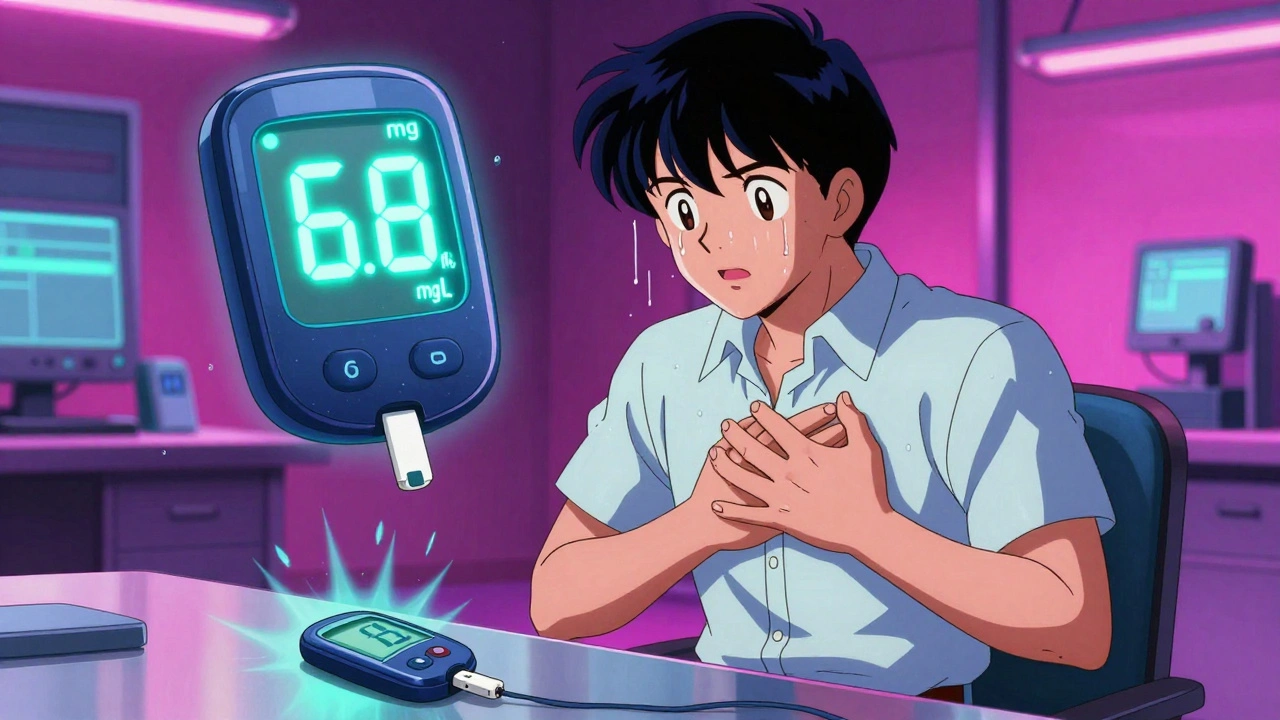
When your blood sugar drops too low, your body doesn’t just feel tired-it can start shaking, sweating, or even lose consciousness. For people with diabetes, this isn’t rare. About 47% of those with Type 1 diabetes and 33% of insulin-treated Type 2 diabetes experience at least one episode of low blood sugar each year. It’s the most common acute complication of diabetes treatment, and it’s also one of the most preventable-if you know what to look for and what to do.
What Counts as Low Blood Sugar?
The medical definition of hypoglycemia is a blood glucose level below 70 mg/dL (3.9 mmol/L). That’s the threshold used by the American Diabetes Association and most U.S. clinics. But here’s the catch: some people start feeling symptoms at 80 mg/dL, while others don’t notice anything until it’s below 50 mg/dL. That’s because your body gets used to higher levels over time, especially if you’ve had diabetes for years.
For people without diabetes, low blood sugar is defined as below 55 mg/dL. But that’s not the main concern for most readers. The real issue is for those using insulin or certain oral diabetes meds like sulfonylureas. These drugs force your body to lower blood sugar-and if you don’t eat enough, exercise too much, or take too much medication, your levels can crash.
How Do You Know You’re Having a Low?
There are two types of symptoms: physical and mental.
Physical symptoms come from your body’s fight-or-flight response. When your blood sugar drops, your adrenal glands pump out adrenaline. That causes:
- Shaking or trembling (hands can shake at 8-12 Hz)
- Sweating (even if it’s cold)
- Fast heartbeat (over 100 bpm)
- Hunger
- Nervousness or anxiety
Mental symptoms happen because your brain runs on glucose. When it’s starved:
- Blurred vision (around 55-60 mg/dL)
- Confusion or trouble concentrating (50-55 mg/dL)
- Slurred speech
- Weakness or dizziness
- Seizures (below 50 mg/dL)
- Unconsciousness (below 45 mg/dL)
Here’s the scary part: if you’ve had diabetes for over 15 years, you might lose these warning signs entirely. This is called hypoglycemia unawareness, and it affects about 25% of long-term Type 1 patients. That means you could pass out without ever feeling shaky or sweaty. That’s why continuous glucose monitors (CGMs) are so important-they don’t rely on your body’s signals.
What to Do When Blood Sugar Drops
If you feel symptoms or your CGM shows a drop, act fast. The 15-15 rule is the gold standard:
- Consume 15 grams of fast-acting carbs.
- Wait 15 minutes.
- Check your blood sugar again.
Good choices for the 15 grams:
- 4 glucose tablets
- 1/2 cup (4 oz) of fruit juice
- 1 tablespoon of honey or sugar
- 6-8 hard candies (not sugar-free)
- 1 tube of glucose gel
Don’t use chocolate, cookies, or whole fruit. Fat and fiber slow down sugar absorption, and you need speed here.
After 15 minutes, if your sugar is still below 70 mg/dL, repeat the process. Once you’re back above 70, eat a snack with protein and carbs if your next meal isn’t within an hour. Think: peanut butter on toast, cheese with crackers, or yogurt with fruit.
What If You Can’t Treat Yourself?
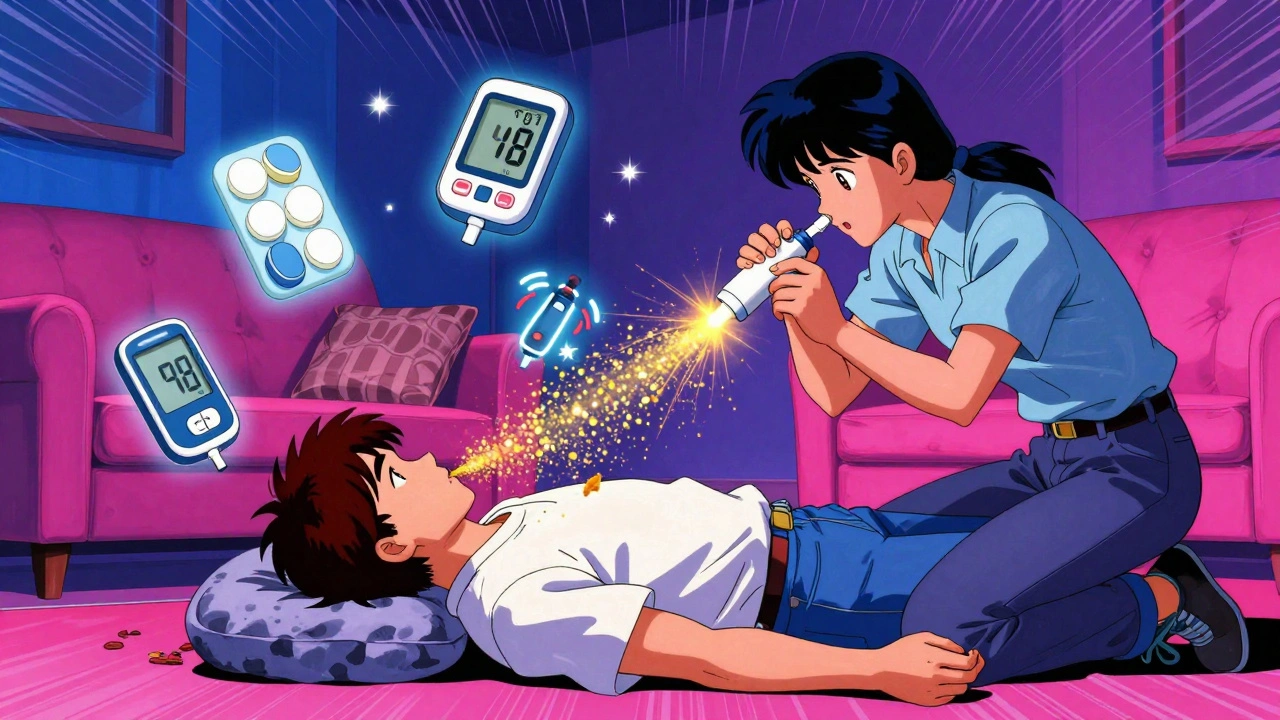
If someone is confused, unconscious, or having a seizure, you can’t give them anything by mouth. Swallowing can cause choking. This is where glucagon saves lives.
Glucagon is a hormone that tells your liver to dump stored sugar into your bloodstream. It comes in two forms:
- Injectable glucagon (traditional kit): Requires mixing powder and liquid. Takes about 10-15 minutes to work.
- Nasal glucagon (Zegalogue, Baqsimi): A single puff up the nose. Works in 10 minutes, no mixing needed.
Studies show nasal glucagon works in 94% of cases within 15 minutes. Injectable works in 82%. Either way, call 911 after giving glucagon-even if they wake up. They need to be monitored.
Every person with diabetes who uses insulin should have a glucagon kit at home, at work, and in their bag. Their family, coworkers, or friends should know where it is and how to use it. Training takes less than 10 minutes.
Why Do These Episodes Happen?
Most low blood sugar events in diabetics come down to three things:
- Too much insulin (73% of cases): Dosing errors, wrong injection timing, or not adjusting for changes in activity or appetite.
- Not enough food (19%): Skipping meals, eating less than planned, or delayed meals after insulin injection.
- Too much exercise (9%): Physical activity lowers blood sugar for hours after. A 30-minute walk can drop levels by 30-50 mg/dL if not accounted for.
Non-diabetics can get low blood sugar too, but it’s rare. Two main types:
- Reactive hypoglycemia: Sugar crashes 2-4 hours after eating, often after weight-loss surgery. Your body releases too much insulin after a meal.
- Fasting hypoglycemia: Happens when you haven’t eaten for hours. Could signal a tumor (like an insulinoma), liver disease, or adrenal problems.
But if you don’t have diabetes and keep having lows, see a doctor. It’s not normal.
How to Prevent Low Blood Sugar
Prevention isn’t about being perfect-it’s about planning.
1. Match insulin to food and activity. If you’re going to walk 45 minutes after dinner, reduce your mealtime insulin by 20-30%. If you’re exercising before breakfast, skip your morning basal insulin dose or cut it by 50%. Work with your provider to adjust doses based on routine.
2. Use a CGM with alerts. Continuous glucose monitors don’t just show trends-they can warn you before you hit 70 mg/dL. The latest systems can even pause insulin delivery automatically when levels start dropping too fast. In one trial, this reduced nighttime lows by 44%.
3. Always carry fast-acting carbs. Keep glucose tabs in your wallet, purse, car, and desk drawer. Don’t rely on vending machines-they’re often out of stock or sell sugar-free stuff that won’t help.
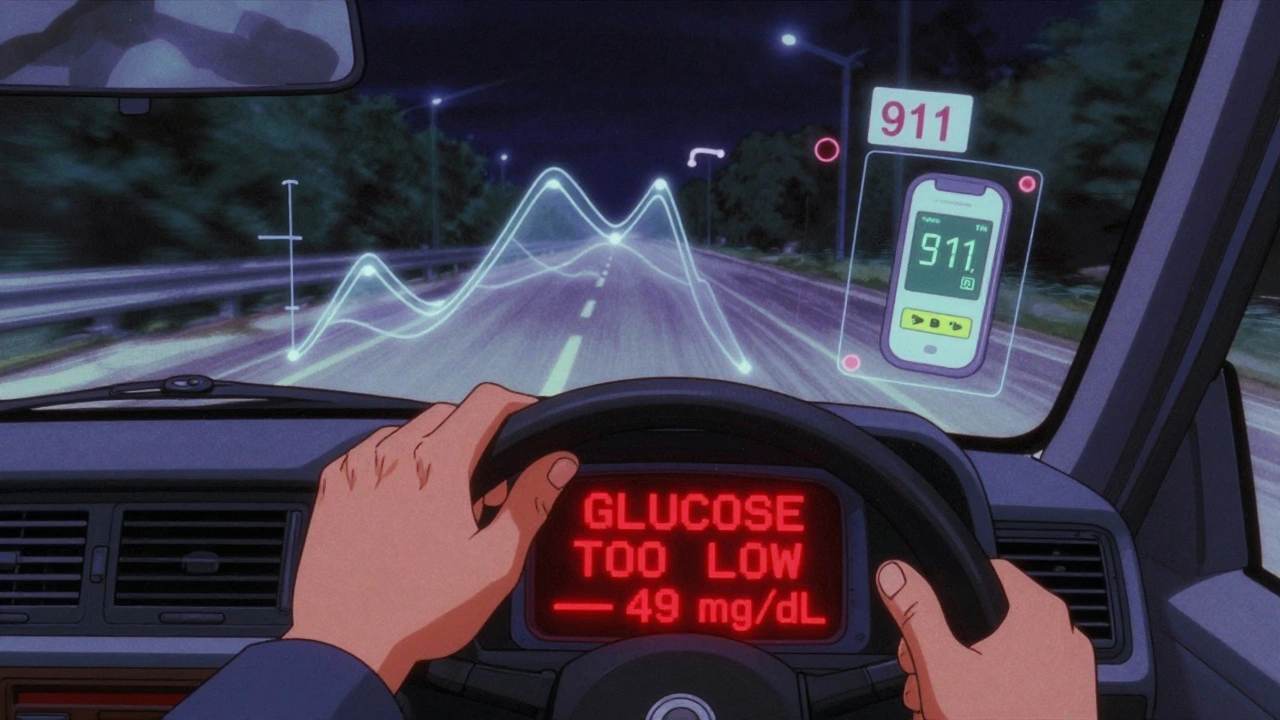
4. Check before you drive. Your brain doesn’t work right below 70 mg/dL. At 50 mg/dL, your reaction time is as slow as someone with a 0.08% blood alcohol level-the legal limit for driving. Always test before getting behind the wheel. If you’re under 70, treat first.
5. Educate the people around you. Over half of people with diabetes say bystanders mistake their low blood sugar for being drunk. That’s dangerous. Teach your family, coworkers, and friends: “If they’re confused, sweaty, or acting strange, give them juice or glucagon. Don’t wait.”
The Hidden Risks
Low blood sugar isn’t just about passing out. Repeated episodes, especially in older adults, increase the risk of:
- Dementia (each severe episode raises risk by 4.7%)
- Heart problems (2.1% higher death risk per episode)
- Fractures from falls
- Chronic sleep loss from nighttime lows
One study found that 6% of unexpected deaths in Type 1 diabetics under 40 are linked to nighttime lows-called “dead-in-bed” syndrome. That’s why many people use alarms or CGMs that vibrate at night.
And here’s something most don’t talk about: the emotional toll. People report feeling anxious, guilty, or embarrassed after a low. Some avoid social events. Others stop exercising. That’s why mental health support is part of diabetes care.
What’s New in Treatment
Technology is changing the game.
- Artificial pancreas systems like Tandem Control-IQ automatically adjust insulin based on real-time glucose data. They reduce time spent below 54 mg/dL by over 3 hours per week.
- Predictive algorithms are being tested to forecast lows 45 minutes ahead using AI. One NIH-funded project aims for 85% accuracy.
- Glucose-responsive insulin is in development-this kind of insulin would automatically slow down when blood sugar drops, like a thermostat for your blood sugar.
But tech isn’t magic. It still requires education, planning, and vigilance. The most advanced CGM won’t help if you don’t know how to respond to its alerts.
Final Thoughts
Hypoglycemia isn’t a sign of failure. It’s a side effect of treatment-and it’s manageable. The key is knowing your triggers, acting fast, and preparing for the worst. Whether you’re managing diabetes yourself or supporting someone who does, understanding low blood sugar saves lives. It’s not about avoiding lows entirely-it’s about knowing what to do when they happen.
What should I do if I feel symptoms of low blood sugar but my meter says I’m fine?
Sometimes, your body’s symptoms appear before your blood sugar drops enough to show on a meter-especially if you’ve had diabetes a long time. Always treat symptoms, even if your reading is above 70 mg/dL. Your body may be reacting to a rapid drop, not just the absolute number. Treat with 15g fast-acting carbs and recheck in 15 minutes.
Can non-diabetics get hypoglycemia?
Yes, but it’s rare. Two types exist: reactive hypoglycemia (after meals, often after weight-loss surgery) and fasting hypoglycemia (due to tumors, liver disease, or hormone problems). If you’re not diabetic and keep having low blood sugar episodes, see a doctor. It could signal an underlying condition.
Why does my glucose monitor sometimes show the wrong number during a low?
CGMs measure glucose in fluid between cells, not directly in blood. There’s a 5-20 minute lag during rapid changes. If your sugar is dropping fast, the CGM might read higher than your actual level. Always confirm with a fingerstick if you feel symptoms but the CGM doesn’t match.
Is it safe to drive with diabetes?
Yes-but only if you test before you drive and keep fast-acting carbs in the car. Never drive if your blood sugar is below 70 mg/dL. At 50 mg/dL, your reaction time is as impaired as someone with a 0.08% blood alcohol level. If you’ve had hypoglycemia unawareness, talk to your doctor about whether driving is safe for you.
Can I use candy or chocolate to treat a low?
No. Chocolate, cookies, and most candies contain fat and fiber, which slow sugar absorption. You need fast-acting carbs like glucose tablets, juice, or honey. Fat delays the sugar from reaching your bloodstream when you need it most.
How often should I check my blood sugar?
Check before meals, before bed, before and after exercise, and whenever you feel symptoms. If you use insulin, check at least 4-6 times daily. If you have hypoglycemia unawareness or a history of severe lows, check even more often-especially overnight. CGMs reduce the need for fingersticks but don’t eliminate the need to verify when symptoms don’t match readings.
Does stress cause low blood sugar?
Stress usually raises blood sugar, but in some cases, it can trigger a low. Emotional stress can lead to skipped meals, forgetfulness about insulin, or increased physical activity (like pacing or crying). It can also disrupt sleep, which affects insulin sensitivity. So while stress doesn’t directly lower glucose, it can create conditions that lead to lows.
Jessica Baydowicz
December 5, 2025 AT 00:47OMG this post is a lifesaver!! I just got diagnosed with Type 1 last year and I was terrified of going low at work-now I keep glucose tabs in my purse, my car, AND my yoga bag. No more panic attacks when my CGM beeps! 🙌
Elizabeth Crutchfield
December 5, 2025 AT 08:32i rlly needed this. i had a low last week and thought i was just tired or drunk lol. my bf gave me a candy bar and i threw up. never again. juice all the way now 😅
Ben Choy
December 5, 2025 AT 08:36Just wanted to say thank you for writing this so clearly. My mom has Type 2 and uses insulin-she didn’t even know about nasal glucagon until I showed her this. We ordered a Baqsimi kit today. She’s 72 and scared of needles, so the nasal one was perfect. 🙏
Emmanuel Peter
December 5, 2025 AT 16:32Okay but let’s be real-why are we still using the 15-15 rule in 2025? It’s 2025. We have AI glucose predictors, automated insulin pumps, and glucose-responsive insulin in trials. This feels like reading a 1998 diabetes pamphlet. You’re still treating symptoms instead of preventing them. Stop being reactive. Get tech. Stop relying on juice boxes like it’s 1999.
Ashley Elliott
December 6, 2025 AT 07:09Thank you for including the emotional toll part. I didn’t realize how much anxiety I was carrying until I read that. I used to avoid birthday parties because I was scared I’d go low and ‘make a scene.’ Now I tell people: ‘If I look weird, give me juice. I’m not drunk-I’m just low.’ It’s changed everything. 💛
Chad Handy
December 7, 2025 AT 04:47I’ve had Type 1 for 22 years and I’ve had 14 hospitalizations from hypoglycemia. I’ve lost my awareness. I’ve woken up in the ER with a blood sugar of 32. I’ve had seizures. I’ve had my wife wake up to me thrashing in bed. I’ve had to explain to my kids why Dad sometimes cries for no reason. And yeah, I use a CGM. And yeah, I have glucagon. But none of it stops the guilt. None of it stops the fear that I’m a burden. None of it stops me from feeling like I’m failing every time my numbers dip. You talk about tech like it’s magic. But magic doesn’t fix the loneliness. Magic doesn’t fix the shame. And magic doesn’t make your 8-year-old stop asking if you’re going to die tonight.
Augusta Barlow
December 8, 2025 AT 12:08Wait-so you’re telling me the government and Big Pharma are letting people die from ‘dead-in-bed’ syndrome because they don’t want us to know about the real cause? I’ve been reading forums where people say CGMs are designed to make you dependent on expensive tech so you keep buying sensors. And insulin? It’s been priced at $300 for 100 years because they want you to keep needing it. This whole ‘low blood sugar’ thing is a distraction. The real problem is that your body’s detoxing sugar too fast because of the processed carbs they feed you. Eat keto. Stop the insulin. Stop the fear. It’s all a scam.
Joe Lam
December 9, 2025 AT 10:12Wow. Just wow. You wrote a textbook chapter and called it a Reddit post. I’m impressed. But let’s cut through the fluff: the only reason people get hypoglycemia is because they’re lazy or incompetent. If you can’t manage your insulin, maybe you shouldn’t have it. Glucagon is for amateurs. Real diabetics use closed-loop systems and never go below 80. If you need juice, you’re doing it wrong.
Jenny Rogers
December 9, 2025 AT 13:57While I commend the author for their comprehensive exposition on the physiological and pharmacological dimensions of hypoglycemic episodes, I must respectfully posit that the prevailing paradigm of reactive carbohydrate supplementation remains fundamentally inadequate. One must consider the epistemological framework wherein glycemic regulation is not merely a biochemical equilibrium but a metaphysical negotiation between autonomy and biological determinism. The 15-15 rule, while empirically validated, fails to address the ontological crisis of diabetic subjectivity. One is not merely treating glucose; one is negotiating the existential fragility of selfhood in the face of metabolic collapse. Perhaps, then, the true intervention lies not in juice or glucagon-but in the cultivation of a transcendent relationship with one’s own physiology.