
Imagine opening a pill bottle and realizing you've been taking the wrong dose for a week, or discovering that a new supplement interacts dangerously with your blood pressure medicine. It happens more often than you'd think. In the US alone, the CDC reports that adverse drug events lead to roughly 1.3 million emergency room visits every year. Whether you're managing a chronic condition at home or overseeing a loved one's care, the margin for error is slim.
To tackle this, healthcare professionals use a gold-standard framework called the Five Rights of Medication Administration. While it sounds like something only for nurses in a hospital, these rules are just as vital for you in your own kitchen or bathroom. By applying these systematic checks, you can drastically lower the risk of medication safety mishaps.
The Core Five Rules of Medication Safety
The Five Rights are designed to be a safety net. If one check fails, the next one is there to catch the mistake. Here is how to apply them to your daily routine:
- Right Patient: In a hospital, this means checking a wristband. At home, it means ensuring the prescription is actually yours. Never share medications, even if a friend has the same symptoms. Two people might have the same headache, but their underlying health-like kidney function or allergies-could make a drug safe for one and toxic for the other.
- Right Drug: Always verify the name on the label against what the doctor told you. Be wary of "look-alike, sound-alike" drugs. The Institute for Safe Medication Practices notes that these confusing names account for 25% of reported errors. If the pill looks different than it did last month, stop and call your pharmacist.
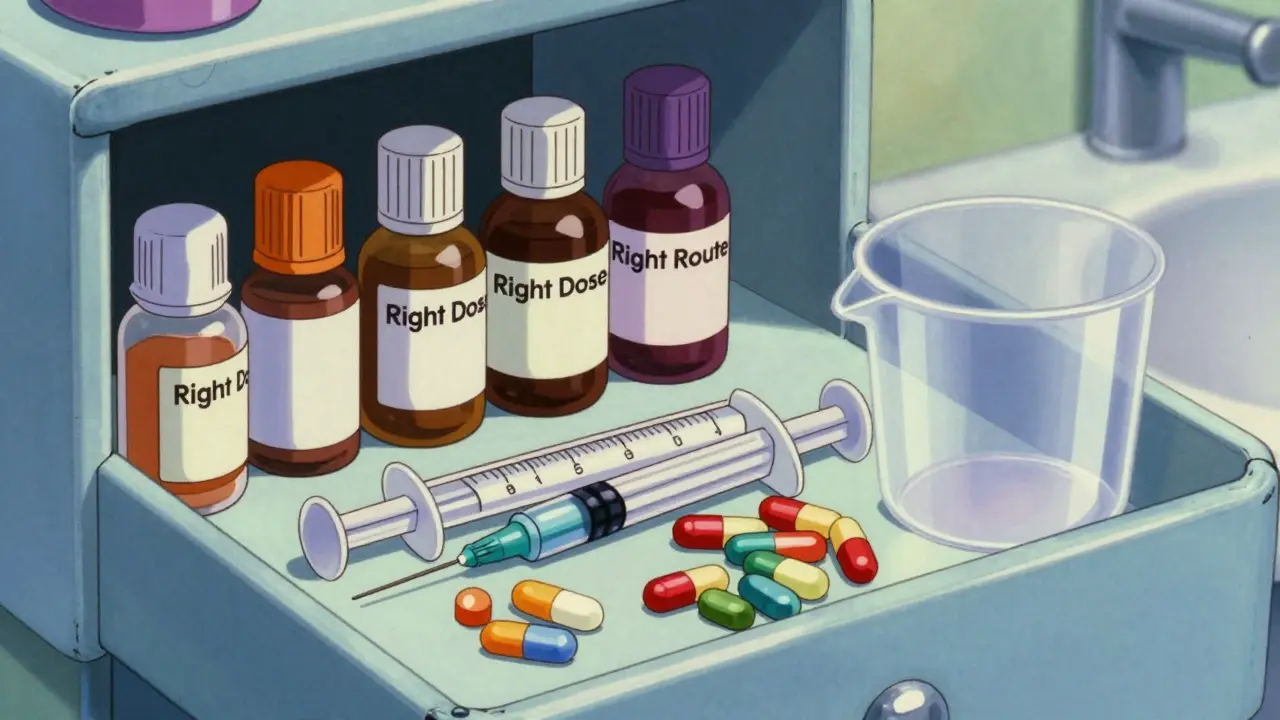
- Right Dose: A tiny mistake in a dose can have huge consequences, especially with "high-alert" medications like insulin. Check the milligrams (mg) or micrograms (mcg) carefully. If you're using a liquid medication, use a proper measuring syringe or cup, not a household kitchen spoon, which varies wildly in size.
- Right Route: This is simply how the medicine enters your body. Is it a pill to swallow, a cream for the skin, or a drop for the eye? Some medications are designed specifically for one route; taking an oral liquid via injection, for example, can be fatal. Always double-check the instructions on the bottle.
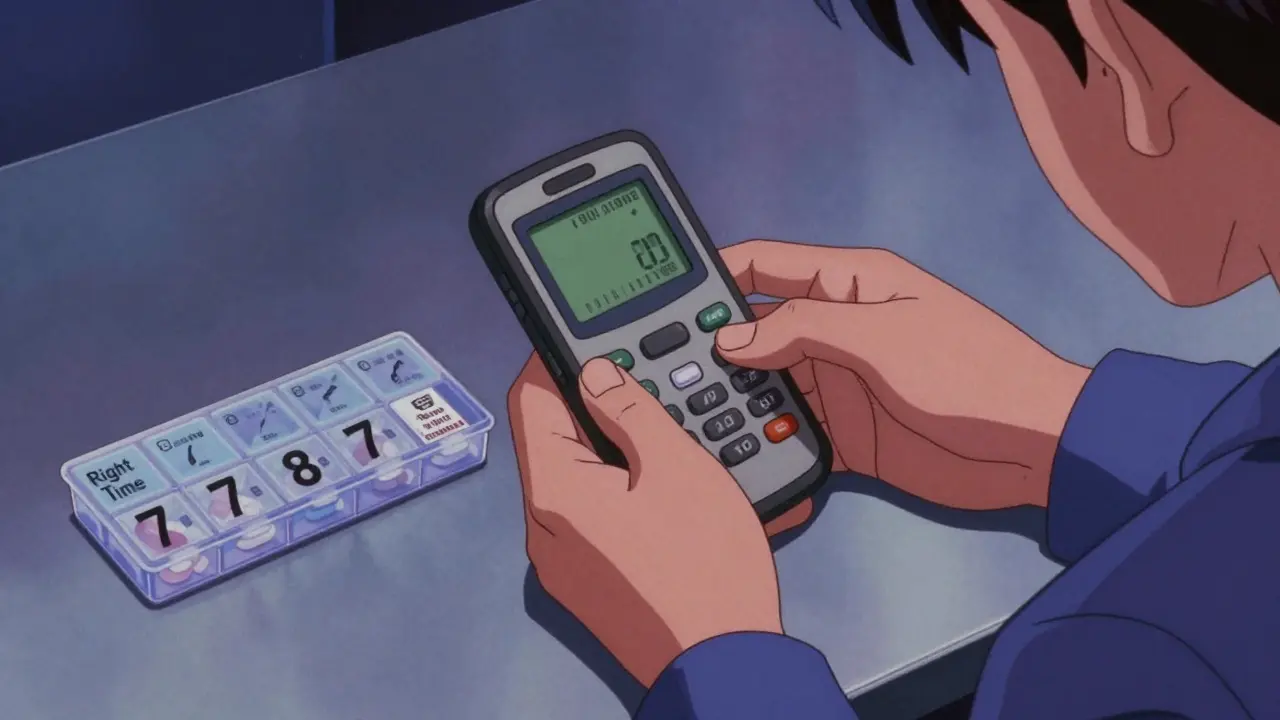
- Right Time: Timing isn't just about remembering; it's about chemistry. Some drugs need to be taken on an empty stomach to absorb, while others must be taken with food to avoid nausea. For time-critical meds, try to stay within a 30-minute window of your scheduled dose to keep the levels steady in your bloodstream.
| Framework | Primary Focus | Best Used For... | Key Limitation |
|---|---|---|---|
| Five Rights | Clinical Accuracy | Hospital/Clinical settings | Focuses on the individual, not the system |
| WHO "Medication Without Harm" | Systemic Risks | Global public health policy | Lacks a step-by-step clinical guide |
| CDC Home Guidelines | Practical Habits | Daily home management | Insufficient for complex hospital care |
Expanding the Safety Net: Beyond the Five Rights
Modern medicine is complex. Taking five pills a day is different from taking twenty. Because of this, experts have expanded the list. You should also consider the Right Reason-do you actually know why you're taking this? If a doctor prescribes a medication but doesn't explain what it's for, that's a red flag. Ask questions until you understand the goal of the treatment.
Then there is the Right Response. Your medication is only "right" if it's working and not causing dangerous side effects. For instance, if you're taking a blood pressure medication but your readings remain sky-high, the "response" is wrong, and you need a clinical review. Monitoring your body's reaction is just as important as taking the pill itself.
Finally, consider Right Documentation. While you don't need a medical chart, keeping a simple log or using a pill organizer helps prevent "double-dosing." Many seniors use these organizers to visually confirm if they've already taken their morning dose, removing the guesswork that leads to accidental overdoses.
Practical Tips for Managing Meds at Home
Turning these clinical rules into daily habits can be tough. If you're managing multiple prescriptions, known as polypharmacy, the risk of error climbs. To keep things safe, try these concrete strategies:
- The Brown Bag Review: Once or twice a year, put every single supplement, vitamin, and prescription you take into a bag and take them to your pharmacist. They can spot dangerous interactions that a doctor might miss.
- Use Technology: If you struggle with the "Right Time," use smartphone reminders or specialized med-tracking apps. Data shows these are particularly effective for adults under 50 who are balancing busy work schedules.
- Lighting Matters: It sounds simple, but 37% of seniors report inadequate lighting as a factor in medication errors. Don't take your meds in a dim room; make sure you can clearly read the label.
- Verify the Appearance: If your pharmacy changes the color or shape of your generic pill, it can be jarring. Always verify the name on the bottle first, then check the pill's appearance. If it looks wrong, don't swallow it.
Common Pitfalls and How to Avoid Them
Many people follow the label perfectly but still experience harm. This often happens due to undetected drug interactions. For example, some common over-the-counter painkillers can interfere with prescription blood thinners. This is why the "Right Reason" and "Right Response" rules are so critical-they prompt you to think about the bigger picture.
Another common trap is the "workaround." In hospitals, nurses sometimes skip a safety check because they are rushed. At home, you might skip reading the label because you've taken the drug for years. Complacency is the enemy of safety. Treat every dose as if it's the first time you're taking it.
What should I do if I miss a dose?
Do not automatically double the next dose to "catch up," as this can lead to toxicity. Check the patient information leaflet or call your pharmacist immediately to find out if you should take the missed dose now or wait until the next scheduled time.
How do I know if a medication is "high-alert"?
High-alert medications are drugs that carry a significant risk of causing serious harm when used incorrectly. Common examples include anticoagulants, insulin, and opioids. These usually require a second person to verify the dose or very strict monitoring of your vital signs.
Are generic drugs as safe as brand-name drugs?
Yes, generic drugs must have the same active ingredients and meet the same safety standards as brand-name versions. However, the inactive ingredients (fillers) may differ, which is why you should always notify your pharmacist if you notice a change in the pill's appearance or if you develop a new allergy.
Why is it important to keep an updated medication list?
In an emergency, doctors need to know exactly what is in your system to avoid giving you a drug that could cause a lethal interaction. A written list ensures the "Right Patient" and "Right Drug" rules are maintained even when you cannot speak for yourself.
Can I take my meds with any liquid?
Not always. Some medications interact with grapefruit juice, dairy products, or alcohol, which can either block the drug's effect or make it dangerously potent. Always check the "Right Route" and administration instructions on the label.
Your Next Steps for Safety
If you are currently taking medications, start by auditing your medicine cabinet. Toss anything expired and create a master list that includes the dose, the time of day, and the reason for taking it. If you are a caregiver, implement a visual check system-look at the pill, look at the label, and then administer.
For those managing complex regimens, like chemotherapy or severe chronic illness, consider a quarterly "medication reconciliation" appointment. This is a formal meeting with a healthcare provider to compare your current medications against your medical records to ensure nothing has been missed or duplicated.