
Vitamin K Consistency Calculator
How This Calculator Works
Enter your daily vegetable servings to calculate your vitamin K intake. Experts recommend maintaining consistent daily intake (1-2 servings) within a 25 mcg variation to avoid dangerous INR fluctuations. Your INR could change by 0.2-0.4 points for every 100 mcg difference in your vitamin K intake.
Your Daily Vitamin K Intake
When you're on warfarin, your blood thinning dose isn't just about the pill you take-it's also about what’s on your plate. Many people assume they need to avoid green vegetables entirely. That’s a myth. The real key? Consistency. Your INR, the number that tells your doctor how well your blood is clotting, swings up and down not because you ate spinach, but because you ate spinach one day and none for three days after. This isn’t about restriction. It’s about routine.
How Vitamin K and Warfarin Work Together
Warfarin doesn’t make your blood thinner. It blocks a process your body uses to make clotting proteins. That process needs vitamin K. So when you eat more vitamin K, your body fights back harder-making more clotting factors despite the drug. When you eat less, the drug wins too easily, and your blood can’t clot properly. This tug-of-war is why your INR changes. A single high-vitamin K meal won’t crash your INR overnight. But if you eat 3 cups of kale one day and none for a week, your INR can swing from 2.5 to 1.8 in under 72 hours. That’s dangerous. Too low, and you risk clots. Too high, and you risk bleeding.
Research from the NIH in 2019 found that every extra 100 micrograms of vitamin K you consume daily can lower your INR by 0.2 to 0.4 points. That might sound small, but in anticoagulation, even 0.3 can mean the difference between safety and a trip to the ER.
The Complete List of Vitamin K-Rich Vegetables
Not all greens are created equal. Some are mild. Others are vitamin K bombs. Here’s the full list of vegetables with the highest vitamin K content, based on USDA FoodData Central 2023 measurements:
- Kale (½ cup cooked) - 547 mcg
- Spinach (½ cup cooked) - 444 mcg
- Collard greens (½ cup cooked) - 418 mcg
- Swiss chard (½ cup cooked) - 299 mcg
- Turnip greens (½ cup cooked) - 265 mcg
- Parsley (¼ cup fresh) - 246 mcg
- Mustard greens (½ cup cooked) - 210 mcg
- Brussels sprouts (½ cup cooked) - 109 mcg
- Broccoli (½ cup cooked) - 102 mcg
- Green cabbage (½ cup cooked) - 82 mcg
- Asparagus (½ cup cooked) - 70 mcg
- Romaine lettuce (1 cup shredded) - 48 mcg
These aren’t just random greens. They’re the top 12 sources. If you eat any of these regularly, you need to track them. And yes, cooking matters. Boiling reduces vitamin K by 15-20%. Steaming keeps it nearly intact. Raw spinach has less than cooked, but you eat more of it raw. A cup of raw spinach has about 145 mcg. A cup of cooked? Close to 444 mcg. Serving size isn’t optional-it’s critical.
What Else Contains Vitamin K? (Beyond Vegetables)
It’s not just salads. Other common foods can sneak in vitamin K:
- Beef liver (3 oz) - 106 mcg
- Egg yolks (1 large) - 25 mcg
- Boost Original (8 oz) - 25 mcg
- Ensure Original (8 oz) - 25 mcg
- Viactiv Calcium Chews (1 tablet) - 25 mcg
- Dried seaweed (10g) - 45-100 mcg
Many people don’t realize their protein shakes, calcium supplements, or even liver pâté can affect their INR. If you take supplements, check the label. If it says “vitamin K” or “phylloquinone,” that’s a red flag unless your dietitian told you it’s safe.
The Myth: Avoid All Greens
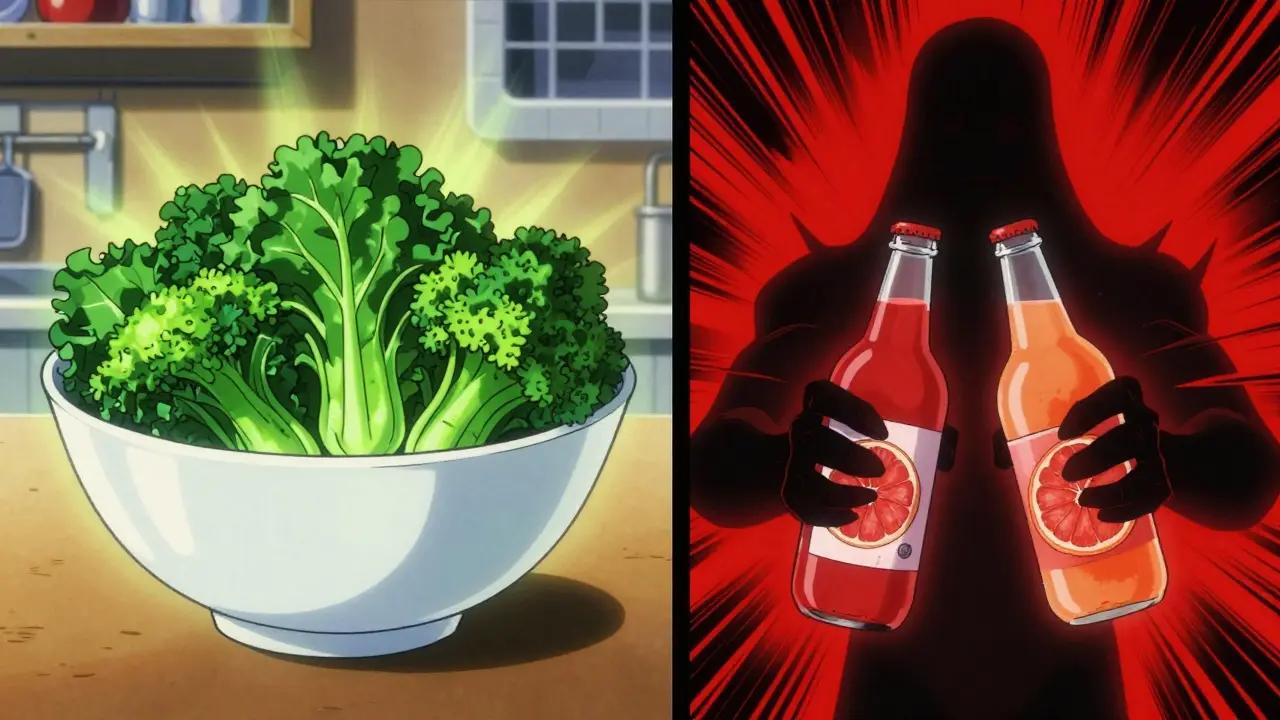
One of the most dangerous myths is that you should stop eating green vegetables. A 2022 survey of 1,847 warfarin users found that 68% of patients believed they had to cut out all leafy greens. Nearly half of them did-and ended up with unstable INR levels. Why? Because when you suddenly remove vitamin K from your diet, your body has no baseline. Warfarin then overpowers your clotting system, and your INR spikes. That’s when you risk bleeding in your brain, stomach, or joints.
Dr. Gary Raskob from the University of Oklahoma put it bluntly in a 2022 interview: “The goal isn’t elimination but consistency-we’ve seen patients hospitalized because they stopped eating all green vegetables.”
The Rule: Stick to 1-2 Servings Daily
Experts agree: you can safely eat 1-2 servings of high-vitamin K foods every day, as long as you do it the same way, every day. One cup of spinach salad on Tuesday and Thursday? Fine. Three cups on Monday and none the rest of the week? That’s trouble.
Mayo Clinic’s guidelines say you can tolerate a daily variation of ±25 mcg. That means if you normally eat 100 mcg, going from 75 to 125 mcg is okay. But jumping from 75 to 200? That’s outside the safe zone. A 2020 study from the University of Iowa found patients with daily vitamin K variation over 35% were 2.7 times more likely to have unstable INR. That’s not a coincidence. That’s a pattern.
What to Avoid Completely
Some things are non-negotiable:
- Cranberry juice - Increases INR by 0.8-1.2 units in 72 hours. One glass can push you into danger.
- Grapefruit juice - Blocks how your body breaks down warfarin, making the drug stronger. A 2021 study showed it raised warfarin levels by 15-30%.
- Uncontrolled alcohol - More than one drink a day increases bleeding risk. It also interferes with liver metabolism of warfarin.
These aren’t “maybe” risks. They’re documented, repeatable, and dangerous. Skip them. Full stop.
How to Get It Right: Practical Steps
You don’t need to become a nutritionist. But you do need a system:
- Find your baseline - Track your meals for 7 days. Use the USDA database or the Iowa Vitamin K Food Frequency Questionnaire. Know how much vitamin K you’re eating now.
- Choose 1-2 foods - Pick one or two high-vitamin K vegetables you like. Make them part of your routine. Spinach smoothie every morning? Kale in your stir-fry every Thursday? Pick one.
- Keep it consistent - Same amount. Same days. Same time. If you eat it in the morning, always eat it in the morning. If you eat it at dinner, always at dinner. Timing matters.
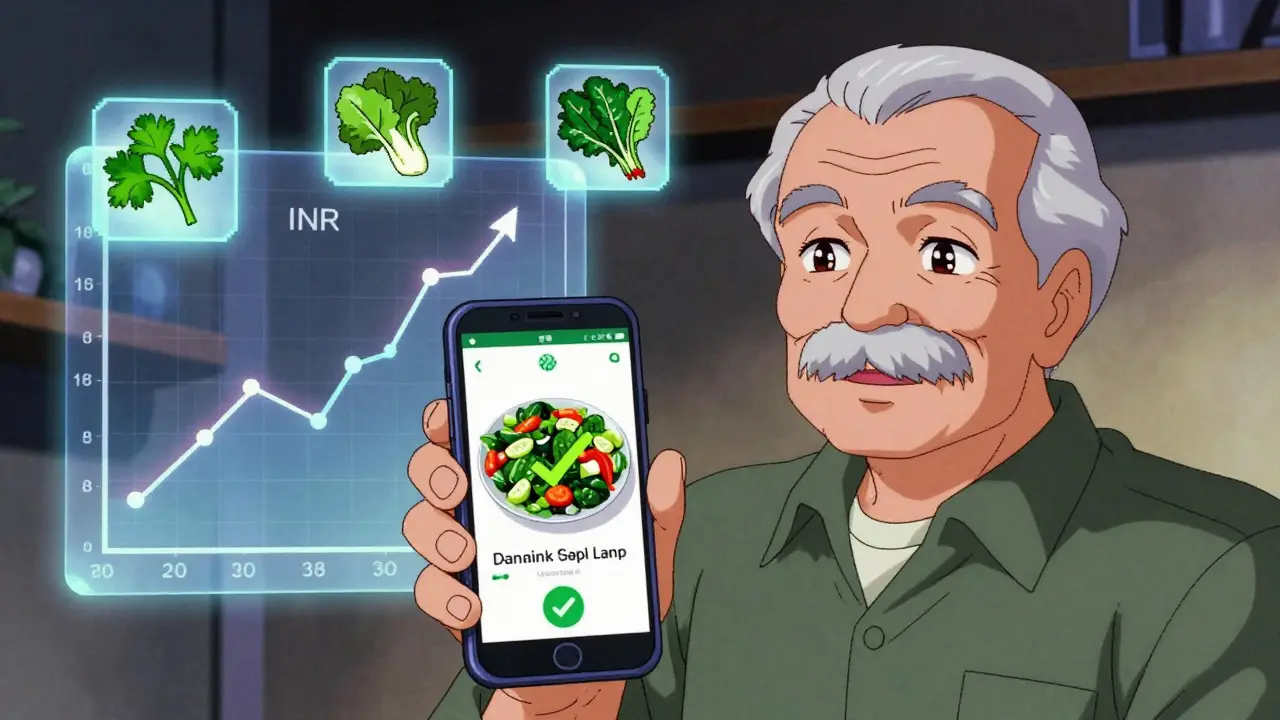
- Use a food diary - Write it down. Or take a photo. A Cleveland Clinic study showed patients who kept a food diary improved their time in therapeutic range by 12.3%.
- Don’t change during illness or holidays - When you’re sick, you eat less. When you’re on vacation, you eat more. Both can wreck your INR. Plan ahead.
What About Supplements and New Medications?
Never start a new supplement, herb, or OTC medicine without talking to your doctor. Garlic, ginkgo, fish oil, and even St. John’s Wort can interact with warfarin. Even a new antibiotic can throw off your INR. The University of Michigan found 24.3% of warfarin-related ER visits were caused by patients starting new supplements without telling their provider.
And yes, your doctor might suggest vitamin K supplements-yes, supplements-to stabilize your INR. A 2022 trial from McMaster University showed patients taking 100 mcg of vitamin K daily had 37% fewer dangerous spikes in INR. But this isn’t for everyone. It’s a personalized tool, only used under medical supervision.
Technology Can Help
There’s an app for this. The National Blood Clot Alliance’s “Warfarin Food Guide” app has been downloaded over 42,000 times. It lets you scan barcodes, log meals, and get instant vitamin K estimates. The University of North Carolina cut ER visits by 43% using a similar system that lets patients take photos of their meals. No guesswork. Just data.
Why This Still Matters in 2026
Yes, newer blood thinners like apixaban and rivaroxaban don’t need diet tracking. But warfarin is still the only option for people with mechanical heart valves, antiphospholipid syndrome, or severe kidney disease. In 2023, 42% of anticoagulated patients were still on warfarin. That’s 4.7 million people in the U.S. alone. For them, this isn’t optional. It’s life-saving.
One patient, Mary T., 67, has kept her INR steady at 2.5 for five years. How? She eats exactly one cup of spinach salad every Tuesday and Thursday. No more. No less. She doesn’t count calories. She doesn’t avoid greens. She just keeps her routine.
You can too.
Can I eat spinach every day if I’m on warfarin?
Yes-but only if you eat the same amount every day. Eating 1 cup of spinach daily is fine. Eating 1 cup one day and 3 cups the next will cause your INR to swing. Consistency matters more than avoidance.
Does cooking reduce vitamin K in vegetables?
Boiling reduces vitamin K by 15-20% because some leaches into the water. Steaming, sautéing, or microwaving preserves nearly all of it. Raw vegetables have less vitamin K per cup than cooked, but you usually eat more raw. So, cooking method matters less than portion size and consistency.
Should I stop eating green vegetables before my INR test?
No. Never change your diet before a test. Your INR should reflect your normal routine. If you eat spinach every day, keep eating it. If you suddenly skip it, your test result will be misleading and could lead to a wrong dose adjustment.
Is kale better than spinach for warfarin users?
Neither is better. Kale has more vitamin K than spinach (547 mcg vs. 444 mcg per ½ cup cooked), but both are high. The issue isn’t which vegetable you pick-it’s that you stick to the same one, in the same amount, every day. Switching between kale and spinach daily can cause instability.
Can I drink alcohol while on warfarin?
One drink per day is generally safe if you’re consistent. More than that increases bleeding risk and can interfere with how your liver processes warfarin. Avoid binge drinking. If you usually have a glass of wine with dinner, keep doing it. If you don’t usually drink, don’t start.
What should I do if I’m sick and can’t eat my usual meals?
Call your anticoagulation clinic. If you’re eating less, your vitamin K intake drops, and your INR may rise. If you’re eating more (like soups with broth and greens), it may fall. Your provider may need to adjust your dose temporarily. Don’t guess-call them.
bill cook
February 27, 2026 AT 15:53Katherine Farmer
February 28, 2026 AT 09:53Angel Wolfe
February 28, 2026 AT 12:05Vikas Meshram
March 2, 2026 AT 00:03Ben Estella
March 3, 2026 AT 10:40Jimmy Quilty
March 3, 2026 AT 14:10Miranda Anderson
March 3, 2026 AT 17:48Gigi Valdez
March 4, 2026 AT 12:29