PBM Reimbursement: How Pharmacy Benefit Managers Control Your Drug Costs
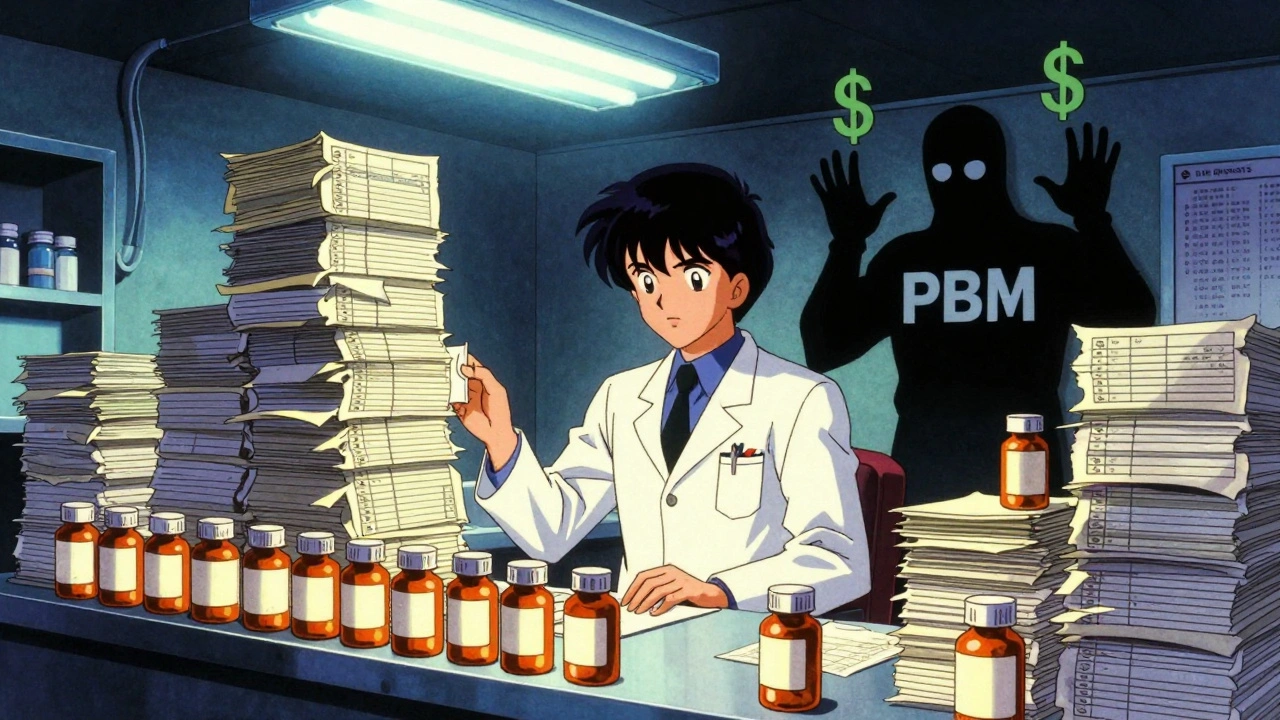
When you pick up a prescription, the price you pay isn’t set by your doctor or the pharmacy—it’s often decided by a PBM reimbursement, a system where Pharmacy Benefit Managers negotiate drug prices and set payment rules for insurers. Also known as pharmacy benefit managers, these middlemen control how much insurers pay pharmacies and how much you pay at the counter. Most people don’t realize PBMs are behind the confusing price jumps, hidden rebates, and sudden coverage denials that make filling prescriptions feel like a game with stacked odds.
PBM reimbursement isn’t just about pricing—it’s a chain reaction. When a PBM strikes a deal with a drugmaker to favor one brand over another, that decision ripples through your co-pay, your insurance formulary, and even whether your doctor can prescribe what they think is best. For example, if your insulin is on a PBM’s preferred list, your co-pay might be $30. If it’s not, you could pay $300—even if the generic version is chemically identical. This is why pharmacy benefit managers, entities that manage drug benefits for health plans and employers have such a huge impact on your wallet. And it’s why insurance coverage, the extent to which your plan pays for medications based on PBM rules often feels arbitrary. You’re not just fighting a pharmacy or an insurer—you’re fighting a system designed to hide costs behind layers of contracts.
What you see on your receipt isn’t the full story. PBMs collect rebates from drugmakers, then decide how much of that money gets passed to you, your insurer, or keeps going into their own pockets. That’s why two people on the same plan can pay wildly different amounts for the same drug. And when your insurance denies coverage for a generic, it’s often not because the drug isn’t effective—it’s because the PBM’s contract favors a different version. This is the hidden layer behind posts about non-formulary generics, medication grants, and insurance coverage denied. People aren’t just asking for help paying for meds—they’re asking why the system makes it so hard to get them in the first place.
The good news? You’re not powerless. Understanding how PBM reimbursement works gives you leverage. You can ask your pharmacist if a cheaper alternative exists under a different PBM tier. You can request a formulary exception when your drug gets blocked. You can use patient advocacy groups to bypass PBM restrictions entirely. The posts below show real ways people are cutting through the noise—whether it’s navigating mail-back disposal programs, fighting drug safety alerts, or finding financial aid for high-cost meds. All of it ties back to one thing: the invisible hand of PBM reimbursement. What you learn here won’t just help you save money—it’ll help you take back control.
Pharmacy Margin Economics: How Generics Drive Profits Despite Low Prices
Generics make up 90% of prescriptions but only 25% of drug spending - yet they drive 96% of pharmacy profits. Learn how the hidden economics of generics keep pharmacies open - and why independent pharmacies are struggling to survive.