Low Blood Sugar: What It Is, Why It Happens, and How to Handle It
When your low blood sugar, a condition where glucose levels in the blood drop below normal, often triggering physical and mental symptoms. Also known as hypoglycemia, it can happen to anyone—even people without diabetes—when the body’s fuel supply runs low and isn’t replaced fast enough. It’s not just about feeling hungry. Low blood sugar can make you shaky, sweaty, confused, or even pass out if ignored. It’s not rare. One in five people with type 1 diabetes experiences at least one episode a week. But it’s also not always obvious. Sometimes it sneaks up after skipping a meal, overdoing exercise, or taking too much insulin.
It’s not just about diabetes. People using certain medications, like sulfonylureas or insulin, are at higher risk. But it can also happen if you drink alcohol on an empty stomach, have an eating disorder, or suffer from rare hormone imbalances. Your insulin, a hormone that helps cells absorb glucose from the blood plays a key role. Too much insulin, or not enough food to balance it, and your blood sugar plummets. Your blood sugar levels, the amount of glucose circulating in your bloodstream, measured in mg/dL or mmol/L need to stay between 70 and 140 for most people. Below 70 is the danger zone. Below 54? That’s an emergency.
Recognizing the signs early saves you from a crash. Nervousness, tingling lips, heart pounding, blurred vision—these aren’t just stress symptoms. They’re your body screaming for sugar. Quick fixes like juice, glucose tablets, or candy work fast. But long-term, you need to understand why it’s happening. Are you eating enough carbs? Are your meds timed right? Are you checking your levels regularly? Many people don’t realize they’re having silent lows—no shaking, no sweating—until they feel foggy or irritable. That’s when tracking becomes critical.
What you’ll find here aren’t generic tips. These are real stories and science-backed strategies from people who’ve been there. From managing lows during workouts to handling them at night, from knowing which snacks actually help to avoiding dangerous drug interactions, this collection cuts through the noise. You’ll learn how to prevent repeats, when to call a doctor, and how to keep your energy steady without relying on sugar crashes. This isn’t about fear. It’s about control.
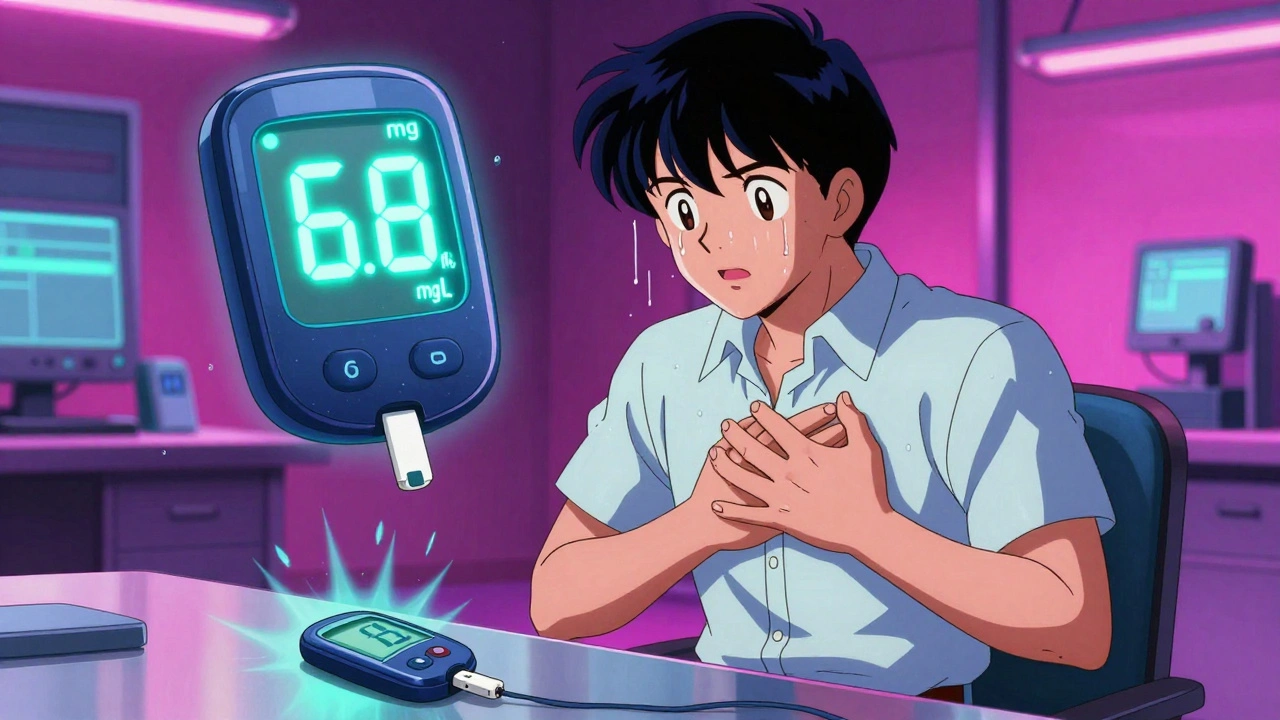
Hypoglycemia: How to Recognize, Treat, and Prevent Low Blood Sugar
Learn how to recognize, treat, and prevent low blood sugar in people with diabetes. Understand symptoms, emergency treatment with glucagon, and proven prevention strategies backed by current medical guidelines.