Generic Drug Economics: How Cheap Medicines Save Money Without Sacrificing Safety
When you hear generic drug economics, the financial system behind low-cost versions of brand-name medications. Also known as off-patent drug pricing, it's what lets millions afford their prescriptions every month. It’s not magic—it’s math. Once a brand-name drug’s patent expires, other companies can make the exact same medicine at a fraction of the cost. No new research. No fancy ads. Just the same active ingredients, same effectiveness, same safety standards. And that’s why generic drugs now make up over 90% of all prescriptions filled in the U.S.
But here’s what most people don’t realize: drug pricing, how much a medication costs from factory to pharmacy. Also known as pharmaceutical cost structure, it’s shaped by patents, manufacturing scale, and insurance negotiations. The price drop isn’t random. A brand-name drug might cost $300 a month. The generic? $10. Why? Because multiple manufacturers compete. They don’t need to spend millions on clinical trials—they just prove they’re bioequivalent. That competition drives prices down. And when insurance companies push for generics, it’s not because they’re cheap—it’s because they’re proven. The FDA requires generics to work the same way, in the same amount, in the same body. No shortcuts. No compromises.
Still, you might run into trouble. insurance coverage, whether your plan will pay for a specific medication. Also known as formulary decisions, it’s where the system gets messy. Sometimes, your plan says no to a generic because it’s not on their list—called non-formulary. Or maybe they want you to try a different generic first. That’s not a denial of your need. It’s a bureaucratic hurdle. The good news? You can appeal. Your doctor can write a letter. You can ask for a one-time exception. And if you’re paying out of pocket? Look into patient assistance programs. Some foundations help cover costs for people who can’t afford even generics.
What’s clear from the posts here is that people aren’t just asking about prices—they’re asking about safety, access, and control. They want to know how to spot fake generics. How to get help when insurance says no. How to dispose of unused meds safely. How to make sure a $5 pill does the same job as a $300 one. That’s the real heart of generic drug economics: it’s not just about saving money. It’s about making sure everyone, no matter their income, can get the medicine they need without risking their health.
Below, you’ll find real stories and practical guides from people who’ve navigated these exact issues—from dealing with denied coverage to comparing generic brands, from spotting counterfeit packaging to finding financial aid. No fluff. No theory. Just what works when you’re holding a prescription and wondering how to make it affordable.
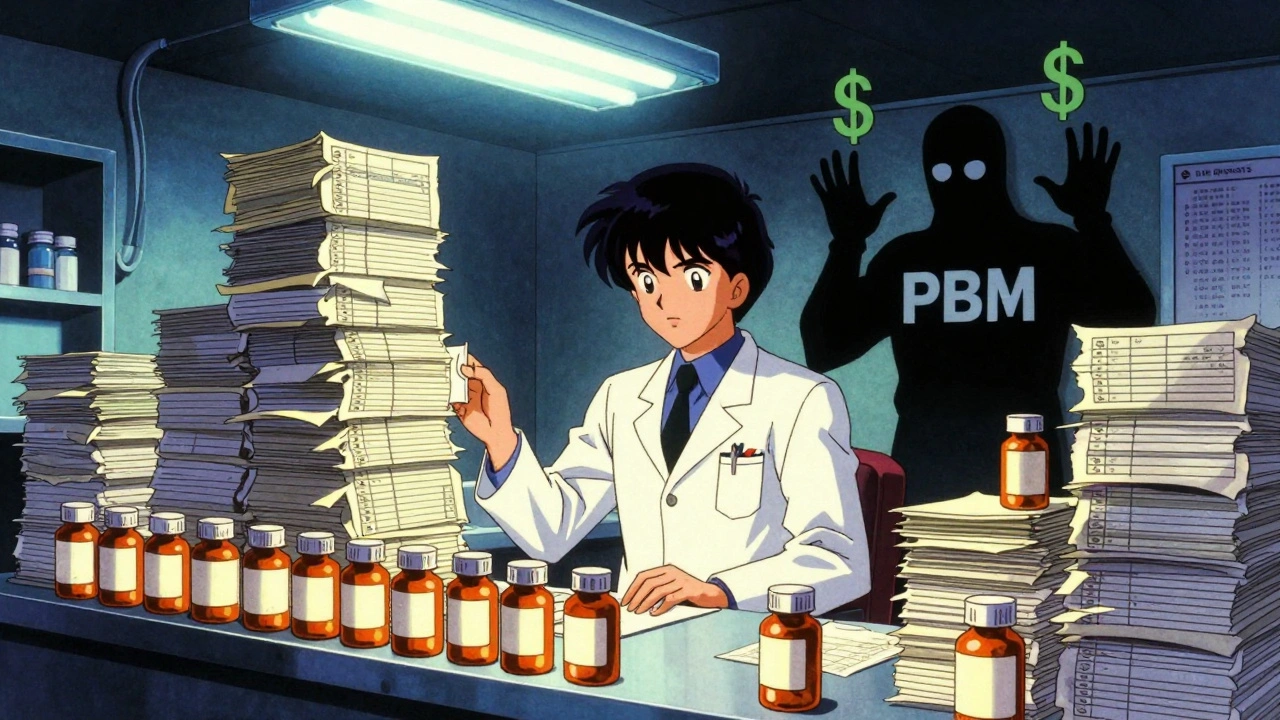
Pharmacy Margin Economics: How Generics Drive Profits Despite Low Prices
Generics make up 90% of prescriptions but only 25% of drug spending - yet they drive 96% of pharmacy profits. Learn how the hidden economics of generics keep pharmacies open - and why independent pharmacies are struggling to survive.