Doxycycline: Uses, Side Effects, and What You Need to Know
When you need to fight a bacterial infection, doxycycline, a broad-spectrum tetracycline antibiotic used to treat everything from acne to Lyme disease. Also known as Vibramycin, it’s one of the most prescribed antibiotics worldwide because it works against a wide range of bacteria and is often taken just once a day. Unlike some antibiotics that only target specific bugs, doxycycline steps in when doctors aren’t sure exactly what’s causing the infection—or when the infection is stubborn, like chlamydia, urinary tract infections, or even certain types of pneumonia.
Doxycycline doesn’t just kill bacteria—it also reduces inflammation, which is why it’s used long-term for acne and rosacea. But it’s not harmless. Many people get stomach upset, especially if they take it on an empty stomach. Sun sensitivity is another big one—you can burn easier, even on cloudy days. And it’s not for kids under 8 or pregnant women, because it can permanently stain developing teeth and affect bone growth. If you’re on blood thinners, antacids, or iron supplements, doxycycline can interact with them, so always tell your doctor what else you’re taking.
Related to this are other antibiotic therapy, the use of drugs to kill or slow the growth of bacteria causing infection. Also known as antibiotic treatment, it includes drugs like amoxicillin, azithromycin, and ciprofloxacin, each with their own strengths and limits. For example, if you’re allergic to penicillin, doxycycline is often the go-to. But if you have kidney issues, your doctor might pick something else. And with rising antibiotic resistance, doctors are more careful than ever about when and how long to prescribe it.
People often wonder if there’s a better alternative. That’s where antibiotic alternatives, other medications or approaches used when doxycycline isn’t suitable or effective. Also known as second-line antibiotics, they include drugs like minocycline, tetracycline, or even non-antibiotic options like topical treatments for acne. Some posts in this collection compare doxycycline to norfloxacin for prostatitis, or look at how it stacks up against other antibiotics in real-world use. You’ll also find advice on avoiding common mistakes—like skipping doses, not finishing the full course, or taking it with dairy or coffee, which can block absorption.
What you’ll find here isn’t just theory. These are real stories and practical guides from people who’ve used doxycycline, doctors who prescribe it, and pharmacists who’ve seen what happens when things go wrong. You’ll learn how to manage side effects, what to do if your insurance denies coverage, and when to push back if a prescription feels off. Whether you’re dealing with a tick bite, a bad breakout, or just trying to understand why your doctor chose this drug over others, this collection gives you the clear, no-fluff facts you need to stay safe and get results.
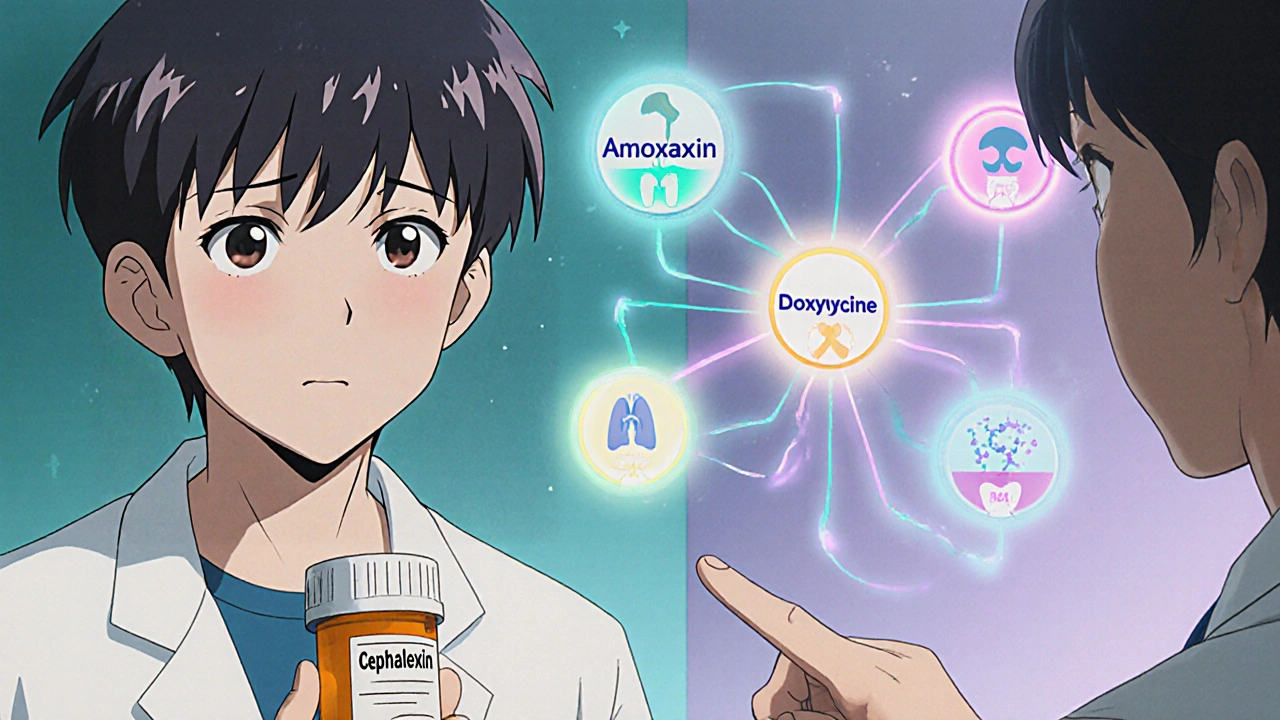
Cephalexin vs Alternatives: Which Antibiotic Is Right for You?
Cephalexin is commonly prescribed for skin, urinary, and respiratory infections, but it's not always the best option. Learn how amoxicillin, doxycycline, and clindamycin compare - and when to ask your doctor for an alternative.