The Core Difference Between Patents and Exclusivity
Many people use "patent" and "exclusivity" interchangeably, but in the legal world, they are completely different beasts. A patent is like a fence you build around an invention; you have to apply for it, fight for it in court, and actively defend it. If a competitor finds a way to build a "different" fence that does the same thing, they might get around your patent. Regulatory exclusivity, however, is more like a locked door managed by the government. It doesn't matter if the competitor's drug is chemically identical or slightly different; the regulatory agency-like the FDA is the United States Food and Drug Administration, the federal agency responsible for protecting public health by ensuring the safety and efficacy of drugs -simply refuses to approve a competing application until the clock runs out. While patents protect the *idea*, exclusivity protects the *right to market* the product.| Feature | Patent Protection | Regulatory Exclusivity |
|---|---|---|
| Source of Right | Patent Office (USPTO) | Regulatory Agency (FDA/EMA) |
| Enforcement | Lawsuits in Civil Court | Automatic Agency Refusal |
| Start Date | At time of filing | At time of market approval |
| Scope | Specific invention/claims | The product itself |
The Heavy Hitters: Types of Exclusivity
Not all drugs get the same level of protection. The length of the "lock-out" period depends on what the drug is and who it helps. In the US, the Hatch-Waxman Act is the 1984 legislation that created the modern balance between rewarding innovators and allowing generic competition set the stage for these rules.- New Chemical Entities (NCE): If a company creates a brand new molecule, they typically get 5 years of exclusivity. For the first 4 years, the FDA won't even accept a generic application.
- Orphan Drugs: These are medicines for rare diseases (affecting fewer than 200,000 people in the US). Because the market is so small, the Orphan Drug Act is a 1983 law providing financial incentives and 7 years of market exclusivity for rare disease treatments grants 7 years of protection to make the investment worthwhile.
- Biologics: Complex medicines made from living cells, like monoclonal antibodies, get the gold standard: 12 years of exclusivity under the BPCIA framework.
- Clinical Changes: If a company does new research to add a new use (indication) to an old drug, they can snag an additional 3 years of protection for that specific use.
Global Variations: US vs. EU vs. Japan
If you're a global pharma giant, you can't use a one-size-fits-all strategy because every region plays by different rules. The US is generally more aggressive with its 12-year biologics window, while Europe uses a more structured "8+2+1" formula. In the European Union is a political and economic union of 27 member states that implements unified pharmaceutical regulations via the EMA , a company gets 8 years of "data exclusivity" (where generics can't even use the originator's data to prove their drug works) and 2 years of "market exclusivity" (where the drug cannot be sold). If they find a new use for the drug, they might get one more year. Japan takes a different path, often granting a flat 10-year data exclusivity period for new chemical entities.The Economic Tug-of-War
Here is where things get controversial. From the perspective of a company like Pfizer or AbbVie, these protections are essential. Developing a drug is a gamble; most fail. The ones that succeed need to recoup billions in R&D costs quickly. For instance, the drug Humira used a combination of patents and biologics exclusivity to keep competitors at bay until 2023, resulting in massive revenue that funded further research. On the flip side, patient advocacy groups and generic manufacturers argue that these periods are too long. When a drug has exclusivity, the manufacturer can charge whatever the market will bear because there is zero competition. This leads to the "patent cliff" phenomenon: when exclusivity finally expires, prices often drop by 80% or more almost overnight. This suggests that while exclusivity fuels innovation, it also keeps medicine expensive for the average person for a decade or more.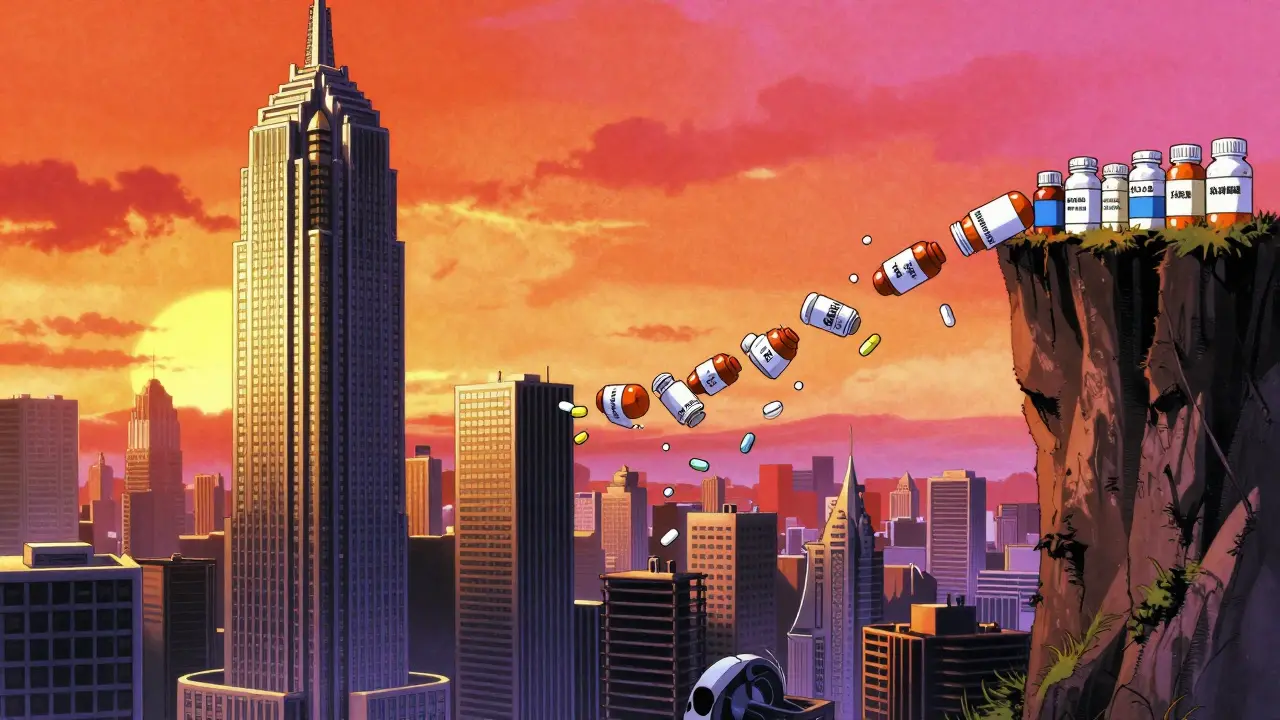
How Companies Manage the "Exclusivity Clock"
Managing these dates isn't something you do on a calendar in a breakroom. It requires a dedicated team of regulatory affairs specialists. These pros spend hundreds of hours coordinating between the legal team (who handle the patents) and the commercial team (who set the price). They rely heavily on tools like the FDA's "Purple Book," which tracks biologics and biosimilars. The goal is to create a "layered" defense. A company might have a patent that expires in 2028, but a regulatory exclusivity period that lasts until 2030. By stacking these protections, they extend the window of maximum profit.The Future of Market Protections
We are currently seeing a shift in the wind. Governments are under immense pressure to lower drug costs. In 2023, the European Commission proposed cutting data exclusivity from 8 years down to 6 to get generics to patients faster. In the US, there are ongoing debates about shortening the 12-year biologics window to 10 years. We are also seeing a change in *what* is being protected. For example, with new cell therapies, regulatory exclusivity is becoming less important. Why? Because these treatments are so complex and "irreproducible" that a competitor can't just copy the formula. The biology itself becomes the protection, making the legal paperwork secondary.What happens when regulatory exclusivity expires?
Once the exclusivity period ends, the regulatory agency (like the FDA) can approve "abbreviated" applications from generic companies. These companies don't have to repeat the expensive clinical trials; they just have to prove their version is the same as the original. This leads to a surge of competitors and a significant drop in the drug's price.
Can a drug be protected by both a patent and regulatory exclusivity?
Yes, and this is the most common scenario. They run concurrently. If the patent expires but the regulatory exclusivity is still active, the generic cannot enter the market. Conversely, if the exclusivity expires but the patent is still valid, the generic company might be able to get FDA approval, but they cannot actually sell the drug without being sued for patent infringement.
Why do biologics get 12 years while NCEs only get 5?
Biologics are much more expensive and complex to develop than simple chemical pills. They are grown in living cells, making them harder to manufacture and test. The longer 12-year window reflects the higher risk and higher cost associated with biological innovation.
What is an "Orphan Drug" and why does it get special protection?
An orphan drug treats a rare disease affecting a very small population (under 200,000 in the US). Because the customer base is so small, companies wouldn't normally invest in them. The 7-year exclusivity period provides a guaranteed monopoly to make the development of these "niche" drugs financially attractive.
Does regulatory exclusivity prevent other companies from researching a drug?
It doesn't stop research, but it stops *approval*. Generic companies often start their research and development while the original drug is still under exclusivity. This allows them to have their application ready to go the moment the clock hits zero, even if they had to do some of that work "blind" without accessing the originator's full data.