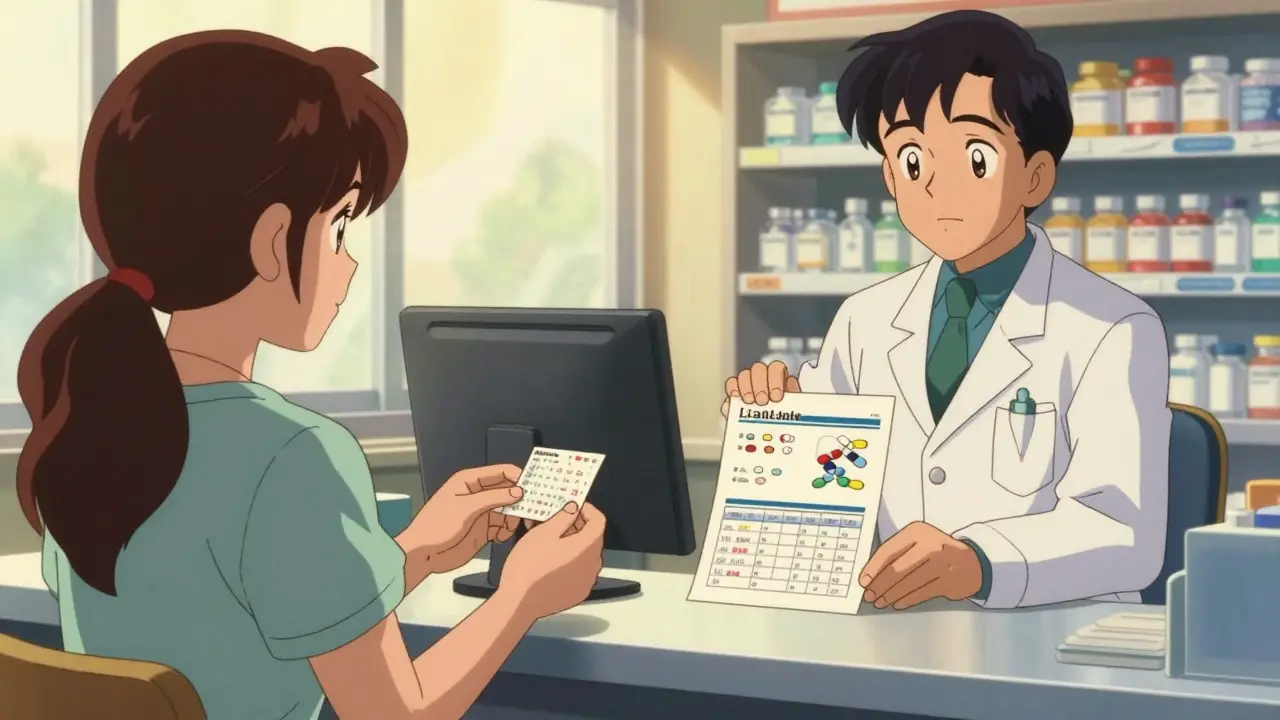
Getting a prescription filled shouldn’t feel like solving a riddle. Yet too many people leave the pharmacy with a tiny slip of paper covered in tiny print, medical jargon, and confusing symbols they don’t recognize. If you’ve ever stared at your medication label and thought, “What am I supposed to do with this?” - you’re not alone. And you don’t have to accept it.
You Have the Right to Understand Your Medications
It’s not just a nice idea - it’s a right. Under the American Medical Association’s Code of Medical Ethics, you’re entitled to receive information about your treatment in a way you can understand. The same goes for your medication instructions. The Patient Bill of Rights used by hospitals and pharmacies across the U.S. clearly states you have the right to ask questions and get answers in plain language. That includes written instructions you can read, keep, and follow without guessing.Some states, like California and Tennessee, have specific laws requiring pharmacies to provide instructions in a way that’s easy to understand. But even in states without those rules, federal guidelines and professional ethics still protect you. If you’re not getting clear instructions, it’s not because you’re asking too much - it’s because the system hasn’t caught up.
Why Clear Instructions Matter
Poorly written medication instructions aren’t just annoying - they’re dangerous. According to the Institute for Safe Medication Practices, 63% of medication errors happen because patients didn’t understand how to take their drugs. That means people are taking too much, too little, at the wrong time, or with foods they shouldn’t. These mistakes lead to hospital visits, emergency room trips, and sometimes worse.Studies show that patients who get simple, clear written instructions are 5.3 times more likely to take their meds correctly. That’s not a small difference. It’s the difference between staying healthy and ending up back in the hospital. And it’s not just about reading level - it’s about clarity. A label that says “take once daily” doesn’t help if you don’t know what time of day, or whether to take it with food.
What Good Instructions Look Like
Good written medication instructions don’t use medical terms. They don’t assume you know what “QD” or “BID” means. They don’t cram everything onto a tiny label. Instead, they include:- The name of the medication (in plain English, not just the brand or chemical name)
- What it’s for (e.g., “for high blood pressure,” not “for hypertension”)
- How much to take (e.g., “one tablet,” not “1 tab”)
- When to take it (e.g., “every morning with breakfast,” not “QD”)
- How long to take it (e.g., “for 14 days,” not “until gone”)
- What to avoid (e.g., “don’t drink alcohol,” “avoid grapefruit”)
- What side effects to watch for (in simple language)
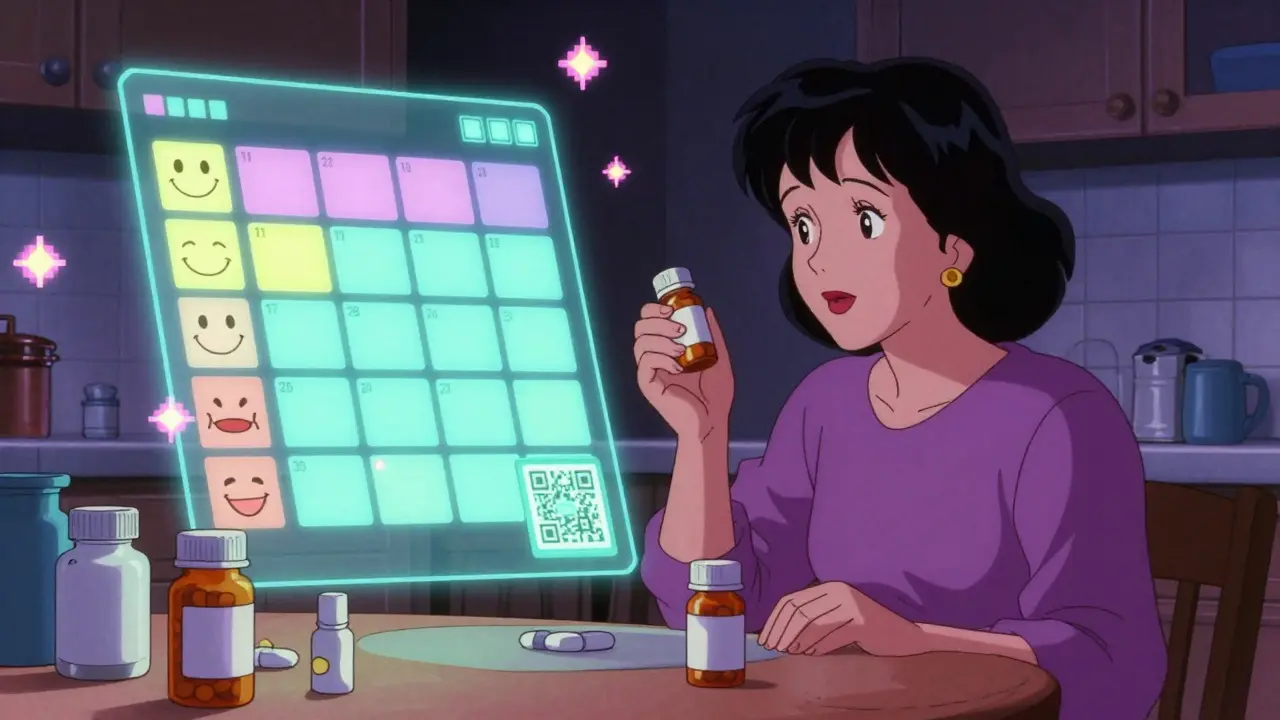
- A visual schedule or calendar if you take multiple meds
Some pharmacies now use pictograms - small pictures showing when to take a pill - which have been shown to improve understanding by over 40%. Others include QR codes that link to short videos explaining the medication in plain language. These aren’t luxury features. They’re basic safety tools.
How to Ask for Better Instructions - Step by Step
Asking for better instructions isn’t rude. It’s smart. And there’s a proven way to do it that works. Here’s how:- Ask to speak with the pharmacist - not the technician. Pharmacists are trained to explain medications. Technicians handle filling; pharmacists handle education. At chain pharmacies, 73% of policies require technicians to pass complex questions up to a pharmacist.
- Be specific - don’t say, “Can you explain this?” Say: “I need a one-page summary in plain English that tells me exactly when and how to take this, and what to watch out for.”
- Cite your rights - saying, “I’m exercising my right under the AmerisourceBergen Patient Rights document to receive education in a language I understand,” increases your chances of getting help by nearly 4 times.
- Ask for a visual schedule - if you take more than two meds a day, ask for a chart with boxes for morning, afternoon, evening, and bedtime. Many pharmacies have these ready to print.
- Use the read-back method - after they explain, say, “Let me repeat it back to make sure I got it right.” Then say what you think you’re supposed to do. If you’re wrong, they’ll correct you. This cuts errors by 63%.
- Ask for it in writing - say, “Can you give me a printed copy of this? I’m keeping it for my medical records.” Pharmacies are 58% more likely to provide written instructions when they know you’re documenting it.
What to Do If They Say No
Sometimes, you’ll get pushback. Maybe they say, “We don’t do that.” Or, “That’s all we can give you.” Don’t walk away. Here’s what to do next:- Ask to speak with the manager. Most pharmacies have a protocol for patient concerns.
- Ask if they can email or text you a clearer version. Many now offer digital copies through patient portals.
- If you’re on Medicare or Medicaid, call your plan’s member services. They’re required to help you get understandable information.
- If you speak another language, say: “I need these instructions in [your language] - that’s required under federal law.” By law, pharmacies must provide translation services if you ask.
- Write down what happened. Include dates, names, and what was said. You can file a complaint with your state pharmacy board or the Office for Civil Rights at HHS.
What’s Changing - And What’s Coming
The system is slowly improving. CVS and Walgreens now offer scannable QR codes on prescriptions that link to video instructions in 20 languages. Some pharmacies are using digital tools that generate personalized, picture-based guides. The FDA is pushing for new rules that would require all prescription labels to use plain language and standardized icons by 2026.Meanwhile, a federal bill called the Patients’ Right to Know Their Medication Act is moving through Congress. It would require every prescription in the U.S. to come with a one-page, easy-to-read guide - no exceptions. With over 140 lawmakers supporting it, it’s not a matter of if, but when.
Don’t Wait for the System to Fix Itself
You don’t need to wait for new laws or fancy apps. You have the power right now. The next time you pick up a prescription, don’t just take the label and go. Stop. Ask. Request. Say clearly: “I need instructions I can understand.”It’s not just about following directions. It’s about staying safe. It’s about taking control of your health. And it’s your right.
Can I ask for medication instructions in my native language?
Yes. Under Title VI of the Civil Rights Act of 1964, pharmacies that receive federal funding - which includes nearly all pharmacies in the U.S. - are required to provide language assistance services at no cost. You can say: “I need my medication instructions in [language] per federal law.” Most pharmacies can print translated materials or connect you with an interpreter. If they refuse, you can file a complaint with the U.S. Department of Health and Human Services.
What if the pharmacy gives me a 2-page document full of medical terms?
Politely say: “This is too complex for me to use. Can you give me a simplified version with plain language and clear directions?” If they say no, ask to speak with the pharmacist or manager. You can also ask for a visual schedule or a one-page summary. Many pharmacies have templates for this - they just need you to ask. If they still refuse, ask if they can email or text you a clearer version, or contact your insurance plan for help.
Is it okay to ask for a picture-based schedule?
Absolutely. Picture-based schedules - like a calendar with boxes for morning, noon, evening, and bedtime - are proven to help people take their meds correctly, especially if they take multiple drugs. You can say: “I’d like a visual schedule with icons showing when to take each pill.” Many pharmacies already have these available. If they don’t, ask if they can print one from their system. This is a common request, and it’s not unusual.
Should I ask for instructions every time I refill a prescription?
Not always - but you should if anything changed. If your dose changed, you added a new medication, or you’re still confused, ask again. Even if the prescription is the same, your understanding might have improved, or you might have new questions. It’s better to ask than to assume. Pharmacists expect patients to check in, especially if they’re managing multiple conditions.
Can I get written instructions for over-the-counter (OTC) meds too?
Yes. While pharmacies aren’t legally required to give written instructions for over-the-counter drugs, many will if you ask - especially if you’re unsure how to use them safely. If you’re taking OTC meds with prescription drugs, it’s even more important to get clarity. Say: “I’m taking this with my other meds. Can you show me how to use it safely?” Pharmacists are trained to spot interactions and can give you personalized advice.
roger dalomba
December 26, 2025 AT 07:59Sophia Daniels
December 26, 2025 AT 13:38Amy Lesleighter (Wales)
December 27, 2025 AT 01:40Peter sullen
December 27, 2025 AT 20:16Brittany Fuhs
December 28, 2025 AT 16:14Fabio Raphael
December 29, 2025 AT 00:05Nikki Brown
December 29, 2025 AT 20:40Natasha Sandra
December 30, 2025 AT 03:54Steven Destiny
December 31, 2025 AT 19:02Rajni Jain
January 2, 2026 AT 02:32Becky Baker
January 2, 2026 AT 16:36Erwin Asilom
January 2, 2026 AT 22:57Sumler Luu
January 4, 2026 AT 13:36