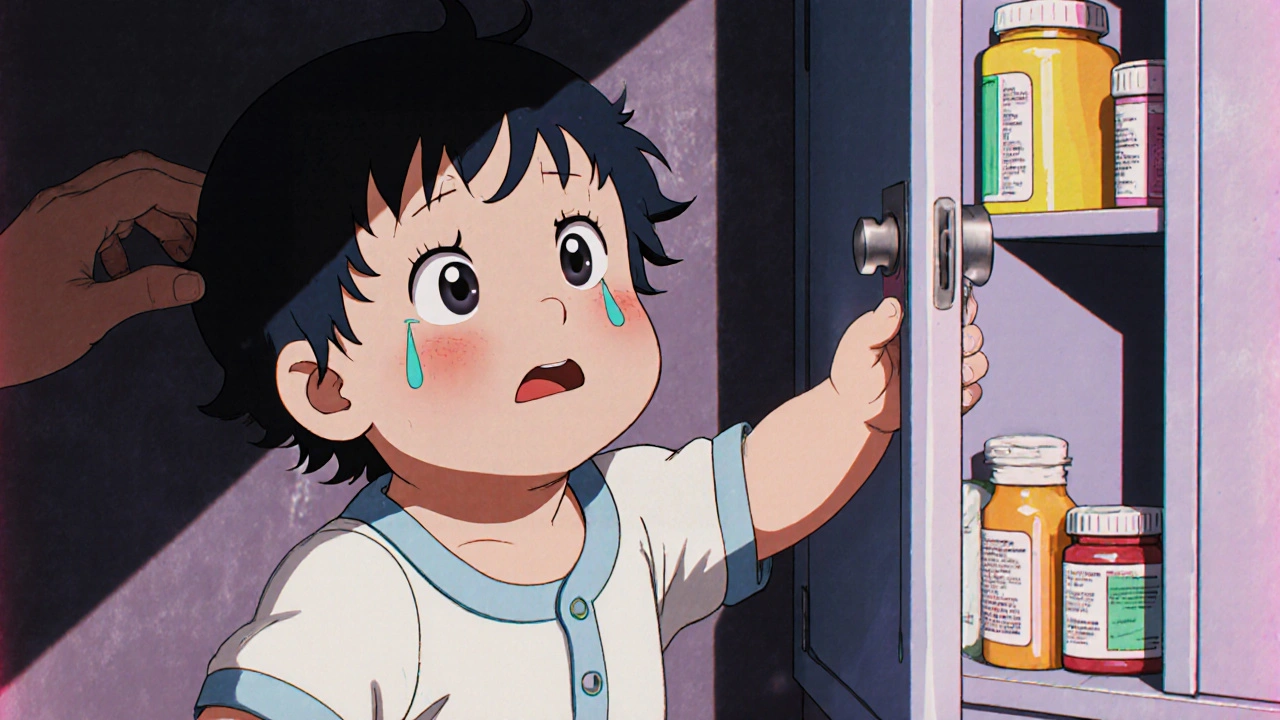
Every year, over 50,000 children under six in the U.S. end up in emergency rooms because they swallowed something they shouldn’t have. Most of these aren’t accidents in the traditional sense-they’re exploratory ingestions. Babies and toddlers don’t mean to poison themselves. They’re just curious. They grab what’s within reach, put it in their mouth, and suddenly, it’s an emergency.
Why Kids Under Five Are at Highest Risk
Children between 1 and 4 years old are the most vulnerable. That’s when they start crawling, pulling up, walking, and exploring everything with their hands and mouths. They don’t understand danger. A bottle of vitamins on the nightstand? To them, it looks like candy. A bottle of liquid medicine left on the counter? It smells sweet. A colorful laundry pod on the floor? It’s a fun new toy. The data doesn’t lie. According to the American Association of Poison Control Centers, 90% of all pediatric poison exposures happen in kids under six. And 75% of those are from normal childhood curiosity-not neglect, not abuse. Boys are slightly more likely to be affected, and kids with hyperactive temperaments are at higher risk too.What’s Most Dangerous? It’s Not What You Think
Most people assume aspirin or cleaning products are the biggest threats. But today, the top dangers have changed.- Liquid medications cause 69% more injuries than pills. Why? They’re easy to swallow, don’t burn the throat, and often taste like fruit or candy.
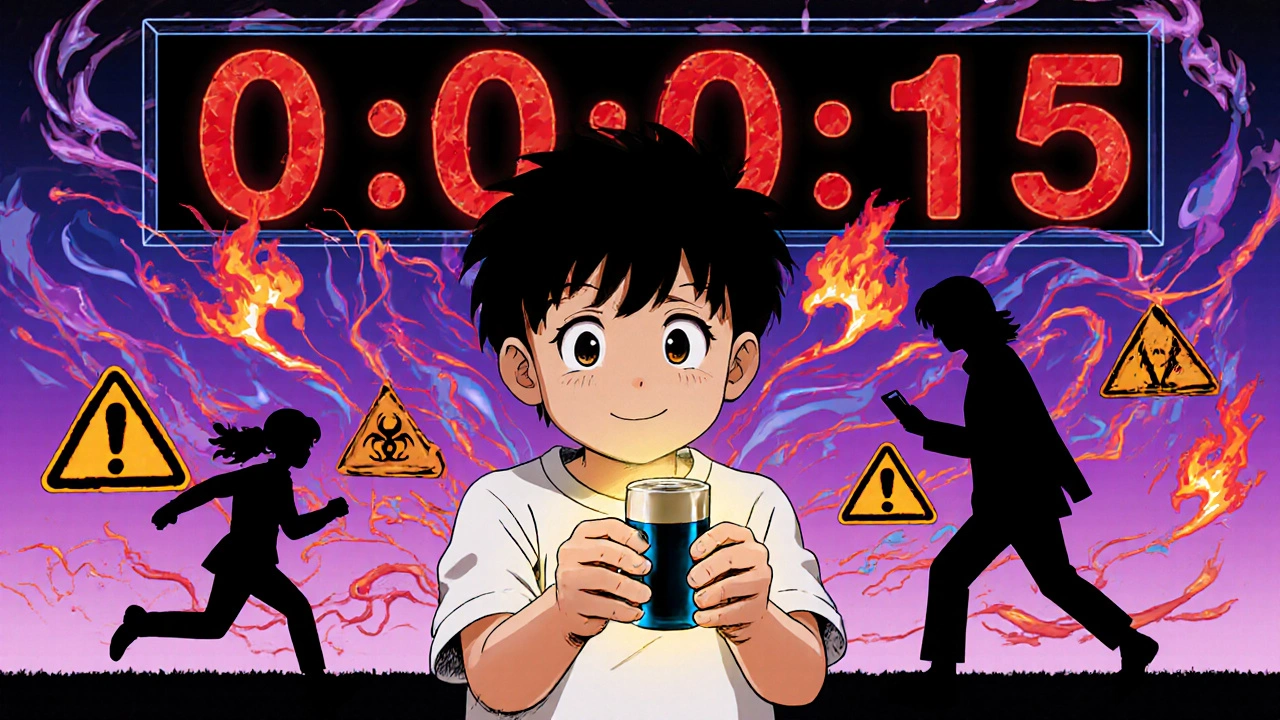
- Button-cell batteries are deadly. Once swallowed, they can burn through tissue in as little as 15 minutes. Over 85% of severe injuries happen in kids under four.
- Laundry detergent pods used to be a huge problem. After manufacturers changed the packaging to be less colorful and added double-latch lids, cases dropped by 39%.
- Liquid nicotine refills for e-cigarettes have surged. Poison control calls for these rose 1,500% between 2012 and 2020. They’re often stored in clear bottles, sometimes near juice or soda.
- Concentrated cannabis edibles are a new and growing risk in states where marijuana is legal. Kids mistake them for gummies or cookies-and hospitalization rates are 3.2 times higher than with other poisonings.
- Buprenorphine, a medication used for opioid addiction, has seen a 156% rise in pediatric exposures since 2010. It’s often found in purses or medicine cabinets.
How to Lock Down Your Home-Step by Step
You don’t need to turn your house into a fortress. But you do need to think like a 2-year-old.- Store everything up high and locked. Keep all medicines, cleaners, vitamins, and chemicals in cabinets at least 1.5 meters (5 feet) off the ground. Use locks on every cabinet-even ones you think are “too high.” Kids climb. A 2022 study found that this single step blocks 82% of access attempts by kids under four.
- Never rely on child-resistant caps alone. They’re designed to slow kids down, not stop them. Only 54% of parents consistently reseal them after use. That means nearly half the time, the cap is off and the bottle is accessible. Always lock the cabinet too.
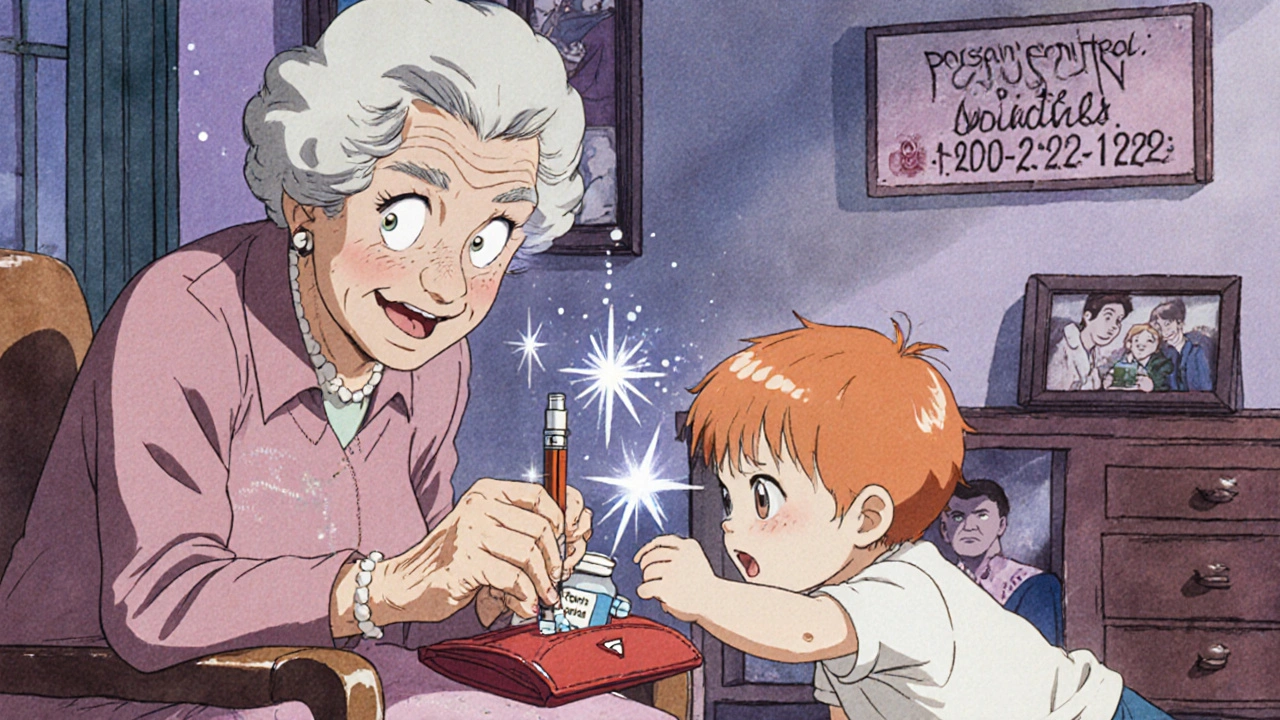
- Keep handbags and backpacks off the floor. Visitors, even grandparents, often leave pills, patches, or vape pens in their bags. These are responsible for 22% of poisoning incidents during visits. Hang bags on hooks or put them on high shelves.
- Separate food and chemicals. Don’t store cleaning products next to cereal or snacks. A 2019 National Safety Council report showed this reduces confusion-related ingestions by 37%. If it looks like food, kids will eat it.
- Keep products in original containers. Never transfer medicine or cleaners into empty soda bottles or yogurt tubs. That’s how kids mistake bleach for juice. This simple step prevents 29% of incidents.
- Use bittering agents where possible. Many household cleaners now contain denatonium benzoate, the bitterest substance known to humans. It doesn’t stop a single swallow-but it stops most kids from taking more than one. Look for it on labels.
Medication Mistakes That Put Kids at Risk
Medication errors are one of the leading causes of preventable poisonings. And the biggest mistake? Using a kitchen spoon. A 2021 study in Pediatrics found that 76% of parents made dosing errors when using spoons, cups, or droppers not made for medicine. Only 12% made errors when using the dosing device that came with the bottle. The difference? A teaspoon holds 5 mL. A real medicine syringe? It’s marked in 0.1 mL increments.- Always use the syringe, cup, or dropper that came with the medicine.
- Never guess. If you lose the device, call your pharmacy for a free replacement.
- Don’t give medicine “just in case.” If your child doesn’t have a fever, don’t give fever medicine.
- Keep a written log of doses. Kids get sick at night. You’re tired. You might give the same dose twice.
What About Grandparents and Babysitters?
This is where things fall apart. A 2021 multi-center study found that 63% of households had safety lapses when care switched between parents, grandparents, or babysitters. Grandparents might not know the new rules. They might leave pills on the nightstand because “that’s how we always did it.”- Have a quick safety chat before they come over. “We keep everything locked now. Can you help us by putting your bag on the chair?”
- Leave a printed checklist by the door: “Medicines in locked cabinet. Vapes in high drawer. Batteries in sealed container.”
- Ask them: “Do you know where the poison control number is?” If they don’t, give it to them.
What to Do If Something Is Swallowed
Don’t wait. Don’t call your pediatrician first. Don’t try to make your child vomit. Don’t give activated charcoal unless a professional tells you to.- Call Poison Control immediately: 1-800-222-1222. This number works anywhere in the U.S. and is staffed 24/7 by toxicology experts. In 78% of cases with the best outcomes, help was called within 30 minutes.
- Have the product ready. Know what was swallowed, how much, and when. Don’t guess. Bring the container.
- Use the Poison Control app. It’s rated 4.7 out of 5. Over 89% of users got help within 90 seconds. Download it now. Don’t wait for an emergency.
- For button batteries: Go to the ER immediately. Time is tissue.
- For liquid nicotine: Call Poison Control and get to the ER. Even small amounts can cause seizures or breathing problems.
When to Start Prevention
You don’t wait until your baby starts crawling. You start before. The American Academy of Pediatrics recommends beginning safety checks at the 9-month well-child visit. That’s 3-4 months before most babies start crawling. By then, you should have:- Cabinet locks installed
- All medicines moved to high, locked storage
- Child-resistant caps on everything
- The Poison Control number saved in your phone
What’s Changing in the Future
Regulations are catching up. By 2025, the FDA may require denatonium benzoate in all e-liquid nicotine products. By 2027, the WHO recommends unit-dose packaging for all liquid medications-meaning each dose comes sealed in its own blister pack. This could prevent 15,000 emergency visits in the U.S. alone. Smart locks for medicine cabinets are growing fast-200% annual growth since 2020. But they cost $149 each. For now, the cheapest, most effective tool is still the simple lock and the poison control number.Final Thought: It’s Not About Being Perfect
You’re not a bad parent if you forget to lock the cabinet once. You’re not careless if you leave a pill bottle on the counter during a rushed morning. We’ve all done it. But you can’t afford to make that mistake twice. The goal isn’t perfection. It’s consistency. Lock it. Call Poison Control. Use the right dosing tool. Teach everyone who cares for your child. Because when it comes to preventing pediatric exploratory ingestions, the most powerful tool isn’t a lock or a bittering agent. It’s awareness. And action.What should I do if my child swallows a button battery?
Go to the emergency room immediately. Do not wait for symptoms. Button batteries can burn through tissue in as little as 15 minutes. Call Poison Control (1-800-222-1222) on your way, but don’t delay transport. Do not induce vomiting or give food or drink unless instructed by a medical professional.
Are child-resistant caps enough to keep kids safe?
No. Child-resistant caps are designed to slow down children, not stop them. Studies show that 46% of parents don’t reseal them after each use. Even a 2-year-old can figure out how to open them after a few tries. Always store medicines and chemicals in locked cabinets at least 5 feet off the ground.
Can I use a kitchen spoon to give my child medicine?
No. A kitchen spoon holds about 5 mL, but medicine doses are often measured in 0.5 mL or 1.25 mL increments. A 2021 study found that 76% of parents made dosing errors using kitchen spoons. Always use the dosing device that came with the medicine-usually a syringe or cup with clear markings.
What’s the most common mistake parents make?
Leaving medications or chemicals within reach during busy moments-like morning routines, visitors, or bedtime. The biggest risk isn’t neglect. It’s distraction. A pill bottle left on the counter for 30 seconds is all it takes. Always return items to locked storage immediately after use.
Should I keep activated charcoal at home?
No. Activated charcoal is rarely recommended anymore for pediatric poisonings. Studies show it doesn’t improve outcomes in most cases and can cause vomiting or breathing problems. Always call Poison Control first. They’ll tell you exactly what to do-no guesswork needed.
How can I make sure grandparents follow safety rules?
Talk to them. Don’t assume they know. Leave a simple checklist by the door: “Medicines locked in cabinet. Vapes in high drawer. Batteries sealed.” Show them where the Poison Control number is saved in your phone. Most grandparents want to help-they just weren’t taught the new rules.
Monica Lindsey
November 29, 2025 AT 17:02Let’s be real-most parents are just one distracted moment away from a trip to the ER. I’ve seen it. You think you’re safe because you ‘only left it out for a second.’ Spoiler: toddlers have eyes like hawks and hands like ninja claws. Lock it up. Always. No exceptions.
And stop relying on ‘child-resistant’ caps. Those are marketing gimmicks designed to make you feel better while your kid figures out how to open them during naptime.
Also, if you’re still using a kitchen spoon to dose medicine? Please. Just… please don’t. You’re not a chef. You’re a potential poisoner.
It’s not about being perfect. It’s about being consistent. And most people? They’re not even trying.
jamie sigler
December 1, 2025 AT 02:03I get it, the article’s long and feels like a lecture. But honestly? I just don’t have the energy to lock up every single thing in my house. I’m tired. My kid’s fine. Maybe we just need to chill out a little.
Bernie Terrien
December 1, 2025 AT 12:40Let’s cut through the sanitized corporate wellness fluff. This isn’t about ‘exploratory ingestions’-it’s about parental negligence dressed up in pediatric jargon. The real problem? You let your kid roam like a feral raccoon in a pharmacy.
Button batteries? Liquid nicotine? Cannabis gummies? These aren’t ‘accidents.’ They’re predictable outcomes of a culture that treats safety like an optional hobby.
And don’t get me started on ‘child-resistant caps.’ That’s not safety-that’s cognitive dissonance with a plastic seal.
The solution isn’t a checklist. It’s accountability. Stop outsourcing responsibility to the FDA and start acting like an adult who gives a damn.
Jennifer Wang
December 1, 2025 AT 23:52It is imperative to emphasize that the implementation of secure storage protocols for hazardous substances within domestic environments constitutes a non-negotiable component of pediatric risk mitigation. Empirical data from the American Association of Poison Control Centers unequivocally supports the efficacy of elevated, locked cabinetry in reducing exposure incidents by over eighty percent. Furthermore, the utilization of calibrated dosing apparatuses, as opposed to household utensils, mitigates dosing errors by a statistically significant margin. It is recommended that all caregivers establish a standardized safety protocol, including the dissemination of poison control contact information to all household members and visitors. Consistency, vigilance, and procedural adherence remain the cornerstone of prevention.
stephen idiado
December 2, 2025 AT 08:14Western parenting is a performative circus. You lock cabinets? Cute. In Nigeria, we teach kids discipline from birth. If your child eats a battery, maybe they weren’t supposed to be fed by you. No one’s teaching responsibility anymore-just fear and locks. This is cultural decay wrapped in a pediatric pamphlet.
Subhash Singh
December 2, 2025 AT 20:57Thank you for this meticulously researched piece. I am particularly intrigued by the statistical correlation between hyperactive temperaments and ingestion incidents. Could you please elaborate on whether any longitudinal studies have been conducted to assess whether early behavioral interventions-such as structured sensory environments or occupational therapy-could reduce the incidence rate independently of environmental modifications? It would be valuable to understand if neurodevelopmental factors interact with environmental triggers in a measurable way.
Geoff Heredia
December 4, 2025 AT 07:03They’re hiding the real agenda. Why are they suddenly pushing bittering agents and smart locks? Coincidence that this all started right after Big Pharma pushed e-liquids and cannabis gummies? This isn’t about safety-it’s about control. Next thing you know, they’ll mandate biometric locks on your medicine cabinet. You think they care about your kid? They care about liability. And your compliance.
Tina Dinh
December 5, 2025 AT 22:13THIS. IS. EVERYTHING. 🙌🔥
Locked cabinets? YES. 🚫
POISON CONTROL SAVED IN PHONE? YES. 📱
NO MORE KITCHEN SPOONS? YES. 🥄❌
My 2-year-old tried to eat a laundry pod last week-I almost had a heart attack. Thank you for this. I’m printing this out and taping it to my fridge. We got this, parents! 💪❤️
Mary Kate Powers
December 6, 2025 AT 15:30Thank you for writing this with such care. I’m a pediatric nurse, and I see the aftermath of these ‘accidents’ every day. The ones that stick with me? The parents who say, ‘I didn’t think it would happen to us.’
It happens to everyone. Even the ones who think they’re careful.
Just lock the cabinet. Save the number. Use the syringe. It’s not about being perfect-it’s about being ready. And you’re already doing better than you think.
Sara Shumaker
December 8, 2025 AT 12:35There’s a quiet tragedy here: we’ve turned parenting into a checklist of hazards instead of a practice of presence. We lock cabinets, but do we sit with our kids while they explore? Do we name the things they touch? ‘That’s not food, sweetie-that’s medicine. It’s not for tasting.’
Maybe the real prevention isn’t just in the lock-but in the conversation. The ritual. The moment you hold their hand and say, ‘This is dangerous.’
Locks are tools. Connection is the armor.
Scott Collard
December 9, 2025 AT 07:20Wow, you really think a 2-year-old can’t open a cabinet with a simple lock? I’ve seen toddlers climb bookshelves to reach the top shelf. You’re not protecting them-you’re just delaying the inevitable. And who’s going to pay for these ‘smart locks’? The poor? The working class? This is elite parenting theater.
Also, why is the article so long? Did you write this for your LinkedIn profile? I’m not reading 2,000 words to avoid my kid eating a battery.
Steven Howell
December 11, 2025 AT 01:55As someone raised in a household where medicine was kept in a drawer under the sink, I can attest: times have changed. My grandmother never locked anything. We never had an incident. But times have changed, and so have the threats. The rise of concentrated nicotine and lithium batteries is unprecedented.
What worked in 1985 won’t work in 2025. This isn’t about overparenting-it’s about adapting to a new world of invisible dangers. The fact that laundry pod deaths dropped 39% after packaging changes proves that design matters.
Let’s not romanticize the past. We’re not safer because we were careless. We were just lucky.
Robert Bashaw
December 12, 2025 AT 10:23I just watched my 18-month-old try to swallow a button battery like it was a gummy bear. I screamed. I cried. I threw the whole damn medicine cabinet across the room.
And then I realized-I didn’t even know where the poison control number was.
So I saved it. On my lock screen. In my contacts. On my fridge. On my husband’s phone. On my mom’s phone. I even printed it and laminated it.
And now? I lock everything. Even the damn toothpaste.
If you’re not doing this? You’re playing Russian roulette with a toddler. And that’s not parenting. That’s gambling.
Brandy Johnson
December 14, 2025 AT 07:52This is why America is collapsing. We’ve turned every minor risk into a national crisis. Button batteries? Kids eat things. That’s how they learn. Instead of teaching responsibility, we lock everything away and call it ‘safety.’
Meanwhile, real dangers-like street crime, bad schools, and social decay-are ignored because we’re too busy policing our medicine cabinets.
Let your kid take a risk. Let them learn. Or are we raising a generation of fragile, locked-down zombies?