Why Protein Snacks Work Better Than Other Snacks
Ever feel hungry again just an hour after eating a bag of chips or a granola bar? That’s not your fault-it’s the snack’s. Carbs and sugar spike your blood sugar, then crash it, leaving you craving more. Protein does the opposite. It keeps you full longer by triggering hormones like PYY and GLP-1 that tell your brain you’re satisfied. Studies show protein snacks can reduce next-meal hunger by 12-15%, especially for people with insulin resistance. And unlike carbs, protein takes more energy to digest. That means your body burns more calories just processing it-up to 30% of the calories in protein go toward digestion alone.
But not all protein snacks are created equal. The goal isn’t just to hit a protein number-it’s to hit it without loading up on sugar, sodium, or empty calories. A good rule of thumb: aim for 10-20 grams of protein per snack, under 200 calories, and less than 5 grams of added sugar. That’s enough to trigger muscle repair and appetite control without turning your snack into a meal.
Top 7 High-Protein, Low-Calorie Snacks That Actually Work
1. Hard-boiled eggs
One large egg gives you 6 grams of protein and just 78 calories. They’re portable, require zero prep if you boil a batch on Sunday, and keep you full for hours. People logging snacks in MyFitnessPal rank hard-boiled eggs as the #1 high-protein choice-with over 2 million monthly entries. Sprinkle with salt, pepper, or a dash of everything bagel seasoning for flavor without calories.
2. Greek yogurt (unsweetened)
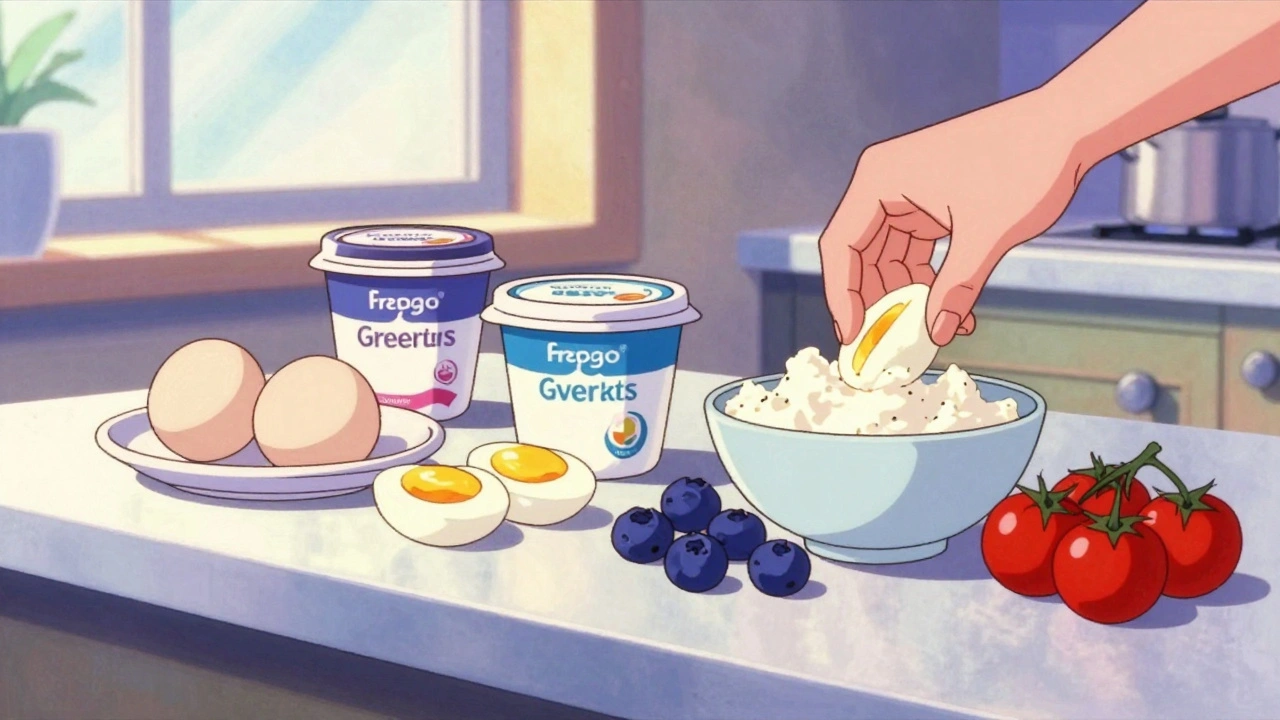
100 grams (about 1/3 cup) of plain, non-fat Greek yogurt delivers 10 grams of protein for only 59 calories. Look for brands with no added sugar-some flavored versions have as much as 15 grams of sugar. Add a handful of blueberries (just 40 calories) for natural sweetness and a boost of antioxidants that may help muscle recovery. Reddit users call this combo the most satisfying snack under 150 calories.
3. Cottage cheese
A half-cup serving of low-fat cottage cheese gives you 14 grams of protein and around 90 calories. It’s rich in casein, a slow-digesting protein that releases amino acids over time-perfect for overnight muscle repair. Try it with sliced cucumber or cherry tomatoes for a savory crunch. Or make cottage cheese bark: spread it thin on parchment paper, sprinkle with chia seeds and a few dark chocolate chips, freeze for 30 minutes, then break into pieces. Users on YouTube say 87% would make this again.
4. Roasted chickpeas
Half a cup of roasted chickpeas has 7 grams of protein and 6 grams of fiber for 135 calories. That fiber + protein combo keeps you full longer than protein alone. Toss canned chickpeas (rinsed and dried) with olive oil, smoked paprika, and a pinch of salt. Roast at 400°F for 25-30 minutes until crispy. Store in an airtight container for up to 5 days.
5. Edamame
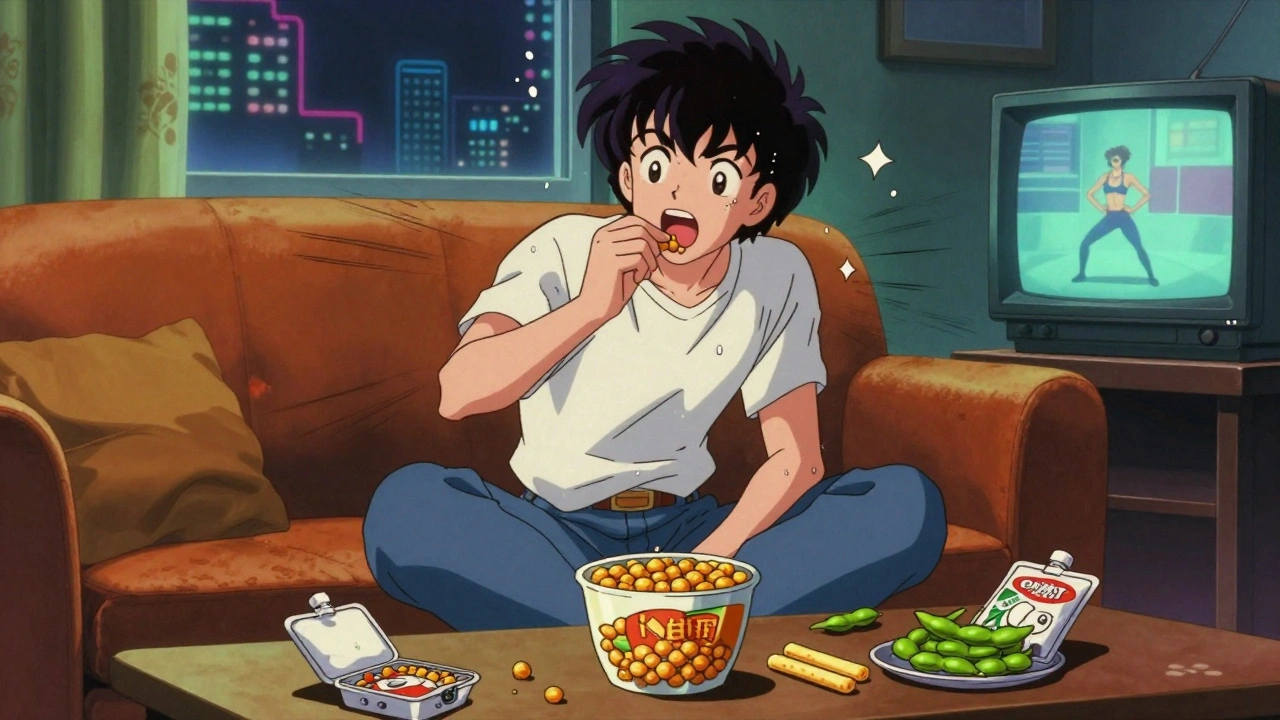
One cup of shelled edamame (steamed or boiled) gives you 17 grams of protein and 8 grams of fiber for just 189 calories. It’s one of the few plant-based foods that’s a complete protein-meaning it contains all nine essential amino acids. Buy frozen, steam for 5 minutes, sprinkle with sea salt, and eat straight from the pod. It’s crunchy, satisfying, and takes almost no prep.
6. Tuna pouches with whole-grain crackers
One 2.5-ounce pouch of tuna in water has 20 grams of protein for about 100 calories. Pair it with 5 whole-grain crackers (around 50 calories) for a balanced snack. Skip the flavored tuna packs-they often have added oil and sugar. Look for “light tuna in water” with no added salt. This combo was rated 4.5/5 by users on BBC Good Food for reducing next-meal cravings.
7. Hard cheese sticks
A single string cheese stick gives you 7 grams of protein and 80 calories. Choose part-skim mozzarella or cheddar. They’re shelf-stable, easy to grab, and require zero prep. If you need more protein, grab two. They’re the go-to snack for beginners because they’re simple, familiar, and hard to mess up.
What to Avoid (Even If It Claims to Be Healthy)
Not every bar or shake labeled “high-protein” is actually good for weight management. Many protein bars are sugar bombs in disguise. Quest bars, for example, have 20+ grams of protein-but also 12-15 grams of sugar alcohols like erythritol. These can cause bloating, gas, or diarrhea in 23% of users. RXBARs use dates for sweetness, which means 13 grams of sugar per bar-even though it’s “natural.”
Jerky is another trap. One ounce can have 10 grams of protein, but also 500-700 mg of sodium-nearly a quarter of your daily limit. Look for brands with less than 400 mg sodium per serving and no added nitrates.
Protein bagels and protein pancakes sound smart, but they’re often loaded with refined flour, fillers, and sweeteners. One bagel can be 300+ calories and 15 grams of sugar. If you’re craving something baked, make your own with almond flour, whey protein powder, and a touch of stevia. Or just eat an egg.
How to Make These Snacks Stick (Without Spending Hours)
Time is the biggest reason people quit healthy snacking. You don’t need to meal prep every day. Just set aside 15 minutes once a week.
- Boil a dozen eggs on Sunday. Peel and store them in the fridge with salt and pepper packets ready to go.
- Portion out cottage cheese into small containers. Add berries or tomatoes when you’re ready to eat.
- Roast a big batch of chickpeas. Keep them in a jar on the counter.
- Buy frozen edamame. Steam it in the microwave while you’re waiting for coffee.
- Keep single-serve tuna pouches and cheese sticks in your bag or desk drawer.
Pre-portioning cuts decision fatigue. When you’re hungry and tired, you’ll grab what’s easy-not what’s ideal. Make the healthy choice the default.
Plant-Based vs. Animal-Based: Which Is Better?
Both work. But they work differently.
Animal proteins-eggs, dairy, chicken, fish-have a Protein Digestibility Corrected Amino Acid Score (PDCAAS) of 1.0. That means your body can use every amino acid they contain. They’re complete proteins, so you don’t need to combine them with other foods.
Plant proteins like chickpeas, lentils, and tofu have lower scores (0.7-0.8). That doesn’t mean they’re bad. It just means you need to pair them. Eat hummus with whole-wheat pita, or tofu with brown rice. Together, they become complete. Plus, plants bring fiber, which boosts fullness even more. Edamame and roasted chickpeas beat cheese sticks in satiety because of their fiber.
If you’re vegan or plant-focused, aim for 20-25 grams of protein per snack to match the effect of animal proteins. Add a scoop of pea protein powder to a smoothie, or snack on soy nuts (10g protein per ounce).
When and How Often to Snack
You don’t need to snack just because you’re hungry. Snack when you need to bridge a gap between meals-especially if you’re active or skipping breakfast. A 2023 study from Harvard found that people who ate 15-20 grams of protein within 45 minutes of waking up had less muscle breakdown throughout the day.
Don’t go overboard. Eating more than 40 grams of protein in one sitting doesn’t give you extra benefits. Your body can only use so much at once. Spread your protein across meals and snacks. Three meals with 25g protein and two snacks with 15g each is better than one giant protein shake.
If you’re trying to lose weight, snack only if you’re genuinely hungry-not because you’re bored, stressed, or watching TV. Keep a food journal for a week. You might be surprised how often you snack out of habit, not hunger.
What Experts Say
Dr. Gabrielle Lyon, a leading voice in muscle health, says: “It’s not how much protein you eat in a day-it’s how much you eat at each meal or snack.” She recommends 30-50 grams per eating occasion to fully activate muscle repair.
Registered dietitian Toby Amidor says: “The best snack has protein, fiber, and low added sugar. If it’s under 5 grams of sugar and has at least 3 grams of fiber, you’re winning.”
And Dr. David Ludwig adds: “Protein snacks reduce overeating later. That’s the real magic-not just the protein itself, but how it changes your behavior.”
The bottom line? High-protein, low-calorie snacks aren’t about restriction. They’re about control. You’re not giving up food-you’re choosing smarter options that keep you full, energized, and on track.
Can I eat high-protein snacks if I’m not trying to lose weight?
Absolutely. High-protein snacks aren’t just for weight loss-they’re for muscle maintenance, energy stability, and even aging well. As you get older, your body needs more protein to prevent muscle loss. Eating 20-30 grams of protein per snack helps preserve strength and mobility, even if your goal isn’t to drop pounds.
Are protein shakes a good snack option?
They can be, but only if they’re simple. Look for shakes with less than 5 grams of added sugar and no artificial sweeteners like sucralose or acesulfame-K. Whey or casein protein powders mixed with water or unsweetened almond milk make a clean, 20-gram protein snack. Avoid meal-replacement shakes-they’re often too high in calories and carbs. A shake should be a snack, not a meal.
Why do some protein snacks make me feel bloated?
It’s usually the sugar alcohols-like erythritol or maltitol-that are added to low-sugar protein bars and shakes. They’re not digested well and can cause gas, bloating, or diarrhea in sensitive people. Try switching to snacks with natural sweetness like fruit or dates, or use unflavored collagen peptides in coffee or smoothies. Collagen dissolves completely and rarely causes digestive issues.
How do I know if a snack is really high-protein?
Check the nutrition label. A snack is high-protein if it has at least 10 grams of protein per serving. Avoid anything with more than 5 grams of added sugar and over 200 calories. If the ingredient list has more than 5 items you can’t pronounce, it’s probably not the best choice. Stick to whole foods when you can-eggs, yogurt, cheese, beans, fish.
Can I make my own protein snacks at home?
Yes, and it’s easier than you think. Mix 1 scoop of unflavored collagen or whey protein powder with 1/4 cup oats, 1 tablespoon ground flaxseed, 1 mashed banana, and a dash of cinnamon. Form into balls and refrigerate. Each ball has about 12 grams of protein and 150 calories. Or make cottage cheese bowls with berries and chia seeds. Homemade snacks cost less, taste better, and have no hidden sugars.
Is it okay to snack at night?
If you’re hungry, yes. A light, high-protein snack before bed can actually help with overnight muscle repair and reduce morning hunger. Cottage cheese, a hard-boiled egg, or a small serving of Greek yogurt are great choices. Avoid sugary snacks or heavy meals-those can disrupt sleep. A 100-150 calorie protein snack is fine, as long as it’s not right before lying down.
Ali Bradshaw
December 6, 2025 AT 03:19Also, the cottage cheese bark? Genius. Made it last weekend. Tasted like dessert but felt like I did something good for myself.
Ada Maklagina
December 7, 2025 AT 10:21ashlie perry
December 7, 2025 AT 16:18Stephanie Bodde
December 7, 2025 AT 23:34Juliet Morgan
December 9, 2025 AT 06:01Katie Allan
December 9, 2025 AT 13:06William Chin
December 10, 2025 AT 01:14Jennifer Patrician
December 11, 2025 AT 23:43Harry Nguyen
December 12, 2025 AT 06:12James Moore
December 12, 2025 AT 21:56Philip Kristy Wijaya
December 13, 2025 AT 21:13Annie Grajewski
December 14, 2025 AT 16:05Rupa DasGupta
December 15, 2025 AT 17:23Kylee Gregory
December 17, 2025 AT 12:24Norene Fulwiler
December 17, 2025 AT 13:53Juliet Morgan
December 19, 2025 AT 00:15