Formulary Exceptions: When Your Insurance Won't Cover Your Medication
When your insurance plan refuses to pay for a drug you need, you’re facing a formulary exception, a formal request to override a plan’s list of covered drugs. Also known as a prior authorization appeal or coverage exception, it’s your legal right to ask for access to a medication that’s medically necessary but not on your plan’s approved list. This isn’t just a paperwork hurdle—it’s often the difference between managing your condition and going without treatment.
Formulary exceptions come up most often with high-cost drugs, newer treatments, or when your doctor says a generic won’t work for you. Think of drugs like tirzepatide, a weight loss and diabetes medication that’s often blocked by insurers, or Tadora (tadalafil), an ED drug sometimes denied because cheaper alternatives are listed. Even common meds like Actonel (risedronate), a bone drug used for osteoporosis, can be excluded if the plan pushes you toward a different bisphosphonate first. These aren’t random denials—they’re based on cost controls, not clinical need.
Doctors and pharmacists handle these requests daily. They submit proof: lab results, prior treatment failures, side effects from alternatives, or guidelines from medical societies. For example, if you’re on isoniazid, a TB drug that causes liver damage in some patients, and your plan only covers rifampin, your doctor can argue that rifampin won’t work for you based on your history. Same with Empagliflozin, a diabetes drug that also protects the heart—if your plan wants you to try metformin first, but you’ve already tried it and it failed, that’s your case.
You don’t need a lawyer to file this. Most plans have a simple form, and your pharmacy can often start the process. But timing matters. If you’re running out of meds, act fast. Some exceptions get approved in days; others take weeks. Meanwhile, ask about cost-saving strategies, like generic substitutions or patient assistance programs. Sometimes, the exception isn’t the only path.
What you’ll find below are real-world stories and guides on how people got their meds covered—whether it was fighting for Samsca (tolvaptan), a rare kidney drug for fluid overload, or pushing back when clonidine, used off-label for schizophrenia symptoms was denied. These aren’t theoretical. They’re lived experiences. And they show you how to navigate the system, not just accept a no.
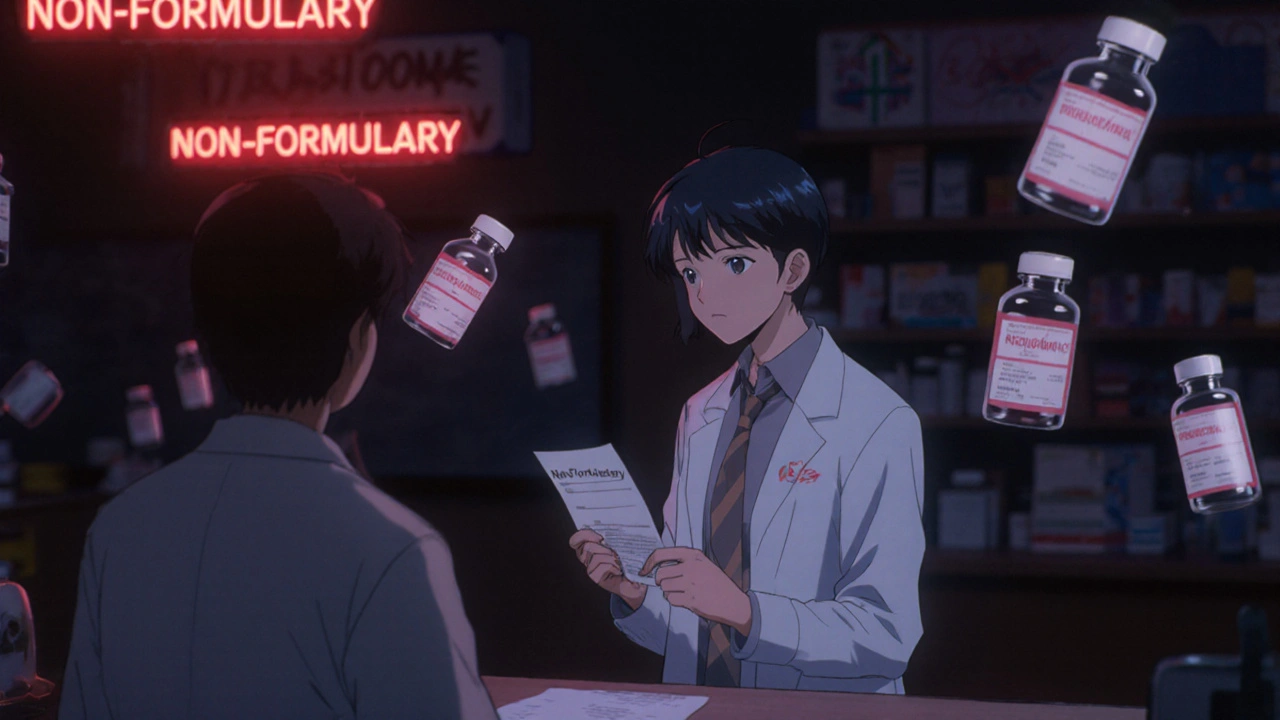
Non-formulary generics: what to do when coverage is denied
When your insurance denies coverage for a generic drug, you're not out of options. Learn how to appeal a non-formulary denial, what documentation your doctor needs, and how to get your medication fast-even if the system says no.