Medication-Supplement Interaction Checker
Check for Potential Interactions
This tool helps you identify potential interactions between your medication and common supplements. Remember: This is not medical advice. Always consult your healthcare provider before combining medications with supplements.
Select both a medication and supplement to check for interactions.
Important Safety Notes
- Never skip medical advice: Always inform your healthcare provider about all supplements you're taking.
- Look for quality certifications: Reputable supplements should have USP, NSF, or ConsumerLab seals.
- Start low and go slow: Begin with smallest dose and monitor for side effects.
- Report adverse events: Use the FDA Safety Reporting Portal if you experience negative effects.
When you’re dealing with side effects from medication - whether it’s nausea from chemo, insomnia from antidepressants, or hot flashes from menopause - it’s tempting to reach for something labeled "natural." After all, if it comes from a plant, how harmful could it be? But here’s the truth: natural doesn’t mean safe. And too many people don’t realize that until something goes wrong.
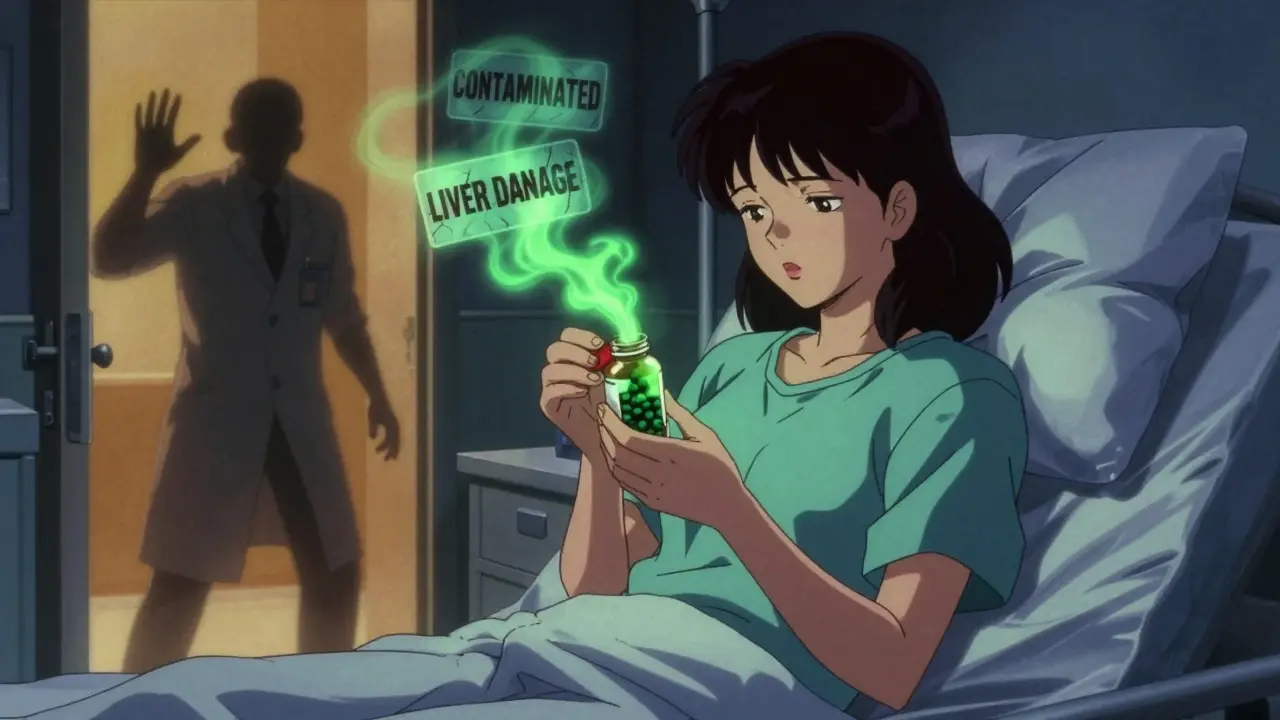
Take black cohosh. It’s widely used for hot flashes, and some studies suggest it might help. But the Cleveland Clinic warns that even the best-formulated versions can cause dizziness, nausea, or headaches. And while liver damage linked to black cohosh is rare, it’s still reported. The real problem? You can’t tell if the product you bought is pure. One batch might be clean; the next could be laced with contaminants or wrong herbs entirely. A 2015 study found that nearly 70% of herbal supplements tested didn’t match what was on the label.
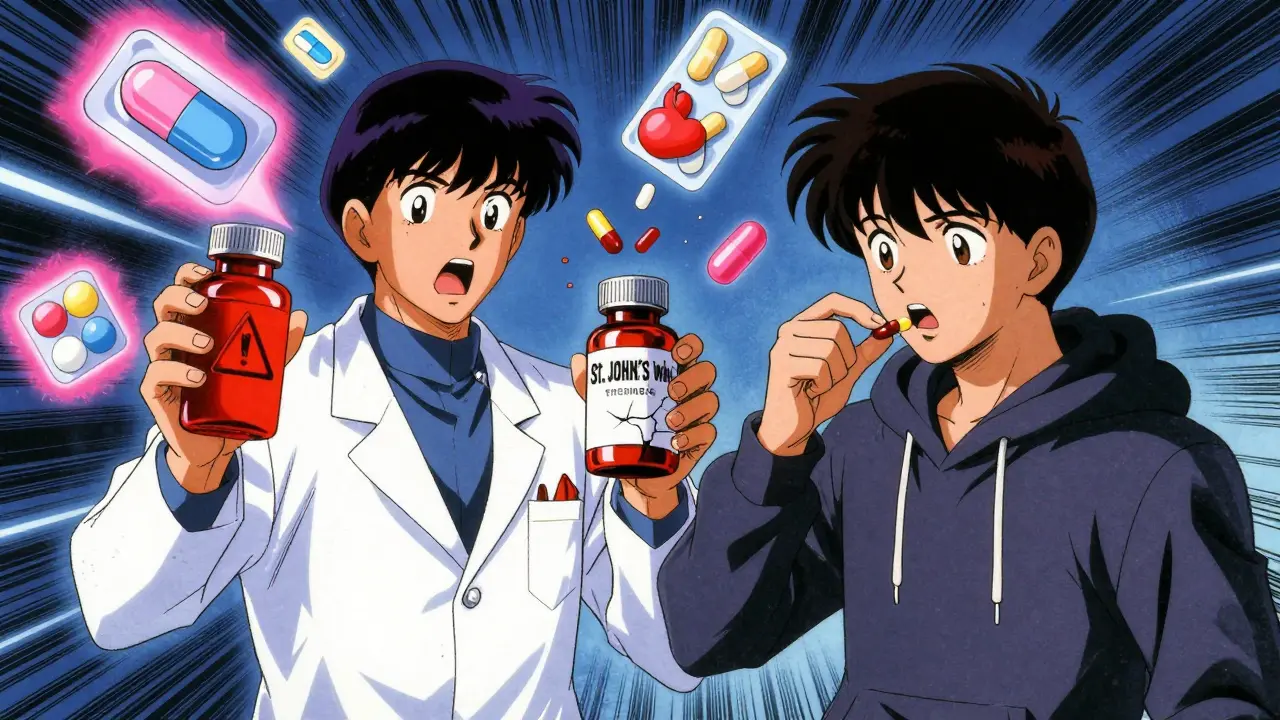
Then there’s St. John’s wort. People take it for mild depression, and it might work. But if you’re on birth control, this "natural" herb can slash hormone levels by up to 24%, making contraception useless. Same goes for antidepressants, HIV meds, or even heart medications. The mechanism? It cranks up your liver enzymes, making your body flush out other drugs before they can do their job. That’s not a side effect - that’s a dangerous interaction. And it’s not rare. Pharmacists in the UK report seeing this mix-up at least once a month.
Even something as simple as cranberry juice, often touted for urinary health, can be risky if you’re on blood thinners like warfarin. The combination can spike your bleeding risk, leading to bruising, nosebleeds, or worse. Ginkgo biloba? Same story. It thins the blood. Combine it with aspirin or ibuprofen, and you’re playing Russian roulette with internal bleeding.
Why "Natural" Doesn’t Mean Safe
The idea that plants are harmless is a myth built on marketing, not science. Herbs are powerful chemicals. Willow bark? It’s the original source of aspirin. Foxglove? It contains digitalis - a heart drug that can kill you if the dose is off by a milligram. Just because these substances come from nature doesn’t mean your body handles them gently.
The FDA doesn’t test herbal supplements before they hit shelves. Under the 1994 DSHEA law, companies can sell anything labeled as a "dietary supplement" without proving it’s safe or effective. That means a bottle of echinacea could contain mold, heavy metals like lead or arsenic, or even synthetic drugs hidden to make it "work better." The Natural Medicines Database, which tracks over 2,800 natural products, only rates a handful as "possibly effective" - and even those come with caveats.
And older adults? They’re at higher risk. As we age, our kidneys and liver slow down. That means herbs stick around longer in the body, building up to toxic levels. A 70-year-old taking turmeric for joint pain might not realize their body can’t clear it like it used to. Studies in JAMA show that older patients are far more likely to suffer serious side effects from herbal products than younger ones.
The Hidden Dangers in Common Supplements
Let’s break down a few popular ones - and what the evidence really says.
- Echinacea: Often used for colds. Some trials show it might shorten a cold by half a day. But if you have allergies to ragweed, daisies, or chrysanthemums? You could get a severe reaction - including swelling, trouble breathing, or anaphylaxis. And if you have lupus or rheumatoid arthritis? It might trigger a flare-up.
- Licorice root: Found in 75% of Japanese herbal formulas. Sounds harmless? Think again. Just 3% of regular users develop pseudohyperaldosteronism - a condition that causes high blood pressure, swelling, low potassium, and even seizures. The NHS says it’s not rare. It’s underreported.
- Bupleurum root: Used in traditional Chinese medicine for liver and fever issues. But it can cause urinary urgency, blood in urine, and allergic reactions that mimic infections. The cause? Not bacteria - your immune system reacting to the herb itself.
- Ephedra: Banned in the U.S. since 2004, but still sold illegally online. Between 1995 and 1999, the FDA logged over 800 adverse events linked to it - including heart attacks, strokes, and death. Half of those cases happened in people under 40. No safe dose exists.
And here’s the kicker: most people don’t tell their doctor they’re taking these. A 2022 survey found that 62% of supplement users never mentioned it during a medical visit. Why? They assume it’s harmless. Or they’re afraid their doctor will dismiss them. But that silence puts them at risk.
What About the Benefits? Is Anything Proven?
Yes - but only in specific cases, with specific products, and under medical guidance.
For example, the Remifemin® brand of black cohosh has been studied in controlled trials for menopausal hot flashes. It’s one of the few herbal products classified as "possibly effective" by the Natural Medicines Database. But only that brand. Other black cohosh products? No evidence. And even then, the benefit is modest - not a cure.
Pumpkin seed oil? One small study showed it might help with overactive bladder symptoms. Ginger? Solid evidence for reducing nausea during pregnancy or after surgery. But again, dose matters. Too much ginger can cause heartburn or thin the blood.
The truth? Most herbal supplements don’t deliver the dramatic results they promise. And when they do work, it’s often because they’re acting like drugs - with all the risks that come with it.

How to Stay Safe
If you’re considering a natural remedy, here’s what you need to do:
- Speak to your doctor or pharmacist first. Not "maybe," not "if you get around to it." Do it before you take anything. Tell them every supplement, herb, tea, or tincture you’re using.
- Check for interactions. Use trusted sources like the Natural Medicines Database or ask your pharmacist to run a check. Don’t rely on Google.
- Buy from reputable brands. Look for third-party testing seals - USP, NSF, or ConsumerLab. These don’t guarantee safety, but they do test for contaminants and correct labeling.
- Start low and go slow. If you’re trying something new, begin with the smallest dose. Watch for new symptoms - headaches, rashes, fatigue, stomach upset. These aren’t "just side effects." They’re warning signs.
- Stop immediately if something feels off. And report it. Use the FDA’s Safety Reporting Portal (www.safetyreporting.hhs.gov). Your report could help someone else avoid a bad reaction.
Also, be aware of what’s in your tea, smoothies, or energy bars. Many contain hidden herbs. A "detox" tea might have senna (a laxative) or licorice. A "focus" blend might have stimulants like yohimbine. Labels rarely say enough.
The Bigger Picture
The global herbal supplement market is worth over $34 billion. And it’s growing. People are desperate to feel better - especially after years of pandemic stress. But the industry thrives on ambiguity. It sells hope, not proof.
Meanwhile, countries like Germany and Japan have stricter rules. Their herbal medicines are regulated like drugs - with approved dosages, safety studies, and mandatory reporting of side effects. In the U.S.? Not so much.
Future improvements are coming - like DNA barcoding to catch fake herbs, and better global monitoring systems. But until then, you’re on your own. And that’s dangerous.
The bottom line? Natural remedies can help - but only if you treat them like medicine. Not as a harmless alternative. Not as a quick fix. As something that can change how your body works - for better or worse.
Chris Farley
March 24, 2026 AT 10:21Darlene Gomez
March 25, 2026 AT 02:35Katie Putbrese
March 26, 2026 AT 04:26Jacob Hessler
March 27, 2026 AT 22:59Amber Gray
March 29, 2026 AT 10:45Danielle Arnold
March 29, 2026 AT 21:55James Moreau
March 30, 2026 AT 16:06J. Murphy
April 1, 2026 AT 11:54